Card Cleaning Before Grading: What's Safe and What Destroys Value
- Share
- publisher
- GUARD TCG Team
- Issue Time
- Nov 13,2026
Summary
A practical B2B guide to cleaning cards before grading: which dry methods are safe, why erasers, alcohol and polish count as alteration, cards that should never be touched, and the consumables shops should stock. Written for retailers, importers and distributors.

Card Cleaning Before Grading: What's Safe and What Destroys Value
Safe pre-grading cleaning means dry methods only: a soft microfiber cloth, a camera lens blower, and gentle wiping on non-glossy areas, while anything wet, abrasive, or chemical risks surface alteration. Erasers, alcohol, polishes, and pressing or trimming are treated as card alteration that destroys value and can get a submission rejected or flagged by graders. For retailers, distributors, and importers who handle submissions in volume, the practical rule is narrower still: remove loose dust, change the sleeve, and change nothing about the card itself.
That distinction sounds academic until it costs someone a five-figure card. PSA's published grading standards state plainly that the company will not grade cards bearing evidence of trimming, re-coloring, restoration, or any other form of tampering. A well-intentioned wipe with the wrong liquid can produce exactly the surface anomalies a grader is trained to flag. This guide separates the safe techniques from the risky ones and the ones that are effectively card destruction, for the shops, breakers, and wholesale buyers who have to train staff on those rules.
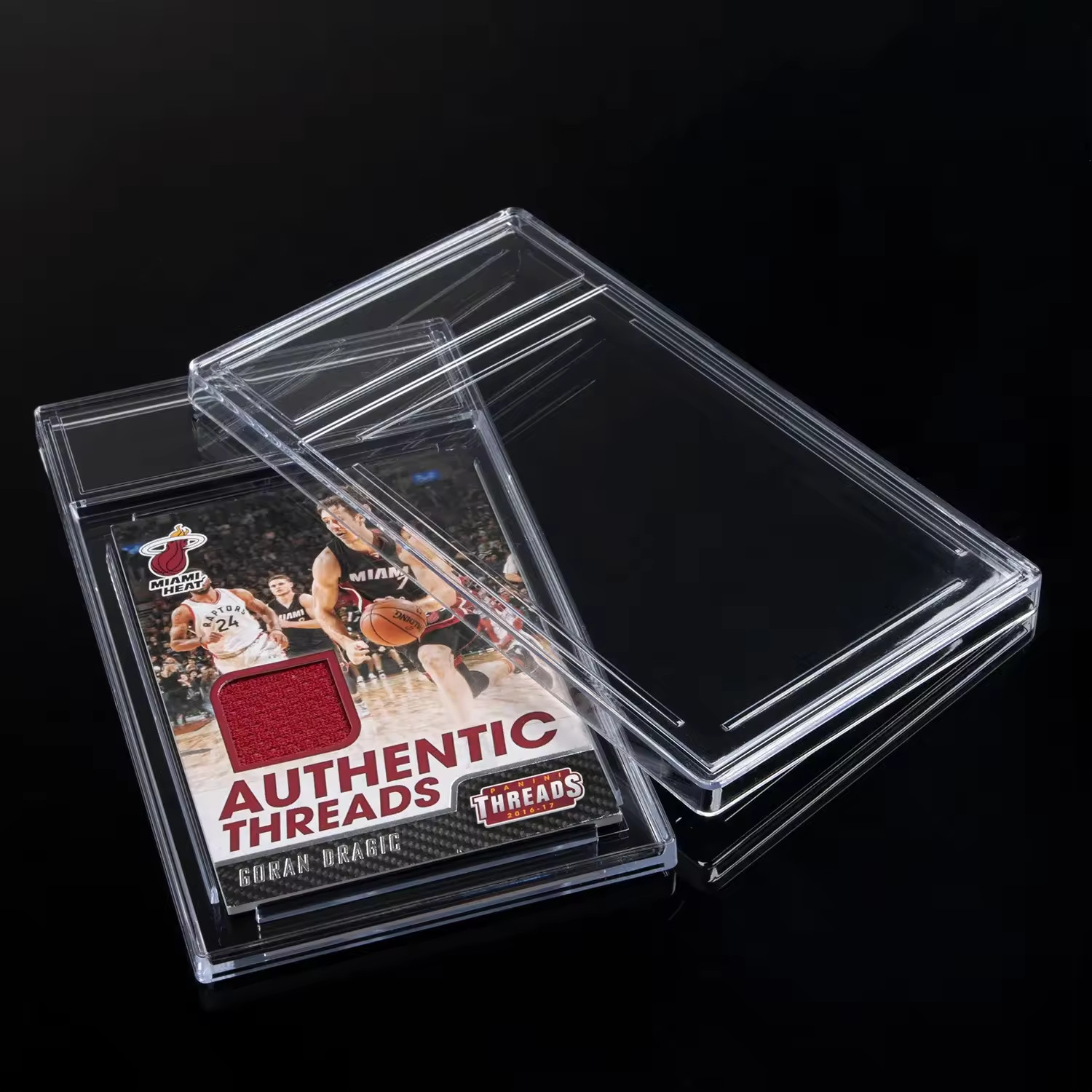
Why Cleaning Before Grading Is Risky
A raw card is a printed, coated paper laminate. The printed layer sits under a thin clear coat, the paper core holds moisture, and the edges are cut fibre. Cleaning feels like maintenance, but every action taken on a raw card is an intervention on the exact surfaces the grader inspects under magnification and angled light.
The risk has grown with grading volume. PSA has said it graded 2 million cards in 2020 and more than 19 million in 2025, while its own backlog tracker reported 7.2 million units in progress in early November 2026. At that scale, graders see every amateur cleaning trick repeatedly and have calibrated their detection to it.
There is a second, quieter risk: cleaning rarely improves a grade. Surface scratches and edge wear are physical, and no cloth removes them. What cleaning can do is take a card that would have graded a 7 and turn it into a card that grades "authentic altered," which is worth less than the raw card in most markets.
What Graders Treat as Alteration vs. Normal Wear
Normal wear is expected: edge whitening, light surface scratches, a soft corner, factory centering that was never perfect. Alteration is deliberate intervention intended to change how the card presents, and graders are looking for both intent and residue. PSA's published scale assigns specific codes to altered cards, including trimming and restored paper stock, and its submission terms exclude items showing evidence of trimming, recoloring, restoration, or other tampering. BGS and CGC apply comparable policies under their own terminology.
In practice the detection signals are consistent: edges too sharp or unevenly cut, a surface that fluoresces differently under UV because a chemical was applied, corner stock that has been rebuilt, and gloss that is uniform in one area and dull next to it. The consequence for a seller is asymmetric — a flagged card comes back ungraded and often noted in the population data, which follows the card. A card left alone grades what it grades.
Safe Dry Techniques: Cleaning Cards Before Grading Without Risk
When cleaning cards before grading, restrict yourself to removing what is not part of the card: dust, loose fibre from a sleeve, a hair, a fingerprint of handling oil on a border. Use a rubber bulb blower first, the kind sold for camera sensors, because air removes loose particulate without contact. Only then consider a dry microfiber cloth, and only on non-glossy areas such as a matte border or the card back.
Technique matters as much as the tool. Support the card flat on a clean, hard, lint-free surface, never in the air where flex stress concentrates at the corners. Wipe in one direction with almost no pressure, using a fresh section of cloth for each pass, and stop the moment the cloth catches. If the mark has not lifted after two light passes, it is in the card, not on it.
A soft, clean, dry brush can lift dust from textured or embossed surfaces where cloth cannot reach; wash and fully dry brushes between uses, since a dusty brush is a fine abrasive. The same logic applies to the sleeve: most "dirty card" complaints are dirty sleeves, and swapping a penny sleeve for a fresh, non-PVC one is risk-free and improves how the card presents in a submission photo.
Unsafe Methods Compared: Erasers, Liquids, and Polishes
The unsafe methods share a trait: each one either removes material or adds residue, and both are detectable. An eraser abrades the clear coat on a border, leaving a dull patch that reads as restored stock. Alcohol, acetone, hand sanitizer, and glass cleaner dissolve or soften the coating and can lift print. Polish fills micro-scratches with a wax or oil that shows as a haze under angled light, and pressing paper flat relaxes the fibre structure in a way graders treat as restoration.
| Method | What it does to the card | Grading outcome | Verdict |
|---|---|---|---|
| Rubber bulb blower | Lifts loose dust, no contact | No effect on grade | Safe |
| Dry microfiber cloth | Removes handling oil from matte areas | Neutral if light pressure only | Safe with care |
| Soft dry brush | Reaches texture a cloth cannot | Neutral if bristles are clean | Safe with care |
| Pencil or polymer eraser | Abrases clear coat, dulls gloss, thins stock | Reads as recoloring or restoration | Never |
| Isopropyl or rubbing alcohol | Softens coating, can lift print and cloud surface | Surface alteration, rejection risk | Never |
| Acetone, hand sanitizer, glass cleaner | Aggressive solvent, residue and discoloration | Altered or damaged, no grade | Never |
| Wax or liquid polish | Fills scratches, leaves detectable film | Treated as restoration | Never |
| Pressing or ironing | Flattens curl, relaxes fibre structure | Restoration under PSA N-codes | Never |
| Trimming or sanding edges | Changes dimensions and cut | Trimmed, not graded | Never |
Print the table for a shop counter. Staff who understand that an eraser is a restoration tool stop reaching for one, and the number of write-offs drops immediately.
Cards You Should Never Attempt to Clean
Some cards should not be touched at all, no matter how safe the method: anything with visible surface scratches, because cloth contact widens them; anything with a soft or separated corner, because pressure delaminates it; anything vintage on porous or uncoated stock, because the paper accepts moisture and oil permanently; and anything with a signature or hand-added ink, because even dry friction can lift the medium.
Foil and etched cards deserve their own warning. The holographic layer is a thin deposited film that scratches at a lower force than printed ink, so a dry cloth that is safe on a matte border will leave a visible sleeker line across a foil surface. On high-value foils, change the sleeve and leave the card exactly as it is. The same applies to cards you suspect were already altered: cleaning adds nothing, and submission risks a returned, flagged item.

How to Choose Tools for Routine Surface Care
Build a small, boring kit and standardise it across every station in the shop: a rubber bulb blower, two or three microfiber cloths in different colours so a dirty one is obvious, a soft dry brush, a supply of fresh non-PVC inner sleeves, and a clean hard work surface. Judgement criteria are simple. Reject any cloth with a printed logo or an edge binding, both of which can scratch; reject any brush that sheds; and reject any "card cleaner" sold as a liquid, spray, or wipe, because a consumable that claims to restore gloss is by definition adding something to the surface. Compared with brand-name cleaning kits marketed to collectors, a plain microfiber and blower combination is cheaper and carries less risk.
Standardise handling as well: nitrile gloves for anyone touching raw high-value cards, cards never face-down on a counter, and a rule that a card goes from penny sleeve to toploader or Card Saver without resting loose on a surface.
Common Mistakes When Cleaning Cards Before Grading
The first mistake is cleaning at all when the card only needs a new sleeve. The second is using more pressure to chase a mark that is under the coating — pressure converts a cosmetic mark into a graded defect. The third is testing a method on a valuable card instead of a bulk common from the same era and finish.
Fourth is cleaning in a humid room or with damp hands, which pushes moisture into cut edges and starts the warp that appears weeks later. Fifth is returning a cleaned card to the sleeve it came out of, transferring the original grit back onto the surface. Sixth, and most expensive, is believing graders reward effort — they reward the card's actual condition, and their instruments are better than yours.
Handling and Storage Rules to Avoid New Marks
Once a card is clean, the goal is to keep it that way until it is sealed in a holder. Double-sleeve with a fresh inner sleeve and a rigid outer holder for anything going into the post, and use a rigid mailer rather than a padded envelope — cards that travel in a soft sleeve inside a bubble mailer arrive with corner dings that look like handling damage to a grader.
Store raw cards vertically or flat with even support, never leaning, and never in a stack heavy enough to press the bottom cards. Keep the environment stable: temperature swings drive expansion in the paper core, and humidity above roughly 60% is where warping and foxing begin. A shelf in a climate-controlled room beats a garage in every climate we have seen buyers describe.
Keep a photo of every card before it leaves the shop. That record protects you in a dispute and gives you a baseline against a returned grade — the single most useful operational habit for a shop grading at volume.

Wholesale and Retail Notes for Buyers (MOQ, Packaging, Lead Time)
MOQ. The consumables that support a cleaning and submission workflow — penny sleeves, Card Saver-style holders, toploaders, microfiber cloths, storage boxes — typically start at 100 units per SKU on stock formats. Custom packaging or branded cloth sets usually need 500-1,000 units because of setup and print cost. Aggregate a mixed order across sleeve gauges and holder sizes to reach a container plan without over-buying any single SKU.
Packaging. Retail-ready sleeves should carry a printed header, barcode, pack count, and country of origin; export cartons need unit counts, carton dimensions, and pallet configuration so your landed-cost model is real rather than assumed. For graded-card accessories, ask for a protective inner wrap and a mailer-grade outer, because scuffed acrylic and cracked slab cases are the most common transit claims in this category.
Lead time. Plan 5-12 days for express samples and 25-35 days for sea freight, plus production time driven by pack count and printing. Every batch should ship against a written inspection routine with retained samples, since a thinner film gauge on the second shipment is the failure buyers report most often.
About GUARD TCG
GUARD TCG has manufactured card protection and display products since 2009, producing more than 300 million units a year for customers in over 70 countries, with 10,000+ customers and 500+ distributors. We run OEM and ODM programs across non-PVC sleeves, toploaders, Card Saver-style holders, binders, storage boxes, deck boxes, and acrylic display cases, with documented material statements, carton and pallet data, a 100-unit MOQ on stock formats, and full-batch inspection before shipment. For buyers building a submission-ready accessories range, start with the OEM/ODM program page, browse the graded card slab accessories and card sleeves catalogs, and send your pack sizes, volumes, and market through the inquiry page.
FAQ
Q1. Can I clean a card with a microfiber cloth before sending it to PSA?
Yes, with light pressure and only on matte or non-glossy areas, after removing loose dust with a rubber blower. Never use liquids, and stop if the cloth catches. If a mark does not lift in two passes, it is in the card and further work only adds scratches.
Q2. Does an eraser count as card alteration?
In practice, yes. Erasing a mark abrades the clear coat and thins the stock, which graders read as recoloring or restored paper. PSA's published standards exclude cards showing trimming, recoloring, restoration, or other tampering from grading.
Q3. Will cleaning improve my grade?
Almost never. Grades reflect physical condition — centering, corners, edges, surface. Dry cleaning can remove dust and handling oil, but it cannot remove scratches or wear, and an aggressive attempt usually makes the surface worse.
Q4. Is isopropyl alcohol safe on a card surface?
No. Alcohol softens the coating, can lift print, and leaves a clouded or uneven gloss that shows under angled light. The same applies to acetone, hand sanitizer, and glass cleaner. Keep all liquids away from raw cards.
Q5. What should a shop stock for a submission workflow?
Fresh non-PVC penny sleeves, rigid holders such as Card Saver-style or 35PT toploaders, a bulb blower, clean microfiber cloths, rigid mailers, and storage boxes. Stock formats start at 100 units per SKU with most factory-direct suppliers.
Conclusion
The safe perimeter around cleaning cards before grading is small and easy to teach: air, a dry cloth, a soft brush, and a fresh sleeve. Everything else — erasers, alcohol, polish, pressing, trimming — is an intervention a grader is trained to detect and that turns a gradeable card into a flagged one. For shops and distributors that is an operational policy: standardise the kit, train staff to do less, photograph every card before it ships, and buy the consumables that make the safe path the easy one. GUARD TCG supplies those consumables factory-direct, with documented materials, carton data, and a 100-unit MOQ, so a submission program can scale without scaling its risk.