Custom TCG Binders for Retail Brands: From Design to Delivery
- Share
- publisher
- GUARD TCG Team
- Issue Time
- Nov 21,2026
Summary
Custom TCG binder programmes for retail brands: cover artwork and logo methods, emboss vs print comparison, GS1 retail packaging and barcodes, sampling, MOQ from 100 units, price breaks and a launch checklist before the first container.
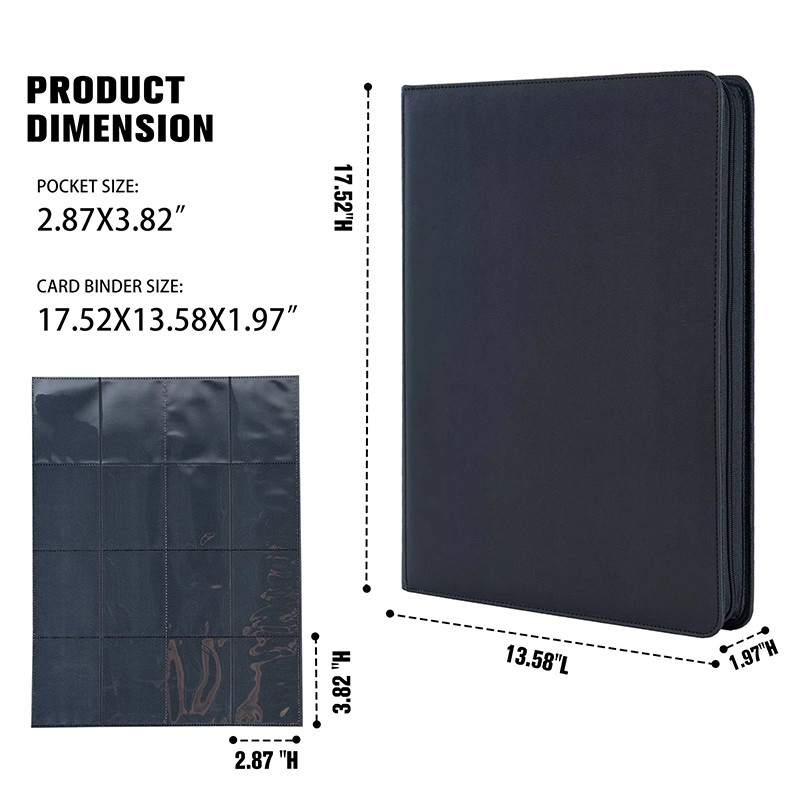
Custom TCG Binders for Retail Brands: From Design to Delivery
For retail brands, a custom TCG binder is a branding project, not a printing job: cover artwork, an embossed or printed logo, retail-ready packaging and a scannable barcode all have to land on one product at one landed cost. Budget on 100–500 units for a first run with custom covers, 7–12 days for sampling and 20–30 days for production after approval. Confirm early that your factory handles hang-tags, polybags and carton marking in-house, because splitting those steps across suppliers usually adds three to four weeks. This guide is written for importers, distributors and private-label buyers building a binder SKU.
Why a Custom TCG Binder Sells Through Retail Channels
A binder is the accessory a card buyer needs on the day they open their first booster box. Every sealed product, starter deck and single-card order creates storage demand, and the binder is the one item in that basket a shopper picks up, opens and judges by touch — which is why the product carries a retail price that tolerates branding, while sleeves and toploaders are bought on cents per unit.
The category is large enough to plan around: Mordor Intelligence sizes the trading card game market at roughly USD 15.1 billion for 2026, and storage accessories grow with it. The custom binder segment is a mature print-and-convert business expanding in the mid single digits by industry estimate, not a speculative niche.
For a retail brand, three properties decide whether the SKU earns a second order: it photographs well in a listing and on a shelf, it survives a pallet and a store backroom without crushed corners, and it stays repeatable at re-order — same construction, same colour, no new die.
Cover Artwork and Logo Methods Explained
A binder cover is four printable surfaces: front panel, spine, back panel with barcode and legal marks, and the packaging around it. Build artwork on the factory's dieline vector file rather than from a product photo, because the dieline encodes trim, bleed, fold and stitch lines plus the zipper opening and handle.
Four rules keep branding intact: keep text and logo elements 5mm inside the stitch line, since seams pull material; avoid hairlines under about 0.5pt on textured PU; reserve the barcode panel as a flat, matte area so it scans at grade A or B; and design the spine knowing it varies 20–40mm across 9-, 12-, 16- and 40-pocket builds.
Brand colour is the other trap: the same Pantone reads differently on glossy laminate, matte PU, 600D polyester and moulded PP, so approve it on the actual substrate under retail lighting, not on a screen proof. A Delta E tolerance of 2 or better is common on coated stock and harder on textured leather-look material.

A 16-pocket leather-look build is the workhorse of branded ranges: the cover panel takes a full-colour print, and the same shell accepts a debossed logo for a quieter sub-brand version.
Emboss vs Print vs Deboss Compared
Logo method changes perceived value per unit more than any other line on the spec sheet. Print gives colour and detail; emboss and deboss shape the material itself, so they survive handling that wears ink away.
| Method | Look and feel | Tooling | Best for | Shelf durability | MOQ impact |
|---|---|---|---|---|---|
| Screen print | Flat, solid, one or two spot colours | Screen per colour, low cost | Simple wordmarks, low unit cost | Good, can scuff at the hinge | Lowest — works from 100 units |
| Heat transfer | Photographic detail, gradients | Transfer plate and film | Detailed artwork on small areas | Good on flat panels | Moderate — plate cost amortised |
| Sublimation | All-over pattern, soft hand feel | No plate, print per metre | Fabric covers and full-bleed art | Excellent, colour sits in the fibre | Flexible, higher unit price |
| Deboss | Recessed mark, tone-on-tone | Engraved die or plate | Premium leather-look, quiet branding | Very good, cannot flake | Die cost, better above 500 units |
| Emboss | Raised mark, tactile | Engraved die with counter-die | Short logos and emblem marks | Very good, edges can polish | Highest setup, plan 1,000+ |
| Foil stamp | Metallic accent, high contrast | Die plus foil roll | Gift-channel and premium tiers | Moderate, foil can scuff | Moderate, foil charged per run |
| Metal badge | Applied plate, jewellery feel | Badge tool plus setting jig | Flagship SKU, limited ranges | Excellent, adds weight | Highest, 1,000+ per run |
Two failures are worth designing around: printed logos on PU can crack at the hinge unless ink and adhesion promoter match the substrate, so request a hinge flex test; and an emboss die scaled for a wide front panel loses legibility on a narrow spine.
Retail Packaging for a Custom TCG Binder: Polybag, Box, or Hang-Tag
Three formats cover most programmes: a polybag with printed header, cheapest and fine for marketplace and distributor channels; a printed colour box that protects corners and carries the capacity claim, pocket diagram and barcode on a flat panel, which chain buyers usually prefer; and a euro-hole hang-tag for pegboard where shelf depth is scarce.
Chain retail asks for more than a bag. Units normally need a GS1-issued barcode — UPC for North America, EAN for Europe — while cartons need a GS1-128 label carrying the SSCC plus the retailer's case pack and placement rules. Vendor manuals commonly specify a barcode height around 12mm and a print grade of A or B. None of that is difficult; all of it is difficult to retrofit after goods are packed.

Toploader-pocket builds need a deeper box and a stiffer carton than single-sleeve albums, because rigid cards add weight.
Case packing deserves its own line in the quotation. A five-layer master carton, an inner polybag and a corrugated divider cost little per unit and remove most corner-crush claims — the commonest chargeback on card accessories. Specify case pack count and carton markings before production.
Sampling and Approval Workflow
Three approvals carry a retail binder programme. Artwork on a dieline comes first: a flat proof showing trim, bleed, stitch positions and the barcode panel. Then a physical custom sample with your materials and print, typically 7–12 days, where colour, logo scale and closure feel get settled. Finally a pre-production sample from production materials, packed in final retail packaging, with a barcode scan test.
Upstream choices — cover materials, dielines, colour references — are covered in our guide to the custom card binder manufacturer process; this article assumes they are settled.
Seal one approved unit as the golden sample and inspect bulk against it. "Close enough" on a one-off becomes visible variance across a few thousand units.

Side-loading 12-pocket albums are a frequent first sample for brands targeting Yu-Gi-Oh! and sports collectors: page count and capacity verify easily in a photo.
MOQ and Price Breaks for Retail Programs
Most factories quote a single MOQ, which hides how the price moves. Ask for a ladder across quantities and colours, because setup — screens, dies, print plates — is fixed and spreads across the run.
| Run size | Typical use | Setup per unit | Colour flexibility | Lead time |
|---|---|---|---|---|
| 100–300 units | Test SKU, one store or one marketplace listing | Highest | One construction, one or two colours | 20–30 days plus sampling |
| 500–1,000 units | Regional launch, distributor opening order | Moderate | Two or three colourways | 25–35 days |
| 2,000–5,000 units | National range, full container | Low | Range of four to six SKUs | 30–45 days by season |
| 10,000+ units | Annual programme with set releases | Lowest | Full range plus exclusives | Slot booking required |
Two structural choices move the entry price more than negotiation: one construction and one colourway for the first run keeps tooling to a single set, and keeping packaging in the same factory removes a second MOQ, a second lead time and the freight between them.
How to Choose the Right OEM Partner
1. Category focus. A factory already running card storage has the dies and welding experience you would otherwise pay to develop.
2. In-house converting and packing. Printing, laminating, sewing, zipper setting, polybagging and carton marking under one roof is the difference between a 25-day and a 50-day programme.
3. Compliance paperwork. REACH statements, CPSIA or Prop 65 declarations, phthalate-free film certificates or a social audit — request them before the PO.
4. A stated inspection standard. Ask for actual AQL levels — 2.5 major and 4.0 minor is a common retail benchmark — plus photo reports with defect classification.
5. A sampling policy in writing. Sample cost, credit against bulk and promised lead time. A factory quoting 30 days for a sample will not hit a 25-day production window.
6. Reorder stability. Confirm the construction, film and colour reference stay available, and that the price ladder holds for a stated period. A supplier who quietly changes film gauge breaks shelf consistency.
Launch Checklist Before the First Container
1. Dieline signed. Artwork approved on the factory's vector dieline.
2. Colour locked. Pantone references and Delta E agreed on the real substrate.
3. Logo method costed. Chosen against run size, not against a competitor's photo.
4. Golden sample sealed. One unit approved in final packaging and photographed.
5. Barcode tested. GS1 UPC or EAN scanned at grade A or B on the actual packaging.
6. Carton spec confirmed. Case pack, board grade, inner bag and GS1-128 label agreed.
7. Compliance file complete. Declarations matched to the shipping SKUs.
8. Freight booked at PO date. Air first, sea for the repeat.
9. Listing assets ready. Pack shots and capacity claims verified against the sample.
10. Reorder trigger set. A sell-through threshold that releases the second order early.
Wholesale and Retail Notes for Buyers (MOQ, Packaging, Lead Time)
GUARD TCG has produced card protection since 2009, with output above 300 million pieces a year, 10,000+ customers, 500+ distributors and shipments to 70+ countries. For a retail brand that shows up in details: MOQ from 100 pieces per style, packaging specified in the quotation rather than after tooling, and batch inspection before every shipment.
Packaging runs from polybag and printed header through colour box, belly band and hang-tag, with barcode and carton marking handled in the same order. Custom covers, branded pulls and private-label ranges are produced through our OEM/ODM programme; stock constructions sit in the card binder and collector album range. Lead time is 5–12 days by DHL, FedEx or UPS, and 25–35 days by sea for containers after sample approval.
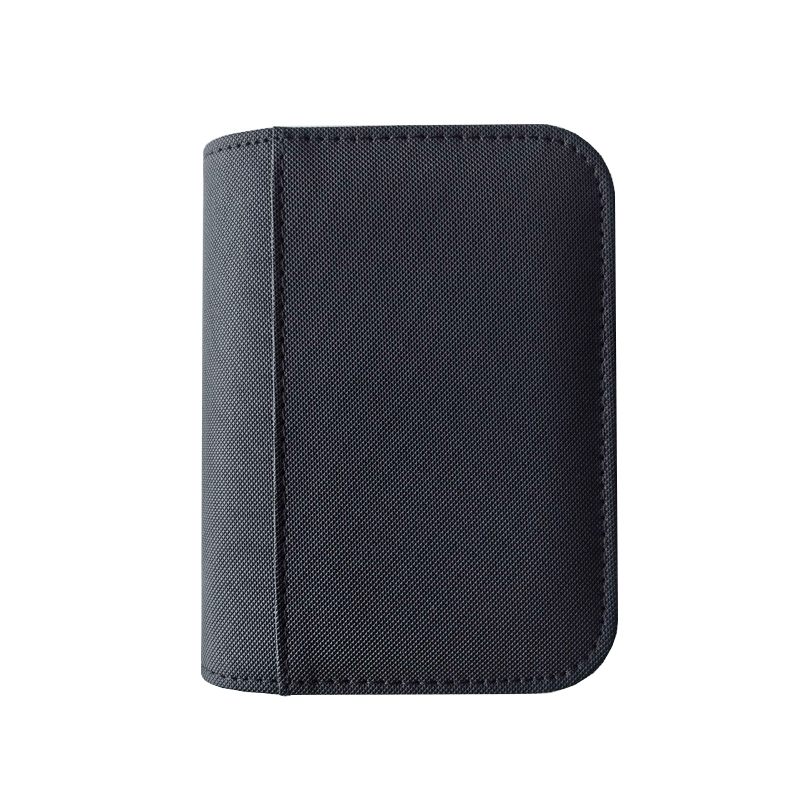
Zippered single-sleeve formats hold a higher retail price than plain albums and photograph well in listings — a common anchor SKU for a first branded range.
Send artwork, target quantity and packaging requirements through our inquiry form; the first useful reply is a dieline plus a costed sample plan, not a catalogue.
About GUARD TCG
GUARD TCG is a trading card protection manufacturer founded in 2009, producing 300 million+ pieces a year for 10,000+ customers and 500+ distributors across 70+ countries. The range covers sleeves, toploaders, slab accessories, binders, storage boxes and acrylic display cases, supplied through wholesale and OEM/ODM programmes with MOQ from 100 pieces. Every batch is inspected before shipment, and the team supports importers with dieline development, private-label packaging and freight planning. Start with the product catalogue or the company profile.
FAQ
Q1: What is a realistic MOQ for a custom TCG binder with retail packaging?
Around 100–500 pieces per style for a standard construction with a custom cover, printed packaging and a barcode. A new size or a second cover material raises the entry quantity, so ask for a ladder at 100, 500 and 1,000 units.
Q2: How long does a retail binder programme take from artwork to delivery?
7–12 days for a custom sample, 20–30 days for production after approval, then 5–12 days by air or 25–35 days by sea. Add two to three weeks if packaging and barcode work sit with separate suppliers.
Q3: Can the factory print my UPC or EAN barcode on the packaging?
Yes — supply the GS1-issued number and print position, and request a scan test at grade A or B. Share the retailer's packaging guide before print, since it governs barcode height and carton labels.
Q4: Is embossing worth the extra tooling for a mid-size brand?
Below roughly 500 units, a deboss or single-colour screen print delivers better value. Emboss and metal badges suit a flagship SKU where tooling spreads across 1,000+ pieces.
Q5: How do I keep a range consistent across repeat orders?
Seal a golden sample, record material and film references in the PO, and hold the price ladder for a stated period. Inspect each repeat against the sealed unit.
Conclusion
A custom TCG binder becomes a retail product when packaging, barcode and carton spec are decided — not when the cover art is approved. Lock the dieline, approve colour on the real substrate, choose the logo method against run size, build packaging into the quotation, and book freight when you place the order. Done in that order, the programme runs on a calendar, with a SKU your buyers can re-order without a new project.