Grading ROI: Which Cards Are Worth Submitting
- Share
- publisher
- GUARD TCG Team
- Issue Time
- Oct 26,2026
Summary
A buyer's guide to grading ROI: how to calculate the net return of grading, the fee and shipping cost stack, PSA 10 vs 9 value curves, modern vs vintage returns, and which cards to submit for a real margin. Written for retailers, importers and distributors.
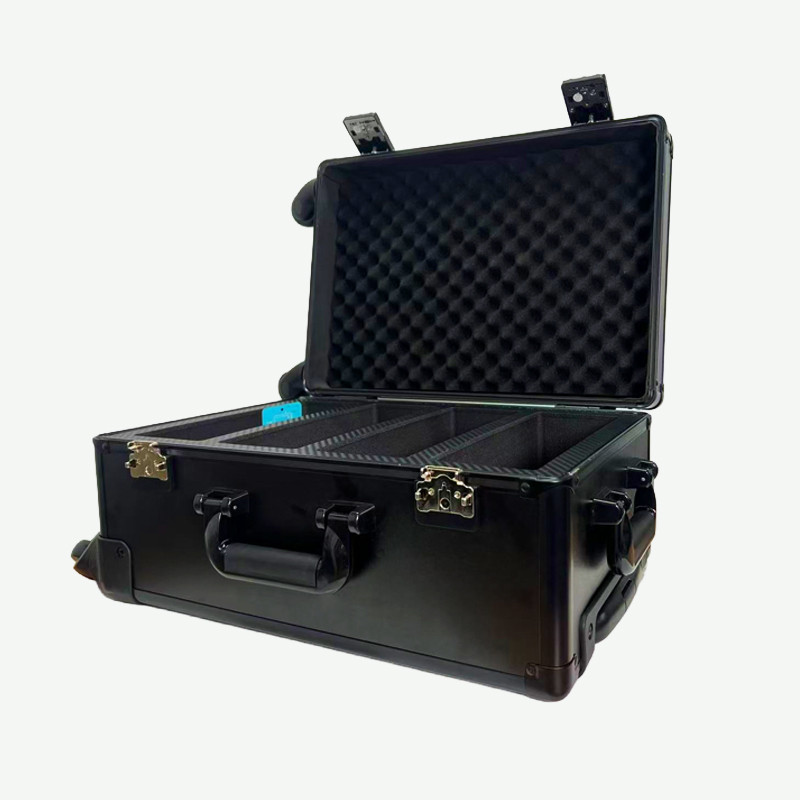
Grading ROI: Which Cards Are Worth Submitting
Grading ROI measures a card's graded market value minus its raw value and every cost you pay to get it slabbed, so a card is worth submitting only when the predicted grade clears the fee, shipping and insurance by a healthy margin. High-demand modern singles, key vintage pieces and cards sitting just below a value jump at a specific grade usually qualify, while mass-produced commons rarely do. This guide walks retailers, importers and distributors through the grading ROI math behind which cards to submit, so you can buy raw, grade and resell with a real margin instead of gambling on the slab.
What Grading ROI Actually Measures
Grading ROI is a net number, not a headline multiplier. The raw formula is graded sale price minus raw cost, grading fee, shipping and insurance, and selling fees, then divided by the all-in cost. A card that "sells for 4x graded" can still lose money if the raw price was high, the tier was expensive, and the selling platform took its cut. The figure quoted in a sales thread is usually gross; the number that matters is the net return after the slab is in hand and actually sold.
The graders themselves make the math explicit by pricing on declared value. PSA, BGS and CGC all charge more as the estimated graded value rises, so the fee is a moving target. A card worth roughly $500 raw and $2,000 graded costs more to grade than a $50 card, because the value tier and insurance scale with it. For B2B buyers who grade in volume, the difference between bulk and express pricing is often the entire margin, which is why understanding which cards to submit starts with understanding the fee structure.
Cost Stack: Tiers, Shipping, Insurance, and Supplies
The all-in cost of grading has at least five layers. First is the grading fee itself, set by the service tier and the declared value of the card. Second is outbound shipping with insurance, because you are mailing an asset insured for its projected value. Third is return shipping. Fourth is supplies: penny sleeves, semi-rigid card holders, team bags and any packing material the grader requires. Fifth is the soft cost of membership, since PSA's cheapest bulk tiers require a Collectors Club subscription.
Tiers and rates move as the graders revise pricing, but the shape of the cost stack has been stable for years. The table below shows approximate late-2025 published rates, rounded and subject to change.
| Service Tier (approx.) | PSA | BGS | CGC |
|---|---|---|---|
| Bulk / Value | ~$24.99 (club, bulk) | ~$15-20 | ~$14-15 |
| Standard / Value | ~$32.99 | ~$35-50 | ~$25-35 |
| Express | ~$150-199 | ~$75-100 | ~$50-75 |
| Walk-Through / Premium | $599+ | ~$150-250 | $150+ |
| Standard turnaround | ~65 business days | 20-30 days | 20-40 days |
| Subgrades on label | No | Yes | No (discontinued 2022) |
Two costs catch first-time submitters off guard. Declared-value upcharges kick in when a card grades higher than its submitted tier allows, and the grader invoices the difference before returning the card. The cheapest tiers also come with long turnarounds, sometimes several months, which means capital is tied up while the market can move. For a retailer grading for resale, speed has a price, and that price belongs in the ROI model from the start.
Grade Breaks and Value Curves for Popular Cards
The entire economics of modern grading lives in the gap between a 9 and a 10. For modern flagship rookies, a PSA 10 typically sells for 2x to 5x a PSA 9 and 5x to 10x the raw card (industry estimate), while a PSA 9 often trades near or below the all-in cost of grading. A 2018 Luka Doncic Prizm base rookie has sold around $800 as a PSA 9 and roughly $4,000 as a PSA 10, and a Victor Wembanyama Prizm base rookie around $125-140 as a PSA 9 versus $450-550 as a PSA 10. The same cliff exists at the bottom: a PSA 8 or lower on a modern card is usually a loss after fees.
That asymmetry is why grading ROI is really a question about hit rate. Only a small share of modern cards, roughly 2-5 percent by industry estimate, actually returns a 10, and that share falls further for condition-sensitive products with fragile foil or dark borders. A buyer who grades everything hoping for 10s is subsidizing the fee on the cards that come back 9. A buyer who pre-screens and grades only strong 10 candidates is buying the right side of the curve.
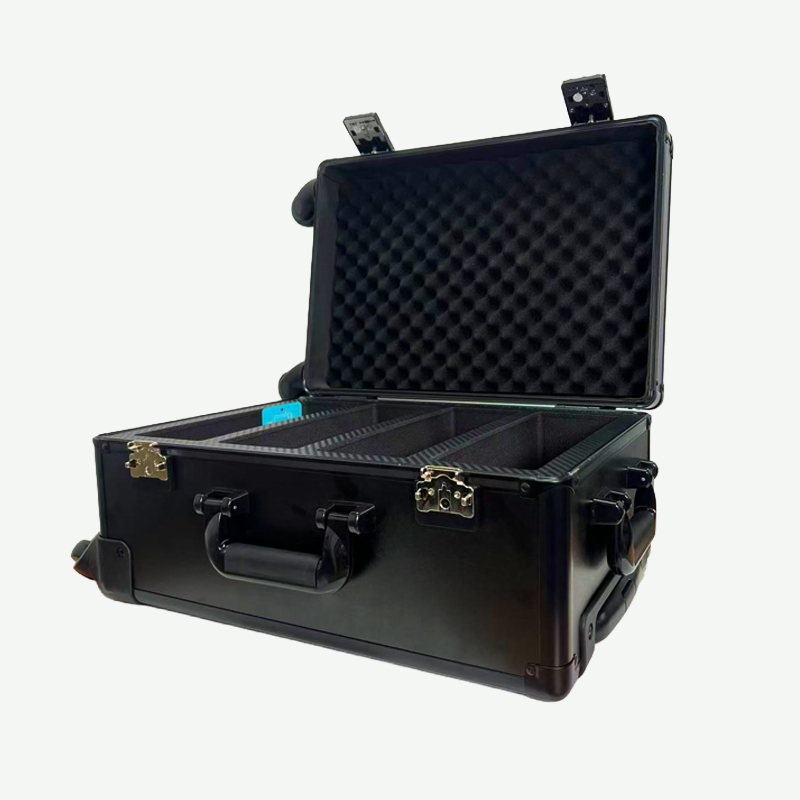
A four-row graded card storage box holds BGS, FGS and SGC slabs upright, protecting the condition that earned each grade so the graded value that drives grading ROI stays intact through handling, retail display and shipping.
Modern Singles vs. Vintage: Where ROI Usually Hides Compared
Where the ROI hides is different for modern singles than for vintage, and the two playbooks are nearly opposites. Modern grading is a condition arbitrage: you buy raw cards with a path to a 10 and sell the premium fast before the population grows. Vintage grading is a scarcity and authentication play: the card's value comes from surviving decades in good condition, and the slab authenticates and protects what is already scarce.
| Dimension | Modern Singles | Vintage (pre-1980) |
|---|---|---|
| Grade gap (10 vs 9) | 2x-5x | 10x-50x+ |
| Source of scarcity | Print run + condition (low pop) | Age + survival + condition |
| Population risk | High - pops grow as more are graded | Low - fixed or declining supply |
| Best play | Pre-screen to gem, flip fast | Buy raw, grade to authenticate and value |
| Biggest downside | PSA 9 premium compression | Overpaying for restored or trimmed cards |
| Liquidity | High | Lower, more selective demand |
| Volatility | Higher (hype-driven) | Lower, steadier |
For a modern card, the biggest risk is population growth, because a 10 that is rare today can become common as more copies are pulled and graded, compressing the premium. For a vintage card, the biggest risks are paying too much for a restored or trimmed copy and the slower, more selective demand. Neither is inherently better; they are different margin profiles that belong in different parts of a portfolio.
Expected Value Thinking for an Uncertain Grade
A professional submission is a bet, and expected value is how you size it. For each candidate, estimate the probability of each possible grade, multiply each by its net sale price after fees, and sum them. Then subtract the all-in cost. The card is worth submitting when the expected value clears the raw sale price plus the cost, and worth skipping when it does not.
Assigning probabilities honestly is the hard part. A card with clean corners, 55/45 or better front centering, no print lines and a strong population report might be a 60-70 percent candidate for a 10, while a card with a soft corner or a visible print line might be a 10 percent candidate. The same raw card can be a great submission or a terrible one depending on that estimate, which is why grading ROI rewards inspection skill far more than it rewards submission volume.
Which Cards to Submit: A Pre-Screening Framework
A practical decision matrix works for most B2B buyers. Cards worth roughly $0-50 raw are almost never worth grading, because the fee can exceed the entire card. Cards from $50-200 are worth grading only when the 10 premium is at least 3x and the card is flawless. Cards from $200-500 are worth grading when they are strong 10 candidates or when the buyer needs authentication and liquidity. Cards over $500 are worth grading for protection and liquidity almost regardless of the 10 premium, because the slab removes friction on a sale.
Before sending anything, run the checklist: front centering 55/45 or better, back centering within tolerance, four sharp corners with no whitening, clean edges with no chipping, and a surface with no print lines, scratches or roller marks. Check the population report to see whether a 10 is genuinely scarce, and be ruthless about cards with any visible flaw, because on modern cards a single flaw usually means a 9, and a 9 is where the margin disappears.

A 35pt ultra-clear slab keeps a freshly graded sports card protected and presentable, the standard holder for the PSA, BGS and CGC slabs whose premiums define grading ROI.
Best Practices and Common Mistakes When Choosing Cards
The best practices are repeatable. Inspect under a 10x loupe and a centering tool, not the naked eye. Compute the net ROI before submitting, not after. Batch submissions to hit bulk pricing instead of grading cards one at a time. And separate the decision to grade from the decision to hold: a card can be worth holding raw while not being worth grading.
The common mistakes are just as predictable. Grading borderline cards that come back 9 is the most expensive one, because the fee and shipping consume the entire premium. Ignoring declared-value upcharges turns a profitable 10 into a break-even. Grading modern base rookies with huge populations chases a premium that is already compressing. And trusting a raw "4x" headline without netting out fees is how a technically winning card becomes a losing submission.
Record-Keeping and Post-Grade Selling Best Practices
ROI is only real if you measure it after the sale, so keep a ledger for every submission: the lot number, each card's raw cost, the tier and fee paid, shipping and insurance, the grade returned, and the final net sale price after platform fees. Over a season, that ledger tells you your true hit rate and which cards to submit next, which is far more useful than remembering your single best sale.
Storage is part of the post-grade plan too. Raw cards headed to grading should be sleeved and placed in a semi-rigid holder to protect the corners, edges and surface that determine the grade. Graded cards should be stored upright in a slab storage box with a soft interior so the slab itself does not scuff. Major selling platforms take roughly 13-15 percent in fees (industry estimate), so the exit cost belongs in the model before the first card ships.

A toploader storage box keeps 3x4-inch rigid holders organized, the right home for raw cards that are being pre-screened and prepped before they go out for grading.
Wholesale and Retail Notes for Buyers (MOQ, Packaging, Lead Time)
For retailers and distributors, grading ROI has a second business line: the supplies the workflow consumes. Stores that buy raw and grade in volume also need sleeves, semi-rigid holders, slab storage boxes and toploaders in quantity, and those consumables carry their own wholesale economics. Custom storage and slab cases generally start at an MOQ of 100 pieces per design, with packaging shipped with protective film and corner support to keep cases scratch-free.
Lead time splits into sampling and production, then transit. Express air freight via DHL, FedEx or UPS typically runs 5 to 12 days, while sea freight runs 25 to 35 days, so a launch tied to a card show or a new release should build both windows in. For buyers building a house brand of grading supplies or storage, sizes, colors, printing and packaging are all configurable through our OEM/ODM programme. Browse the graded card slab accessories and card storage boxes and carrying cases categories to match the product to the workflow.
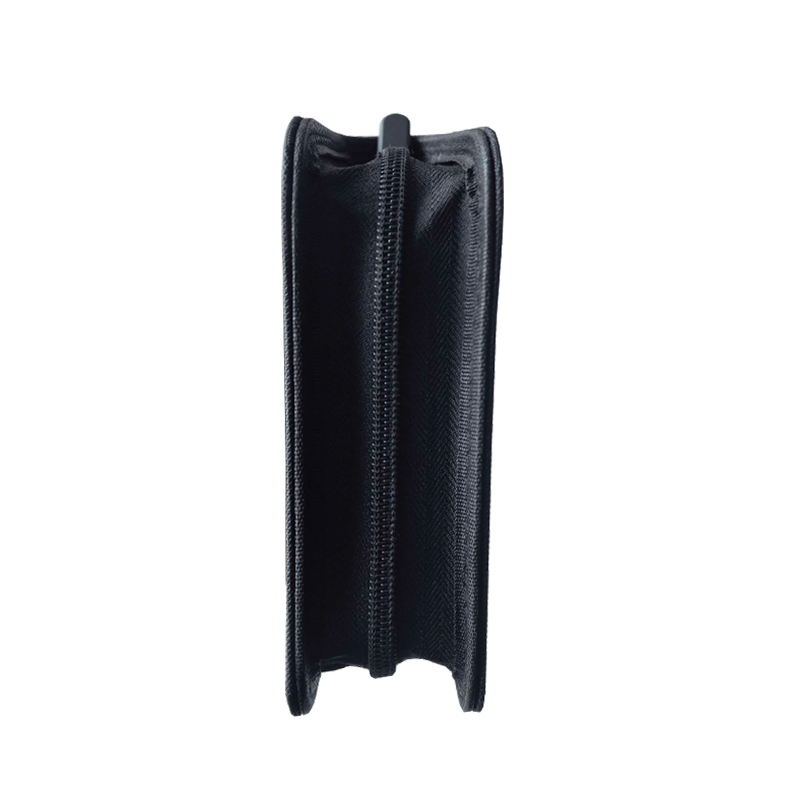
A 40-pocket zipper binder organizes singles for retail display and inventory, a companion SKU that turns a grading-focused store into a full card-buying destination.
About GUARD TCG
GUARD TCG is a trading card and collectible accessories manufacturer established in 2009, producing more than 300 million units a year for over 10,000 customers in 70-plus countries, including more than 500 distributors. Our range covers graded card storage boxes and slab cases, card sleeves, toploaders, rigid protectors, acrylic display cases, binders and storage solutions, with OEM and ODM programs for custom dimensions, colors, print and branding. Every order runs through full batch inspection before dispatch, we support express air freight (DHL, FedEx, UPS, typically 5 to 12 days) and sea freight (25 to 35 days), and custom programs generally start at an MOQ of 100 pieces. Learn more on our about page.
FAQ
Q1: What does grading ROI actually measure?
It measures the net return of a grading submission: the graded sale price minus the raw cost, grading fee, shipping and insurance, and selling fees. A card is worth grading only when that net figure clears the raw price plus all-in costs by a healthy margin.
Q2: Which cards are worth submitting for grading?
High-demand modern singles with a clear path to a 10, key vintage pieces where the slab adds authentication and value, and cards sitting just below a value jump at a specific grade. Mass-produced commons and cards under roughly $50 raw are usually not worth grading.
Q3: Is a PSA 9 worth grading or buying?
For modern cards, a PSA 9 is risky for flippers because it often trades near or below the all-in cost of grading after fees. It can still be a good buy for collectors who want 80-90 percent of the visual appeal at a fraction of a 10's price.
Q4: How much does it cost to grade a card?
Costs scale with the service tier and declared value. Approximate late-2025 rates ranged from about $15-25 per card for bulk tiers up to $599 or more for walk-through service, plus shipping, insurance and supplies, and rates change as graders revise pricing.
Q5: Should I grade modern or vintage cards for better ROI?
They are different plays. Modern grading is a fast condition arbitrage on the 9-to-10 gap, while vintage grading is a slower scarcity and authentication play with a much larger grade premium. Many buyers hold a mix of both rather than choosing one.
Conclusion
Grading ROI is a discipline, not a lottery. It starts with the net formula, runs through the fee and shipping stack, and depends on the value cliff between a 9 and a 10. The cards worth submitting are the ones where the predicted grade clears all-in cost by a real margin, and finding them is a matter of pre-screening, population research and honest probability, not volume. For retailers, importers and distributors, the same discipline extends to the storage and supplies that protect the grade and complete the sale. Review our product range for graded card storage and slab cases, or send your formats through the inquiry form for a matched quote on the supplies your grading workflow needs.