How Many Cards Fit in a 9-Pocket Binder? A Real-World Capacity Guide
- Share
- publisher
- GUARD TCG Team
- Issue Time
- Aug 11,2026
Summary
A 9-pocket binder holds 9 cards per side and 18 per double-sided sheet: 360 cards in a standard 20-sheet binder, up to 1,080 in a 60-sheet version. Learn the capacity formula, how sleeving changes real-world capacity, and how 9-pocket compares with 4, 12, and 16-pocket binders.
How Many Cards Fit in a 9-Pocket Binder? A Real-World Capacity Guide
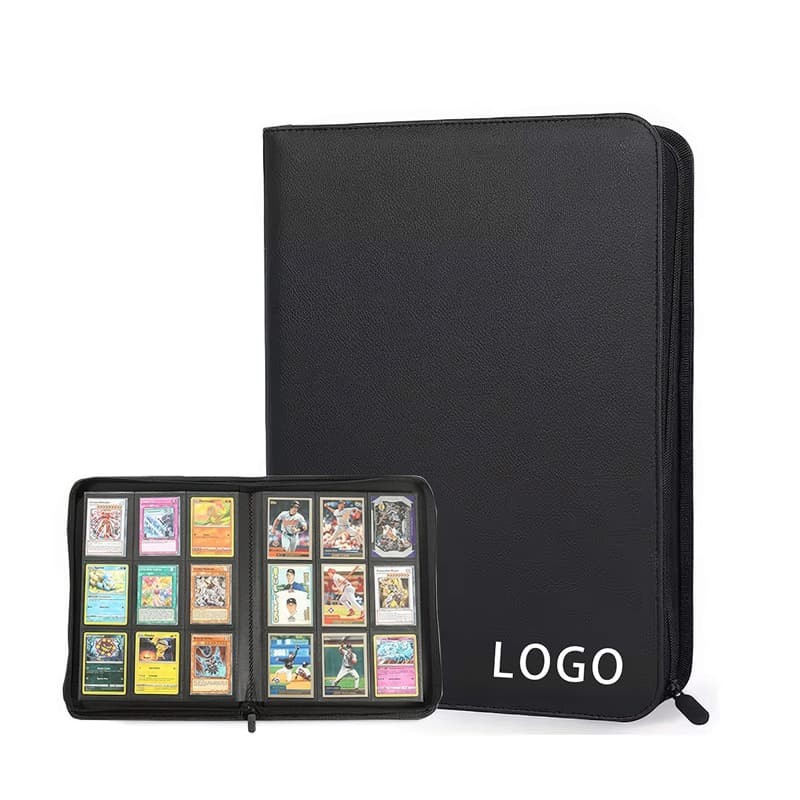
A 9-pocket binder holds 9 cards per page side, which means 18 cards per double-sided sheet. A standard 20-sheet binder stores 360 cards, a 40-sheet binder stores 720, and a 60-sheet binder stores 1,080 when both sides are filled. The capacity formula is simple: pockets per side × 2 sides × number of sheets. Sleeved cards fit comfortably, but double-sleeved cards take more room and toploaders do not fit standard 9-pocket pages at all. That is the short answer — here is how to calculate exactly how many cards your binder holds.
What Is a 9-Pocket Binder?
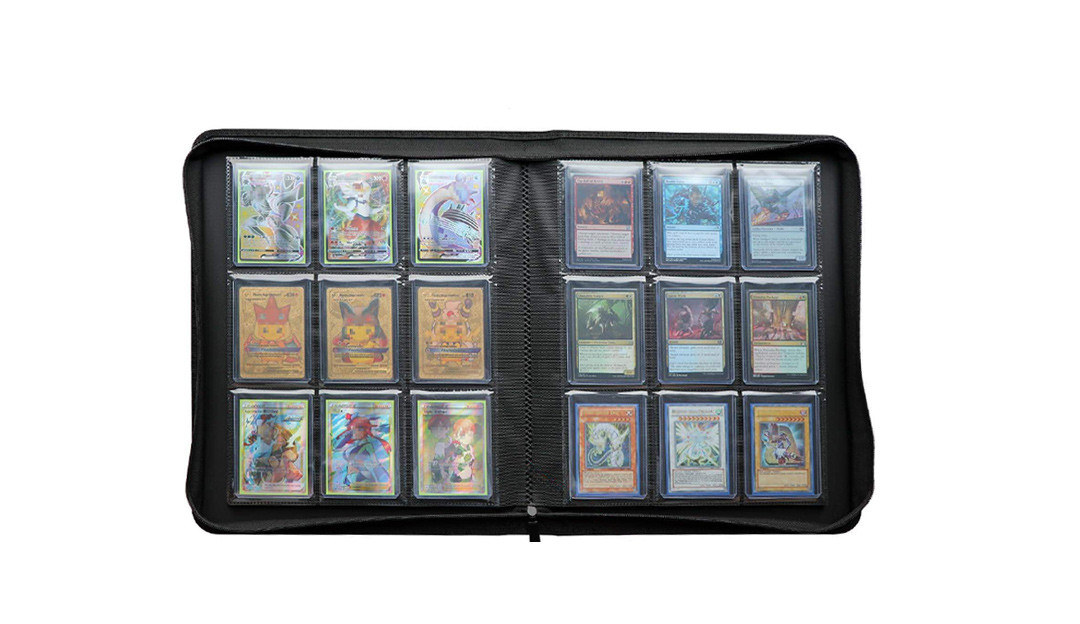
A 9-pocket binder is a three-ring or strap-style album whose pages hold nine cards per side — three columns by three rows. Because each sheet is double-sided, every page stores 18 cards. This is the most common configuration in the trading card hobby because it fits standard-size cards (63.5 × 88 mm, the size used by Pokémon, Yu-Gi-Oh!, Magic: The Gathering, and most sports cards) with room to spare, and it works with penny sleeves up to about 50 microns without bulging.
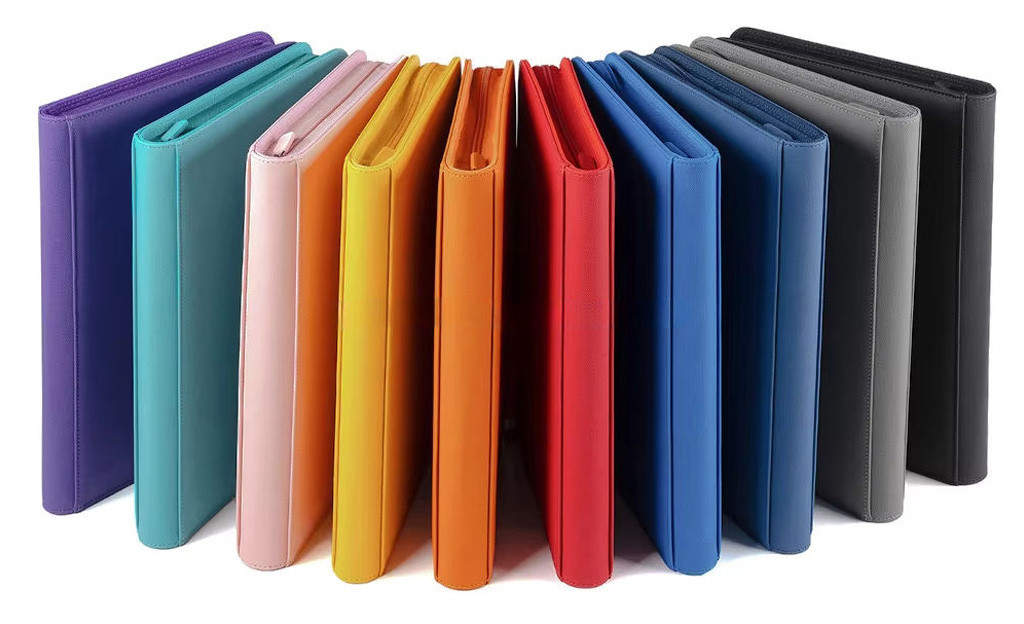
Whether the binder is described as "20 pages," "40 pockets," or "360 cards," manufacturers are usually describing the same product — the terminology varies, so the capacity math below is the reliable way to compare any two binders.
The Simple Math: How Binder Capacity Is Calculated
Capacity is always pockets per side × 2 sides × number of sheets. For a 9-pocket binder that is 18 cards per sheet. Multiply by the sheet count and you get the theoretical maximum:
- 20 sheets → 9 × 2 × 20 = 360 cards (the standard "full-size" binder)
- 30 sheets → 9 × 2 × 30 = 540 cards
- 40 sheets → 9 × 2 × 40 = 720 cards
- 50 sheets → 9 × 2 × 50 = 900 cards
- 60 sheets → 9 × 2 × 60 = 1,080 cards
These are theoretical numbers — they assume one unsleeved card per pocket and a page that closes flat. In real use you will store slightly less, and the reasons are covered below.
9-Pocket vs. 4, 12, and 16-Pocket Binders: Capacity Compared
| Feature | 4-Pocket | 9-Pocket | 12-Pocket | 16-Pocket |
|---|---|---|---|---|
| Cards per side | 4 | 9 | 12 | 16 |
| Cards per double-sided sheet | 8 | 18 | 24 | 32 |
| 20-sheet capacity | 160 | 360 | 480 | 640 |
| Toploader friendly | Wider pockets, some fit | No (pockets too shallow) | No | No |
| Best for | Graded slabs, large cards | Main collection, all-round use | Bulk storage with page flipping | Maximum density, display sets |
| Page weight when full | Light | Balanced | Heavy | Heaviest, ring strain risk |
The 9-pocket layout is the sweet spot for most collectors: enough density to store a full set in one book, while each card still gets its own pocket so cards do not rub together. According to manufacturer specs from leading binder brands such as Vault X and Ultra PRO, the 20-sheet / 360-card 9-pocket binder is the most widely sold configuration in the hobby.
How Sleeving Changes Real-World Capacity
Sleeves add thickness, and thickness reduces how comfortably cards sit in standard pockets. As a rule of thumb, based on our factory thickness measurements: a single 40–50 micron penny sleeve adds only about 0.05 mm per card, so sleeved cards still fit standard 9-pocket pages with no noticeable bulge. A double-sleeved card (perfect-fit inner sleeve plus outer sleeve) adds roughly 0.10–0.15 mm and makes pages noticeably tighter — the binder still closes, but pages can start to bow if every pocket is double-sleeved.
Toploaders are a different story: a standard 35PT toploader is about 0.9 mm thick — roughly 15–18 times a sleeved card — and simply does not fit standard 9-pocket pages. If you want to store cards in toploaders, you need a dedicated toploader binder with 3 × 4 inch pockets, which typically holds far fewer cards per book. Our 35PT toploaders are sized exactly for that format.
How Many Cards Should You Actually Load?
Plan for about 90% of the theoretical maximum. Real-world advice from collectors and from our factory QC team:
- Leave a few empty pockets per book — fully packed binders get heavy and the rings can deform over time.
- Count sleeves as capacity, not cards — if you double-sleeve, treat capacity as 15–16 cards per sheet instead of 18.
- Keep sets in order, fill pages front to back — easier to check a master set against a checklist, and pages stay flatter.
- Use side-loading pages for high-value cards — cards drop in from the side and cannot slide out of the top.
- For a 360-card collection (e.g., one full Pokémon set), a single 20-sheet 9-pocket binder is exactly the right size.
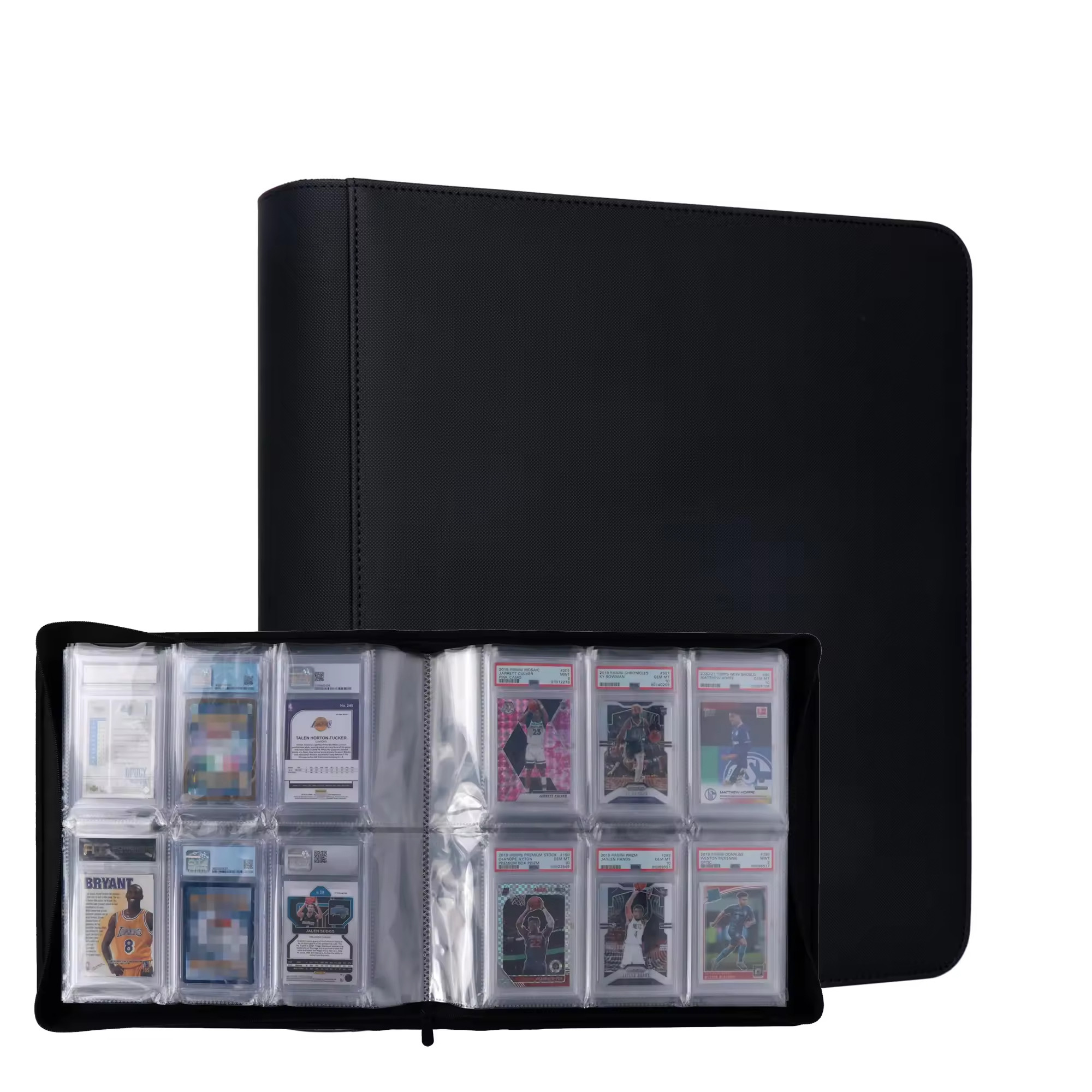
Once cards are graded and sealed in slabs, they outgrow pocket pages entirely. Slabs are best stored in dedicated slab storage boxes rather than binders — keep that in mind before your collection grows past raw-card territory.
Who Should Use a 9-Pocket Binder?
A 9-pocket binder is the right choice if you collect raw (ungraded) standard-size cards and want them organized, visible, and protected — whether you are completing a Pokémon master set, sorting bulk by rarity, or building a Commander deck collection. It is also the best option for players who sleeve their decks and want a play-friendly binder. If your collection is mostly graded slabs, mostly oversized cards, or mostly cards already in toploaders, look at 4-pocket binders or storage boxes instead.
How to Choose the Right 9-Pocket Binder
When comparing binders, check four things. First, the sheet count — 20 sheets (360 cards) is standard, but 40- and 60-sheet versions exist. Second, page material: non-PVC, archival-safe polypropylene pages are a must for long-term storage. Third, the closure: zipper or strap closures protect pages from dust and keep cards from sliding out. Fourth, ring quality — D-rings keep pages flat and prevent the "page flip" problem that O-rings cause when the binder is full.
About GUARD TCG
GUARD TCG is a professional trading card accessories manufacturer founded in 2009, producing 300 million+ pieces per year for collectors and retailers in 70+ countries. Our in-house factory serves 10,000+ customers and 500+ distributors with OEM/ODM services, standard-product MOQ from 100 pieces, QC batch inspection on every order, and shipping via DHL, FedEx, or UPS in 5–12 days or sea freight in 25–35 days. We manufacture the full protection chain that works with your binder system: non-PVC penny sleeves for the first layer, 35PT toploaders for rigid storage, and grading card slabs for the graded collection. Learn more on our About Us page, browse the full range on Products, or contact our team for bulk pricing and custom branding.
FAQ
Can a 9-pocket binder hold toploaders?
No. Standard 9-pocket pages are designed for sleeved cards only — a 35PT toploader is roughly 0.9 mm thick and will not fit. Use a dedicated toploader binder with 3 × 4 inch pockets if you want to store cards inside toploaders.
Is 360 cards (20 sheets) enough for most collections?
For a single full Pokémon set or a moderate collection, yes — 360 is the standard size. For larger collections, 40-sheet (720) and 60-sheet (1,080) 9-pocket binders are available.
Does double sleeving reduce how many cards fit?
Yes, slightly. Double-sleeved cards add 0.10–0.15 mm of thickness per card, so pages get tighter and may bow when completely full. Plan on roughly 15–16 double-sleeved cards per sheet instead of 18.
Do I need to sleeve cards before putting them in a binder?
It is strongly recommended. A penny sleeve protects the card surface from the pocket's edges and from dust, and sleeved cards still fit 9-pocket pages comfortably. For long-term storage, use archival-safe, non-PVC sleeves.
Why do some binders advertise "360 pockets" instead of "360 cards"?
Manufacturers count differently: "360 pockets" means 9 pockets × 2 sides × 20 sheets of pocket space, which is the same as 360 card slots. The actual card capacity is identical — 360 cards.
Conclusion
A 9-pocket binder holds 9 cards per side and 18 per double-sided sheet, so a standard 20-sheet binder stores 360 cards — with 30, 40, 50, and 60-sheet versions storing 540, 720, 900, and 1,080 respectively. Use the formula pockets × 2 × sheets to compare any binder, plan for about 90% of the theoretical maximum in real use, and remember that double-sleeved cards take a little more room while toploaders need a dedicated binder. For most raw-card collections, a 9-pocket binder remains the best balance of capacity, protection, and presentation — and when combined with quality penny sleeves, it is everything your cards need to stay flat, clean, and organized for years.
Wholesale and OEM Supply
Need this range in bulk? GUARD TCG manufactures card binders and albums and offers OEM/ODM custom card accessories for brands, card shops and distributors. Browse the card binders and albums range, or request a wholesale quote.