How Retailers Can Win TCG Customers: Accessory Bundling Strategies
- Share
- publisher
- GUARD TCG Team
- Issue Time
- Sep 24,2026
Summary
TCG accessory bundling strategies for card shops: how retailers design a New Player Starter Bundle, Tournament-Ready Kit and Grading Round-Trip Pack, price bundles, time them to set releases and tournament season, and use membership to lift average order value and repeat purchases.
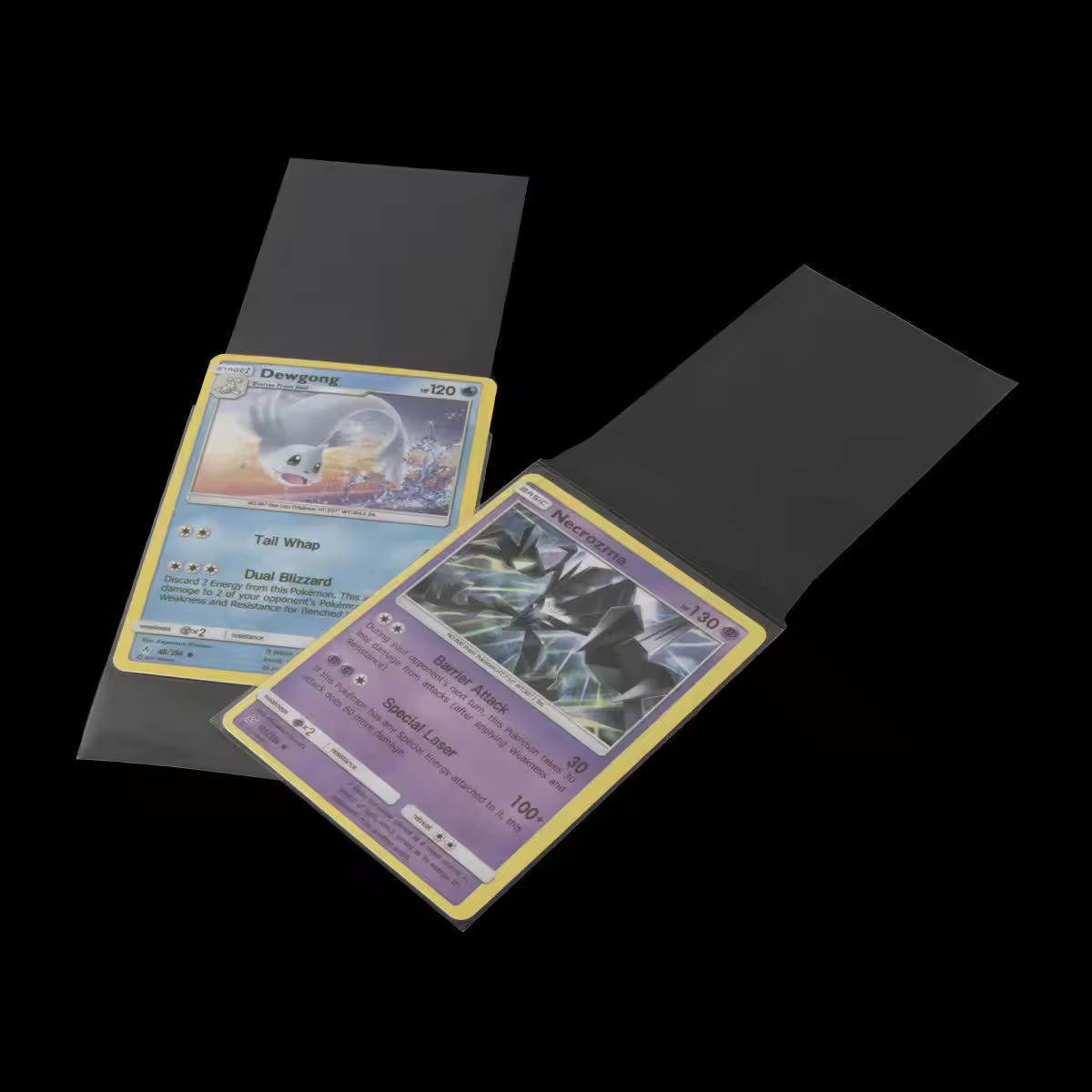
How Retailers Can Win TCG Customers: Accessory Bundling Strategies
TCG accessory bundling works by packaging the items a player needs for a specific moment into one priced kit. The three bundles that consistently move the needle for card shops are the New Player Starter Bundle (booster packs + sleeves + deck box), the Tournament-Ready Kit (sleeves + playmat + dice/counters + storage box), and the Grading Round-Trip Pack (penny sleeves + toploaders + card savers + shipping supplies). Retailers who merchandise these kits in fixed, repeatable formats typically report a higher average order value than shops selling the same accessories loose, with many reporting roughly 30% uplift on bundled baskets (retailer-reported, industry estimate). This guide breaks down how to design, price, and promote those bundles, drawing on GUARD TCG's experience supplying accessories wholesale to card shops in 70+ countries.
What Is TCG Accessory Bundling?
TCG accessory bundling is the practice of selling two or more card-protection or play accessories together as a single unit, usually at a combined price that is slightly below the sum of the individual items. It is not a discount tactic so much as a completion tactic: instead of hoping a customer assembles the full kit themselves, the retailer pre-assembles it around a clear use case.
For a card shop, a bundle is also a merchandising object. It has a name, a label, a fixed shelf position, and a known price — which makes it easy for staff to recommend, easy to restock, and easy to describe in an Instagram post. Loose accessories, by contrast, rely on the customer knowing what they need before they walk in.
Why Bundling Works: Benefits for Card Shops
Bundling is one of the few retail tactics that improves several metrics at once, which is why game stores that adopt it tend to keep it.
- Higher average order value: a bundled basket crosses the price threshold of a single item without the customer feeling upsold, because every item in the kit is genuinely needed.
- Lower decision friction: new players do not know the difference between an inner sleeve and a penny sleeve; a starter bundle decides for them.
- Faster stock turn: bundling moves slow-selling SKUs by pairing them with high-demand ones, clearing shelf space without discounting.
- Stronger margin mix: the bundle's margin is the weighted margin of its parts, so a healthy accessory mix can lift the whole basket above the margin on packs alone.
- Repeat purchase anchor: a named bundle becomes a reorder habit — players come back for "the tournament kit," not for seven separate items.
- Marketing simplification: one photo, one price, one caption. Bundles are far easier to promote on social platforms than a wall of loose products.

Sleeves are the anchor item of almost every bundle: cheap enough to include without killing margin, essential enough that no player declines them.
Three Bundle Blueprints That Sell
Start with three bundles rather than a dozen. Each one maps to a buying moment, which makes it easy to explain at the counter and easy to promote on a calendar.
1. New Player Starter Bundle
Built for the customer who just bought their first packs or a precon deck. Contents: two to four booster packs, one pack of standard sleeves (typically 100 count), one deck box, and one set of dice or counters. This is the highest-volume bundle in most shops because it converts first-time buyers into equipped players, and it attaches directly to a purchase they were already making. Price it just above the precon or pack purchase so it reads as an obvious, cheap upgrade.
2. Tournament-Ready Kit
Built for Friday Night Magic, locals, and store championships. Contents: 100 double-sleeve-ready sleeves, a playmat, a deck box sized for 100+ double-sleeved cards, dice, and a small storage or carrying case. Timed to the tournament season, this kit sells to the player who already has packs and now needs protection and presentation. It is also the bundle most likely to be repurchased as sleeves wear out.
3. Grading Round-Trip Pack
Built for collectors sending cards to a grading company. Contents: penny sleeves, rigid toploaders or card savers, and shipping supplies — the exact combination PSA's submission guidance and other graders' instructions call for. This bundle serves a high-intent customer with a clear deadline, which makes it one of the most defensible full-price bundles a shop can carry, and it pairs naturally with a "we'll walk you through submission" counter conversation.
Bundle Structures Compared
The table below compares the three blueprints across the variables that decide whether a bundle earns shelf space: who it is for, what it contains, how it is priced, and how often it repeats.
| Feature | New Player Starter Bundle | Tournament-Ready Kit | Grading Round-Trip Pack |
|---|---|---|---|
| Primary buyer | First-time or returning player | Regular competitive player | Collector sending cards to grade |
| Core contents | Packs + sleeves + deck box + dice | Sleeves + playmat + 100+ box + counters | Penny sleeves + toploaders/card savers + mailers |
| Anchor SKU | Booster packs | Sleeves and playmat | Rigid toploaders |
| Typical price position | Entry — impulse-friendly | Mid — planned purchase | Mid to high — deadline-driven |
| Bundle saving vs. loose | Small (5–10%) | Moderate (10–15%) | Small; value framed as convenience |
| Repeat frequency | One-time onboarding | Seasonal / as sleeves wear | Per submission batch |
| Best shelf location | Counter and pack wall | Play area and event sign-up desk | Near singles case and counter |
| Promotion window | Always on | Pre-release through championship season | Always on, peaks after set releases |

A binder is an easy fourth component for a starter bundle: it gives the new player somewhere to put their collection, which extends the bundle's value beyond the first game night.
Pricing Psychology: Anchors, Tiers, and Thresholds
How a bundle is priced matters as much as what is inside it. Three mechanics do most of the work in a card shop.
- Anchor high, tier down: present a good-better-best ladder — a basic kit, a standard kit, and a premium kit. Many shoppers choose the middle option once a premium tier exists, and the premium tier makes the standard one look reasonable.
- Price for the threshold, not the item: if the shop's loyalty program or shipping-free level sits at a certain spend, size the bundle so it lands just above it. A bundle that nudges a $28 basket to $35 does more for the store than a bigger discount on a $20 item.
- Keep the saving believable: steep bundle discounts train customers to wait for sales and can undercut the accessory margin the shop depends on. A modest, consistent saving paired with convenience and curation is more durable than a deep one-off discount.
Where accessories are cheap to source and light to ship, the bundle can carry more value without a heavy discount. Because a manufacturer ships accessories by both air (DHL, FedEx, UPS, typically 5–12 days) and sea (25–35 days), a retailer can plan bundle pricing around landed cost and avoid over-discounting to clear stock.

Storage is the component customers under-buy: bundling a deck box or slab case into the kit fixes a need the player has not yet noticed.
Seasonal Bundling: Set Releases and Tournament Seasons
Bundles sell best when they are tied to a moment on the calendar, because the customer already has a reason to spend. Three windows matter most for TCG retailers.
- Set pre-release and launch week: build a "new set survival kit" — packs, sleeves in a matching colour, a fresh binder for the new set, and a deck box for the new format. Launch traffic is the highest of the quarter; the bundle captures it.
- Tournament season: as organized play calendars ramp up, shift the shelf toward tournament kits — playmats, 100+ deck boxes, and durable sleeves that survive weekly play.
- Gift season and holidays: repackage the starter bundle with gift-friendly packaging, since a bundle is a far easier gift decision than a wall of loose accessories.
Work the calendar in reverse: for each major release, decide the bundle, order the accessories early, and get the kit on the shelf before the traffic arrives. Restocking late wastes the window.
Merchandising the Bundle In-Store
A bundle that is not visible does not sell. Three placement rules matter.
- Put the bundle where the trigger purchase happens: the starter bundle belongs beside packs and precons, and the grading pack belongs beside the singles case and the counter.
- Show the components, not just the box: an open display or a small stack of the contents makes the value legible in two seconds, which is roughly how long a customer gives a shelf.
- Repeat the name everywhere: shelf label, receipt, Instagram caption, and staff language should use one bundle name. Consistency is what turns a bundle into a habit.

Low-cost, stackable components let a shop build an entry bundle at a price point that still fits an impulse buy at the counter.
Membership and Repeat Purchase Mechanics
The first bundle sale is the easy part; the profit is in the repeat. Accessories wear out, formats rotate, and collections grow, so a well-built bundle program has natural repeat triggers.
- Bundle punch cards: buy five qualifying bundles or accessory purchases, get a sixth item free. Simple, visible, and effective for sleeves and toploaders that players repurchase.
- Subscriptions and season kits: a monthly or quarterly accessory kit works for regulars who would rather not think about restocking.
- Event-linked rewards: tie a small accessory reward to event attendance, so the loyalty mechanism reinforces both play and spending.
- Upgrade paths: let the starter bundle trade toward the tournament kit, so the customer's next purchase is pre-planned.
A membership mechanism works best when the reward is an accessory the customer will use — sleeves, an inner-sleeve pack, or a box upgrade — rather than a discount that erodes margin.

The grading pack lives or dies on the right rigid holder: a correctly sized 35PT storage box and toploaders are what make the kit genuinely useful, not just thematic.
Common Bundle Mistakes to Avoid
- Building bundles around dead stock instead of a real customer need, which makes the saving look like a clearance dump.
- Discounting so deeply that the bundle margin falls below the loose-item margin it replaced.
- Using a different name, price, or contents each week, which prevents the bundle from becoming a habit.
- Hiding the bundle behind the counter or under a shelf where no browsing customer sees it.
- Ignoring sleeve and holder sizing, so a "starter kit" ships with sleeves that do not fit the customer's cards or a box that will not hold the deck.
- Never refreshing the bundle with each set release, so it slowly stops matching what players actually play.
Also verify quality before a bundle goes on repeat: a bundle puts the shop's name behind every component, so a run of splitting sleeves or brittle toploaders damages the bundle's reputation far more than a single bad SKU would. A supplier that offers batch-level QC inspection and standard MOQ from 100 pieces makes it easier to test a kit, refine it, and scale it without overcommitting cash.

A premium-tier bundle can include a display or protective case, giving the good-better-best ladder a visibly higher top rung.
About GUARD TCG
GUARD TCG is the card-protection brand of a Chinese manufacturing group founded in 2009, producing over 300 million protective products a year for more than 10,000 customers and 500+ distributors across 70+ countries. The factory runs OEM and ODM programs for sleeves, toploaders, binders, deck boxes, and acrylic display cases, with standard MOQ from 100 pieces, full batch-level QC inspection, and worldwide shipping via DHL, FedEx, and UPS in 5–12 days or sea freight in 25–35 days. Product specifications such as 50-micron sleeve film, 35PT rigid toploaders, and 92–99% UV-blocking display materials come directly from our production lines. The retail guidance in this article is drawn from supplying stores and distributors who build their own bundle programs, not from theory.
FAQ
Q1 How do I calculate the profit on a bundle?
Add the landed cost of every component, then divide the bundle's selling price minus that total cost by the selling price to get the bundle margin. Compare that figure with the weighted margin of selling the same items loose. The bundle is worth keeping when it lifts units per transaction and stock turn without pushing margin below the loose-sale baseline, even if the headline saving makes it look thinner at a glance.
Q2 How much should a bundle discount be?
Small and consistent beats deep and occasional. Most shops keep the saving modest — framed as curation and convenience rather than a discount — because steep bundles train customers to wait for promotions and cut into the accessory margin that keeps the store profitable between set releases.
Q3 What is the best bundle for a brand-new game store?
Start with the New Player Starter Bundle. It attaches to the purchase customers are already making, needs only a few SKUs (packs, sleeves, a deck box, dice), and teaches the shop which components move. Add the Tournament-Ready Kit once the store runs regular events, and the Grading Round-Trip Pack if it buys and sells singles.
Q4 How many bundles should I carry at once?
Three is usually enough: one entry bundle, one competitive kit, and one specialist bundle such as grading. Too many variants split the customer's attention and make restocking confusing. Refresh the contents with each major set release rather than adding new bundle names.
Conclusion
Winning TCG customers with accessories is a packaging problem before it is a pricing problem. Build three clear kits — a New Player Starter Bundle, a Tournament-Ready Kit, and a Grading Round-Trip Pack — price them so the saving feels reasonable rather than desperate, tie them to set releases and tournament seasons, and place them where the trigger purchase happens. Then make them repeatable through punch cards, season kits, and upgrade paths so the bundle becomes a habit instead of a one-off. Browse our card protection and storage products to source the components, explore more retail guidance on our blog, or contact us for wholesale and OEM bundle programs.