How to Choose a Trading Card Accessories Manufacturer: 10 Questions to Ask
- Share
- publisher
- GUARD TCG Team
- Issue Time
- Sep 11,2026
Summary
How to choose a trading card accessories manufacturer: 10 questions to ask, covering factory vs trading company, certifications, capacity, in-house tooling, QC, tolerances, MOQ and price breaks, lead time, shipping terms and defect policy. Includes a strong-answer vs red-flag table, verification methods, a sample evaluation checklist, and red flags to avoid.
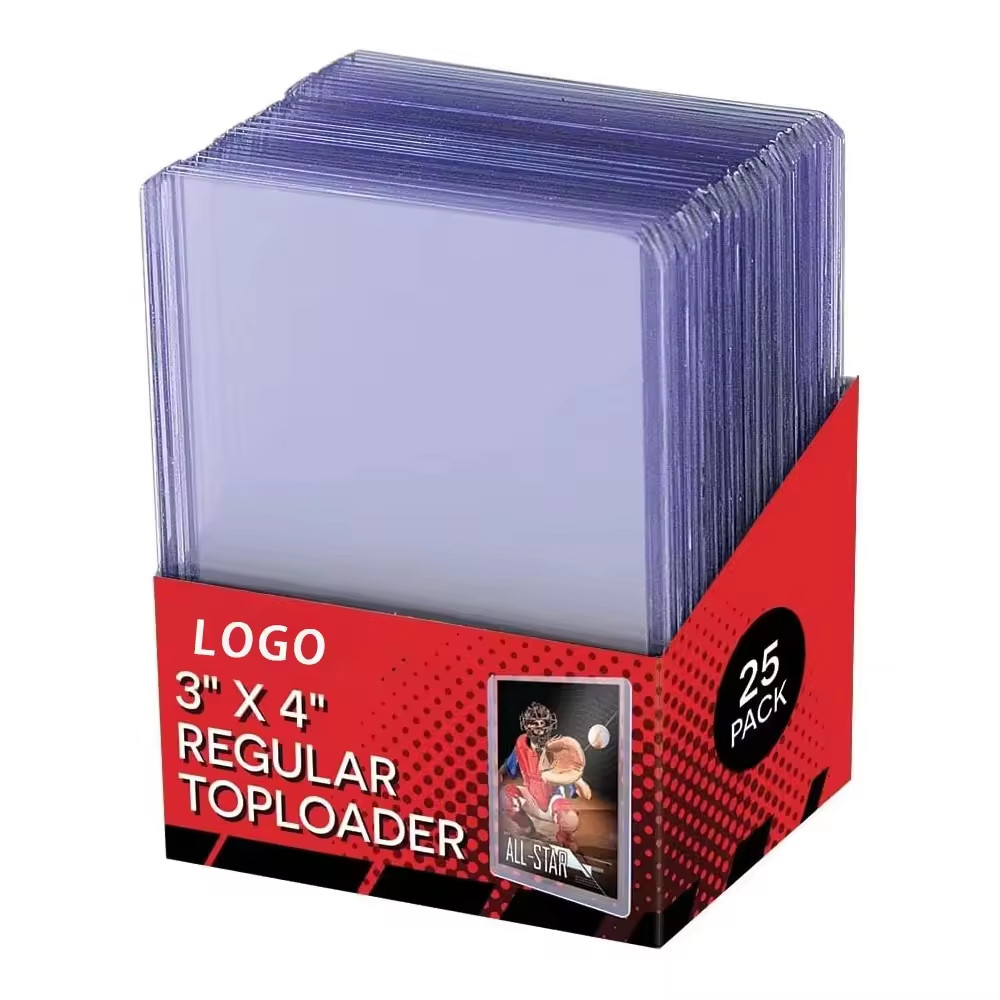
How to Choose a Trading Card Accessories Manufacturer: 10 Questions to Ask
To choose a trading card accessories manufacturer, ask 10 questions that separate real factories from middlemen: certifications and audit trails, production capacity, in-house tooling, sample accuracy, QC method, MOQ and price breaks, lead time, packing and shipping terms, defect policy, and after-sales support. Request samples, verify the production floor, and confirm batch-level traceability before you pay any deposit. A supplier that answers all 10 clearly — and lets you inspect real output — is usually a safe long-term partner. Vague answers, pressure to accept a huge first order, or a refusal to send samples are immediate red flags.
For brand owners, game stores, and importers, the supplier you pick quietly sets your ceiling: it determines your unit cost, your defect rate, how fast you can restock a hot SKU, and whether your customers come back. This guide gives you a practical vetting script, the answers that should satisfy you, and the warning signs that mean you should keep shopping. If you would rather start from a shortlist of verified suppliers, browse the card accessories product range first and work backwards to the factory behind it.
Why Your Manufacturer Choice Decides Margin, Quality, and Launch Speed
The sourcing decision is rarely about the lowest quote. It shapes three things that compound over time:
- Unit cost and margin: a factory-direct partner removes 20–40% of middleman markup, but only if the quality holds. The cheapest quote often hides thinner material or a smaller usable size.
- Consistency: card sleeves, toploaders, and acrylic cases are bought on repeat. A supplier that hits your first order but drifts on the third will cost you returns, reviews, and trust.
- Speed to market: new TCG sets and grading events create short demand windows. A factory that can quote, sample, and ship fast turns a trend into revenue instead of dead stock.
- Scalability: if your accessory line works, you need a partner who can multiply output without re-engineering your product.
The 10 Questions to Ask a Card Accessories Manufacturer
Send these as a written questionnaire and compare answers side by side. Written replies also create a paper trail you can hold the supplier to later.
- 1. Are you the factory, or a trading company? Ask for the business license, plant address, and a live or recorded walkthrough of the production floor. Trading companies are not automatically bad, but they add cost and remove your visibility into QC.
- 2. What certifications and audits do you hold? Look for ISO 9001 quality management, plus material or safety reports (for example RoHS or REACH for plastics). Ask to see the actual certificates and their validity dates, not just a logo on a website.
- 3. What is your real production capacity for my product type? Capacity should be quoted by machine or line, not as a vague "large." A partner making hundreds of millions of pieces a year will have capacity headroom for your growth.
- 4. Do you tool and produce in-house? In-house cutting, printing, ultrasonic welding, and injection molding mean faster samples, tighter tolerances, and less finger-pointing when something goes wrong.
- 5. How do you control quality — sampling or full inspection? For accessories where a single bad unit means a returned order, batch-level full inspection plus documented sampling is the standard to expect.
- 6. What are your size and material tolerances? Ask for the spec sheet: sleeve thickness in microns, toploader thickness in PT, acrylic wall thickness in mm, and the acceptable deviation range.
- 7. What is your MOQ, and how does pricing step down? Get the full price-break table, not one number. Standard branded products can start far lower than fully custom tooling.
- 8. What is your lead time for samples and for mass production? Split the answer into sample days and production days, and put both in the proforma invoice or contract.
- 9. How do you pack and ship, and on what terms? Ask about export carton strength, palletization, Incoterms, and whether they can quote both air express and sea freight.
- 10. What is your policy on defects and after-sales support? The best suppliers state a defect threshold, a remedy (replacement, credit, or refund), and a response time up front.
What a Strong Answer vs. a Red Flag Looks Like
Use this table as a scoring sheet. Grade each question green (strong), amber (needs follow-up), or red (walk away). Two or more reds across the ten is a signal to keep sourcing.
| Question | Strong Answer | Red Flag |
|---|---|---|
| Factory or trading co. | Plant address, business license, live video walkthrough of lines | Evasive about the plant or "our partner factory" with no access |
| Certifications | Current ISO 9001 plus material/safety test reports shown on request | Logo only, expired papers, or refusal to share the certificate number |
| Capacity | Capacity quoted by line/machine with monthly output figures | Vague "we can produce anything" with no numbers |
| In-house production | Cutting, printing, welding or molding done internally | Everything is "subcontracted" with no single point of accountability |
| QC method | Batch-level full inspection plus documented AQL sampling | "We check the first box" or no defect records at all |
| Tolerances | Written spec sheet with thickness and size deviation ranges | No data — "it is standard quality, you will see" |
| MOQ & price breaks | Full tiered price table and a first-order MOQ you can live with | One price only, or a huge non-negotiable first order |
| Lead time | Sample and production days stated separately and in writing | "Fast, don't worry" with nothing on paper |
| Packing & shipping | Export cartons, Incoterms, and air + sea options quoted | Cannot explain export packing or basic Incoterms |
| Defect policy | Defect threshold, remedy, and response time agreed in writing | "No returns once shipped" with no remedy path |
Manufacturer vs. Trading Company vs. Wholesale Platform
All three can fill an order, but they solve different problems. Match the channel to your volume, experience, and need for customization.
| Factor | Direct Manufacturer | Trading Company | Wholesale Platform |
|---|---|---|---|
| Unit price | Lowest — no middle markup | 20–40% above factory | Mid to high, varies by seller |
| Customization (OEM/ODM) | Full: printing, color, tooling, packaging | Limited, forwarded to a factory | Usually catalog items only |
| QC visibility | High — you can audit the line | Low — one step removed | Depends on the individual seller |
| MOQ | Higher for custom, flexible on standard | Often negotiable, aggregated | Lowest, per-item |
| Best for | Brands scaling with their own specs | Buyers who want one contact for many items | Small tests and one-off restocks |
How to Verify a Supplier Is a Real Factory
Paperwork alone is easy to copy, so verify with evidence that is hard to fake. Ask for a live video call that walks from raw material to finished cartons, request the plant address and confirm it matches the business license, and check export records or past shipment references. Third-party inspection firms such as SGS, TÜV, and Bureau Veritas can perform on-site factory audits and pre-shipment inspections for a fee. Escrow-style buyer protection offered by major B2B platforms adds another layer, though it does not replace your own sample test. A genuine factory welcomes this scrutiny; a reseller stalls.

A factory that shows real, freshly made samples — not renderings — is far more likely to deliver on the order you actually place.
Sample Evaluation: What to Inspect Before You Commit
Never approve mass production from a photo. Order physical samples and test them the way a customer would.
- Material and thickness: confirm the sleeve micron or toploader PT matches the spec sheet, measured with calipers rather than by eye.
- Print accuracy: check color against your Pantone or supplied artwork, and look for fine-detail bleed on logos and text.
- Cut precision: square corners, clean edges, no burrs or slivers that catch a card.
- Fit and insertion force: a card should slide in smoothly without being loose enough to shift or tight enough to scuff.
- Packaging: how the sample arrives is how the bulk order will arrive. Weak cartons mean damage in transit.

Graded-style holders, toploaders, and sleeves should all hold their dimensions batch after batch — that is what your repeat customers pay for.
QC, Tolerances, and Batch Traceability
Ask what happens between "the first good sample" and "the last carton." A mature supplier runs batch-level full inspection on critical dimensions, documents sampling results, and can trace a finished carton back to the material lot it came from. This matters for accessories such as 50-micron penny sleeves, 35PT toploaders, and acrylic display cases with UV-blocking of roughly 92–99%, where small material shifts change how the product performs. Traceability is also your protection if a single batch is off: you can isolate it instead of recalling everything.
MOQ, Price Breaks, and Payment Terms
MOQ is driven by tooling, printing, and packaging setup, not by the supplier's mood. Standard branded products can often start around 100 pieces; light custom printing typically needs larger runs; brand-new tooling raises the bar further. Always request the full price-break table so you can see where your realistic order volume lands. On payment, a normal structure is a deposit with the balance before shipment, released against inspection photos or a pre-shipment report. Be cautious about any supplier who demands 100% upfront before you have seen production evidence.

Custom acrylic work is a good stress test of a supplier's real capabilities: it needs tooling, precision cutting, and clean finishing, not just assembly.
Lead Time, Packaging, and Shipping Terms
Get the timeline in writing and split it into sample lead time and mass-production lead time. For international buyers, express couriers such as DHL, FedEx, and UPS typically deliver in about 5–12 days for small, urgent shipments, while sea freight usually runs 25–35 days and cuts cost dramatically for bulk orders. Confirm the Incoterm, the export carton specification, and whether the supplier can handle palletizing and documentation. Ask about the HS code they use for card accessories so your customs clearance is predictable.
Red Flags: When to Walk Away
- Unwilling to send physical samples, or samples that do not match the quoted spec.
- No documented defect tracking or the classic line "we have never had a problem."
- A first order MOQ that is far larger than the market test you want to run.
- Prices that are dramatically below everyone else — usually thinner material or a hidden cost later.
- Pressure tactics or refusal to put lead time, spec, and defect terms in writing.
- Certificates that cannot be verified by number with the issuing body.
About GUARD TCG
GUARD TCG is a trading card accessories manufacturer established in 2009, producing more than 300 million pieces a year for customers in over 70 countries. We serve 10,000+ buyers and 500+ distributors, offering OEM and ODM programs from standard products to fully custom designs. Standard items can start at a 100-piece MOQ, with in-house tooling, batch-level QC, and both express and sea freight options. If you are comparing suppliers, treat us the same way: ask the ten questions, request a sample, and judge us on the answer. You can start from our company profile or send your requirements through the inquiry form.

FAQ
Q1: How do I tell whether a supplier is a factory or a trading company?
Ask for the plant address, the business license, and a live video walkthrough of the production floor. A real factory can show its own machines and material stock; a trading company usually cannot, and its quoted price reflects an extra layer of margin.
Q2: How many samples should I request before ordering?
One is rarely enough. Request at least two production samples from different batches so you can see how consistent the supplier is, and test them with calipers, a print check, and a real card-fit test.
Q3: What is a reasonable MOQ for card accessories?
It depends on customization. Standard branded products can often start around 100 pieces, light custom printing needs a larger run, and brand-new tooling raises the MOQ further. Always ask for the tiered price table that matches your volume.
Q4: Do I need a third-party inspection?
For a first bulk order, yes. A pre-shipment inspection by a firm such as SGS, TÜV, or Bureau Veritas verifies quantity, spec, and packing before you release the balance. It is inexpensive relative to the cost of a bad first shipment.
Q5: What lead time should I expect for a custom order?
Plan for sample lead time plus mass-production lead time, both stated in writing. Add transit time on top: roughly 5–12 days by express courier and 25–35 days by sea for international card accessory shipments.
Conclusion
Choosing a trading card accessories manufacturer comes down to verification, not sales talk. Ask the ten questions in writing, score each answer, request physical samples from more than one batch, and confirm the plant with a walkthrough or a third-party audit before you pay a deposit. A supplier who answers all ten clearly, shares real output, and puts lead time, spec, and defect terms on paper is a partner you can scale with. Start with the product catalog, shortlist the factories behind the items you like, and then hold every candidate to the same script. That process protects your margin, your customers, and your brand.
Wholesale and OEM Supply
Need this range in bulk? GUARD TCG manufactures trading card protection products and offers OEM/ODM custom card accessories for brands, card shops and distributors. Browse the trading card protection products range, or request a wholesale quote.