How to Display Graded Cards at Home: Frames, Cases, and Shelving Ideas
- Share
- publisher
- GUARD TCG Team
- Issue Time
- Sep 4,2026
Summary
The best ways to display graded cards at home: UV-protective wall-mount frames for hero cards, acrylic display cases and stands for desk showcases, and tiered shelving or a slab wall for larger collections. Includes a wall frame vs. case vs. shelving comparison table, lighting and humidity rules to prevent fading, and FAQ on slab safety, LEDs, and PSA/BGS/CGC holders.
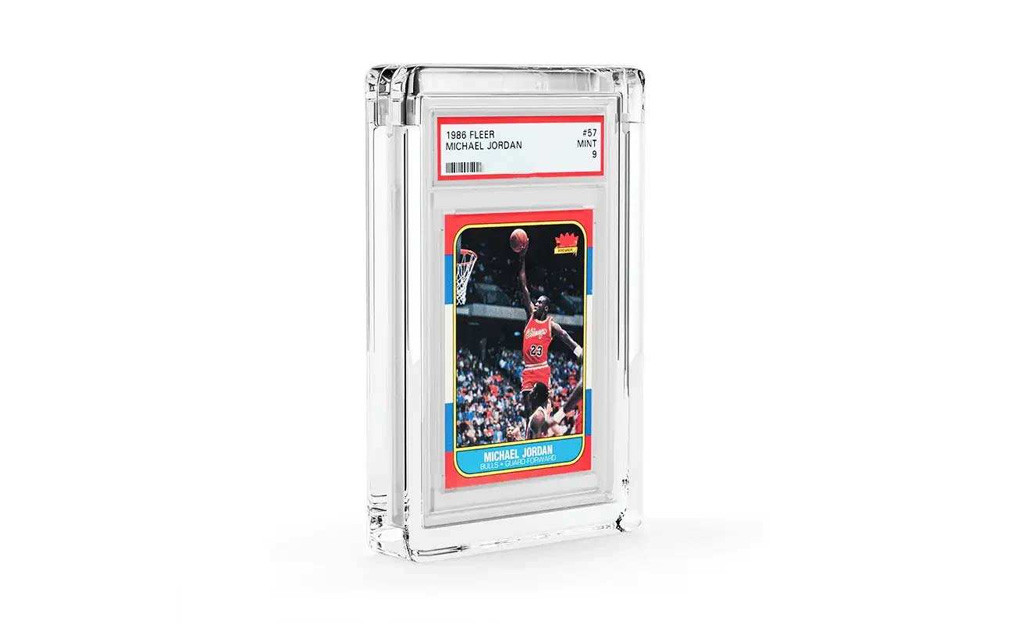
How to Display Graded Cards at Home: Frames, Cases, and Shelving Ideas
The best way to display graded cards at home is to choose one of three setups — a UV-protective wall-mount frame for hero cards, clear acrylic display cases and stands for desk-level showcases, or tiered shelving and a slab wall when your collection grows past a few slabs — and to keep every display away from direct sunlight, lit with LEDs, in a room with stable temperature and humidity. Displaying graded cards does not reduce their value as long as the original slab stays sealed and you add a layer of UV, dust, and handling protection around it. This guide compares graded card display frames, cases, and shelving ideas so you can match the right method to your space, budget, and collection size.
Why Display Graded Cards at Home at All?
A graded card in a PSA, BGS, or CGC slab is already sealed in rigid, tamper-evident protection, which makes it one of the few collectibles that can sit on open display without constant worry. Slabs are also verification tools: the grade and label communicate a card's condition at a glance, which is why collectors, dealers, and even retail shops use them as both decoration and proof of quality. According to PSA's own guidance for collectors, graded cards retain their value best when kept sealed and in stable conditions — and that is exactly what a good display does. Displaying a few favorite slabs at home turns an investment into something you can enjoy daily, and as collector communities note, a well-displayed graded card is also far less likely to be mishandled than one stored loose in a drawer.
Three Ways to Display Graded Cards: Frames, Cases, and Shelving
Almost every home setup for graded cards falls into one of three categories, and most collectors combine them:
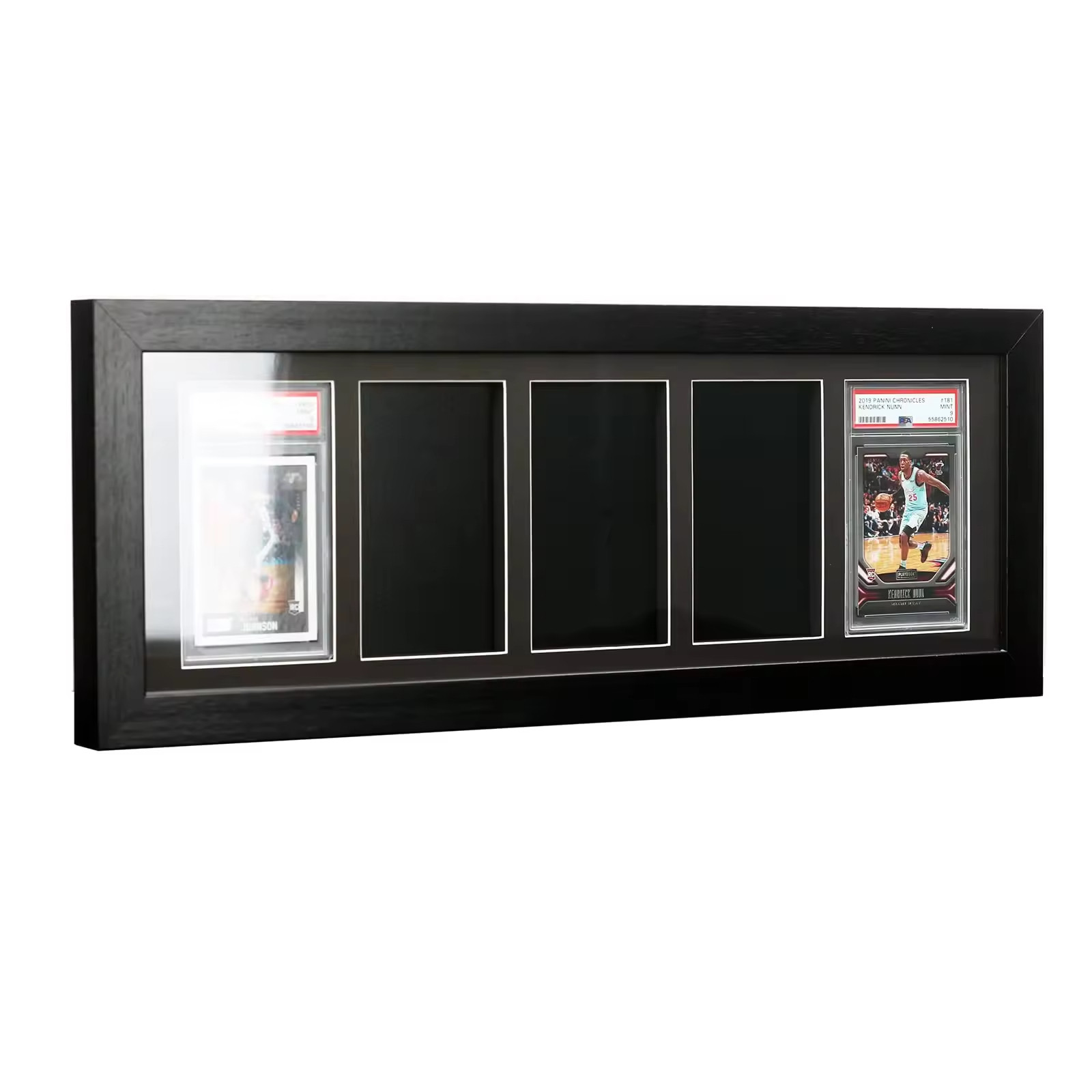
- Wall-mount graded card display frames — a single-slab or multi-slot frame hung at eye level. Best for one to twelve hero cards and the strongest visual impact per square meter.
- Acrylic display cases and stands — clear cases or easel-style stands that sit on a desk, shelf, or cabinet. Best for cards you want to rotate, handle, or show off up close.
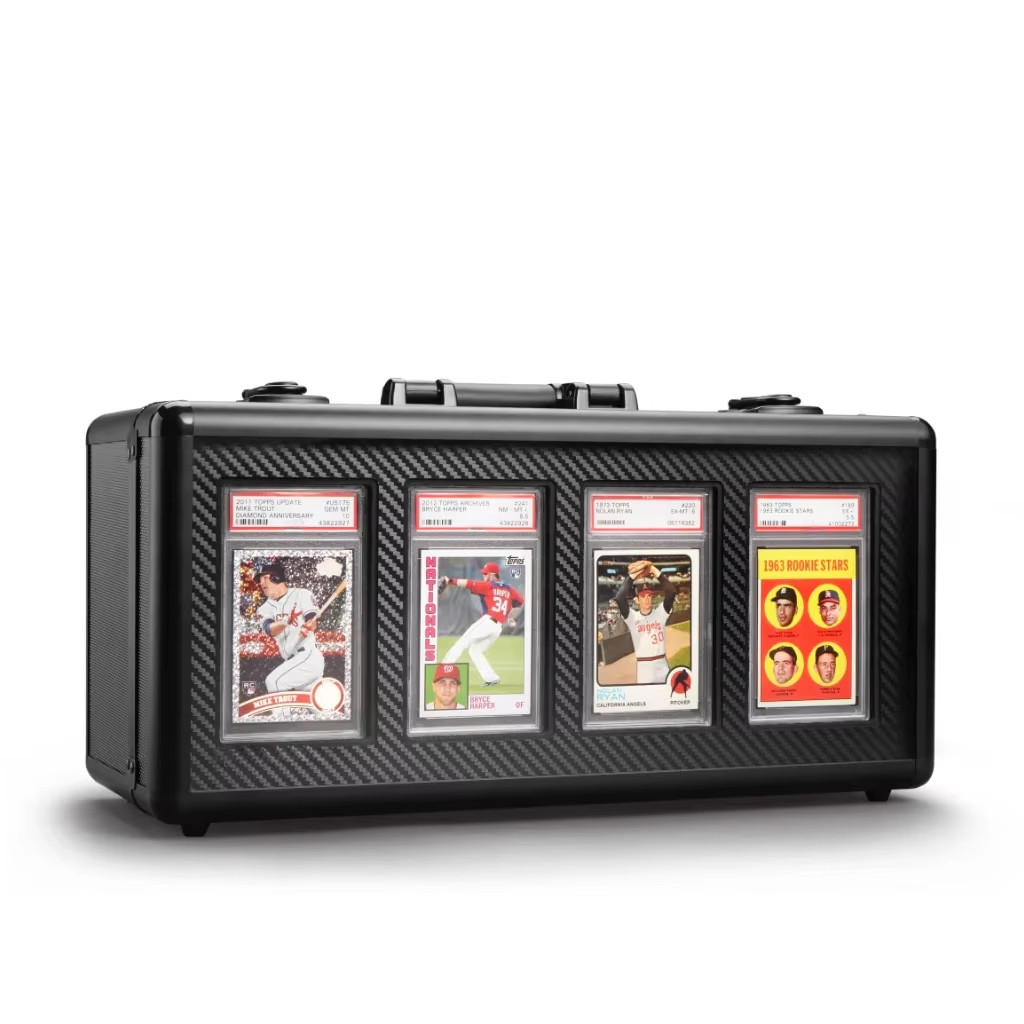
- Tiered shelving and slab-wall systems — rows of slabs on risers, ledges, or in glass cabinets. Best for ten or more graded cards when you want the whole collection visible at once.
The common thread in all three approaches: the display adds protection — UV filtering, dust resistance, and stable positioning — on top of the slab, rather than exposing the bare holder to sunlight and handling.
Wall-Mounted Frames for Graded Cards: What to Look For
A graded card display frame is the closest thing collectors have to hanging art. Before buying or building one, check four things:
- UV-filtering front panel. Standard glass blocks little ultraviolet light; archival display frames use UV-filtering acrylic or glass, with premium panels blocking 97-99% of UV — a meaningful difference because fading from sunlight and even indoor daylight is cumulative and irreversible.
- True slab-sized slots. PSA, BGS, and CGC slabs are slightly different widths and thicknesses, so look for frames with adjustable or size-specific channels rather than a generic slot that lets the slab rattle.
- Weight and wall anchors. A multi-slab frame loaded with cards can weigh several kilograms; always mount into studs or use rated drywall anchors, never into plaster with a single nail.
- Easy access. Frames with magnetic or hinged fronts let you rotate cards without unmounting the frame — useful for keeping your display fresh.
Hanging frames are the most popular way to create a "gallery wall" of graded cards, and the format works for any TCG — Pokémon, sports cards, MTG, or One Piece — because the slab standardizes the visual grid.
Acrylic Display Cases and Desk Stands: The Flexible Option
Not every graded card needs a permanent wall spot. Acrylic display cases and stands sit on desks, shelves, and cabinets, and they are the easiest way to rotate cards in and out of the spotlight. High-transparency acrylic cases with a UV-protection rating keep a slab visible from every angle while shielding it from dust, fingerprints, and accidental knocks. The same category includes multi-slot acrylic cases originally designed for sealed product that collectors repurpose for slab display. For a desk setup, place the case away from windows and direct lamp heat, and choose LED lighting over halogen or incandescent bulbs, which emit heat and more UV.
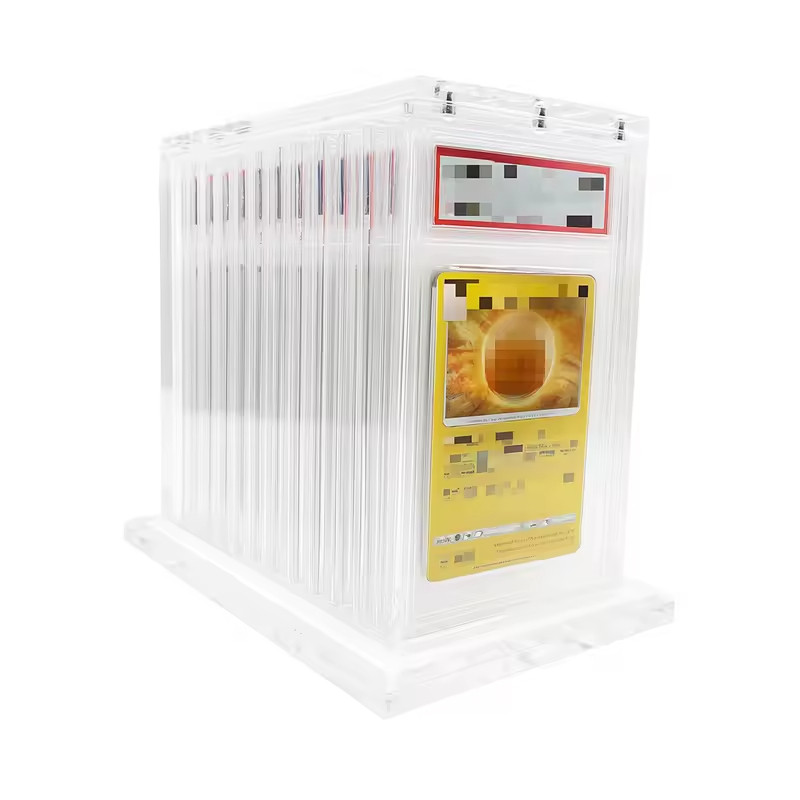
Collectors who like to rearrange their room every few months tend to prefer cases and stands because they are zero-commitment: no anchors, no holes, no leveling — just place, arrange, and re-arrange.
Shelving Ideas: Turning Many Slabs into a Slab Wall
Once you own more than about ten graded cards, the classic question becomes how to display graded cards without covering every wall in individual frames. The most effective shelving ideas are tiered:
- Riser rows. Acrylic step risers let each slab lean back at a readable angle, so a second row is not hidden behind the first — ideal on a bookshelf or sideboard.
- Picture ledges. Narrow floating ledges hold a row of slabs upright; you can crowd more cards per meter than frames and swap them instantly.
- Glass-door cabinets. A display cabinet with UV-filtering glass protects an entire collection from dust and curious hands, and keeps humidity more stable than open shelving.
- One-color grid. When arranging many slabs, line up labels and card orientation in the same direction for a cleaner, more intentional look.
For a large collection, many collectors build a single dedicated "slab wall" — a run of ledges or risers on one interior wall — rather than scattering displays around the house. That concentrates the visual impact and makes climate control and dusting far easier.
Wall Frame vs. Acrylic Case vs. Shelving: Graded Card Display Compared
| Feature | Wall-Mount Frame | Acrylic Case / Stand | Tiered Shelving / Slab Wall |
|---|---|---|---|
| Best for | 1–12 hero cards on display long-term | Cards you rotate or show up close | 10+ slabs, full-collection display |
| Wall space needed | Most per card (frame borders) | None — uses desk or shelf top | Medium — vertical rows are dense |
| Typical UV protection | High with UV-filtering front panel (97–99%) | Depends on acrylic grade; look for UV-rated | Low on open shelves; high with UV glass cabinet |
| Dust resistance | Excellent — sealed frame | Good — closed case; stands are open | Poor on open ledges; dust regularly |
| Cost per slab | Highest | Medium | Lowest at scale |
| Setup effort | High — anchors, leveling, spacing | Minimal — place and arrange | Medium — install ledges or risers once |
| Ease of rotation | Low — unmount to swap cards | High — swap in seconds | High — pick up and replace slabs |
| Main risk | Falling if under-anchored | Knocked over on busy desks | Dust buildup and UV on open shelves |
There is no single "correct" method — serious collectors typically use frames for two or three grail cards and shelving for the rest, with an acrylic case or two on the desk for whatever they are enjoying that week.
Setting Up the Display Area: Lighting, Dust, and Layout
Where you put the display matters as much as what you put the cards in. Three rules protect graded cards while they are on show:
- Keep displays off direct sunlight paths. Even indirect window light adds up over years. Position displays on interior walls, or add UV-filtering window film if the room gets strong natural light.
- Use LED lighting only. LED strips and spots emit negligible UV and little heat, unlike halogen or older fluorescent fixtures. Angle lights from the sides to reduce glare on slab plastic, and avoid intense spotlights aimed straight at cards for hours.
- Keep a stable room climate. Collector and conservation guidance commonly targets roughly 60–70 °F (15–21 °C) and 30–50% relative humidity. Avoid placing displays above radiators, near vents, or in attics, basements, and bathrooms where humidity swings are common.
Dust is the sneakiest enemy of open displays: it settles on slab edges and label surfaces and requires wiping that can scratch acrylic. On open shelves, a soft brush or microfiber pass every few weeks beats letting dust cake on. Closed cases and cabinets dramatically reduce this chore.
How to Choose the Best Graded Card Display for Your Home
Match the display method to how you actually live with your collection:
- 1–3 grail cards, want maximum impact: wall-mount frames with UV-filtering fronts, at eye level, evenly spaced — typically 2–4 inches apart for a clean gallery look.
- Medium collection (4–20 slabs), rent or dislike drilling: acrylic cases and stands plus a picture ledge or riser on existing furniture; nothing permanent needed.
- Large collection (20+ slabs) or kids/pets in the house: a glass-door cabinet with UV-filtering glass — the safest way to display many graded cards while keeping dust, sunlight, and curious hands out.
- High-value cards: whatever the display style, add a slab sleeve or inner protector before mounting, and keep the slab sealed — never crack a PSA, BGS, or CGC holder for display purposes.
Budget matters too: as a rough industry estimate, frames cost the most per slab, acrylic stands sit in the middle, and riser-led shelving is the most economical at scale — which is why shelves are the default for serious collections.
About GUARD TCG
GUARD TCG is the trading card accessories brand of a professional manufacturer founded in 2009, producing more than 300 million protective items every year for customers in 70+ countries, with 500+ distributors and 10,000+ retail partners worldwide. We manufacture graded-card-friendly protection — including rigid holders, sleeves, and crystal-clear acrylic display cases with UV-blocking acrylic rated up to 92–99% UV阻隔 depending on grade — under strict batch QC in which every production batch is fully inspected, and we support OEM/ODM customization with a standard-product MOQ from 100 pieces. The display guidance in this article reflects what our factory teams and collector partners have learned about slab materials, acrylic, and light exposure over nearly two decades. Explore our display cases and card protection range, browse more collector guides on our blog, or send us an inquiry for wholesale and custom display solutions.
FAQ
Q1: Does hanging a graded card in a frame damage the slab?
No — if the frame uses a proper slab-sized slot, supports the holder flat, and is mounted securely, the slab stays as safe as it would on a shelf. The main risks are frames that let the slab rattle, and under-anchored frames falling. Use rated anchors and check that the card cannot shift inside the frame.
Q2: Will display lighting fade my graded cards?
Direct sunlight is the main fading risk; ordinary indoor light is far weaker but still cumulative over many years. Use LED lighting (minimal UV and heat), keep displays out of direct sun, and choose UV-filtering frames, acrylic cases, or cabinet glass for long-term display. Premium UV-filtering acrylic blocks roughly 97–99% of UV.
Q3: What temperature and humidity should a display room have?
Conservation and collector guidance commonly suggests roughly 60–70 °F (15–21 °C) and 30–50% relative humidity. Avoid radiators, vents, attics, and damp basements, and consider a small hygrometer if your display room has seasonal humidity swings.
Q4: Should I keep my cards in the original PSA, BGS, or CGC slab while displaying them?
Yes. The slab seal is what protects the card and verifies the grade; opening it for display defeats the purpose and usually voids any grading guarantees. Display the sealed slab inside a frame, case, or sleeve instead.
Q5: Can I display a large graded card collection without covering every wall?
Absolutely — the most common large-collection setups are riser rows on a shelf, picture ledges, or a single glass-door cabinet. These concentrate the collection in one spot, protect it from dust and UV, and are far easier to manage than dozens of individual frames.
Conclusion
Displaying graded cards at home comes down to three proven options: UV-protective wall frames for your most impressive slabs, clear acrylic display cases and stands for cards you rotate and enjoy up close, and tiered shelving or a slab wall when the collection grows beyond a handful. Whichever graded card display frame, case, or shelving idea you choose, the protection rules stay the same — keep displays out of direct sunlight, light them with LEDs, control dust, and hold temperature and humidity in a comfortable, stable range while the card stays sealed in its original slab. Displayed this way, graded cards keep both their condition and their value, and your collection finally gets the attention it deserves.
Wholesale and OEM Supply
Need this range in bulk? GUARD TCG manufactures graded card slab accessories and offers OEM/ODM custom card accessories for brands, card shops and distributors. Browse the graded card slab accessories range, or request a wholesale quote.