MOQ Explained: How Low Can You Really Go with Custom Card Accessories?
- Share
- publisher
- GUARD TCG Team
- Issue Time
- Sep 10,2026
Summary
MOQ (minimum order quantity) explained for custom card accessories: standard branded products can start around 100 pieces, light custom printing near 1,000, and new tooling 1,000-5,000+. Learn what drives MOQ (tooling, printing, packaging, material), a reference table by product type, price-break tiers, and low-MOQ strategies for small sellers and new brands.
MOQ Explained: How Low Can You Really Go with Custom Card Accessories?
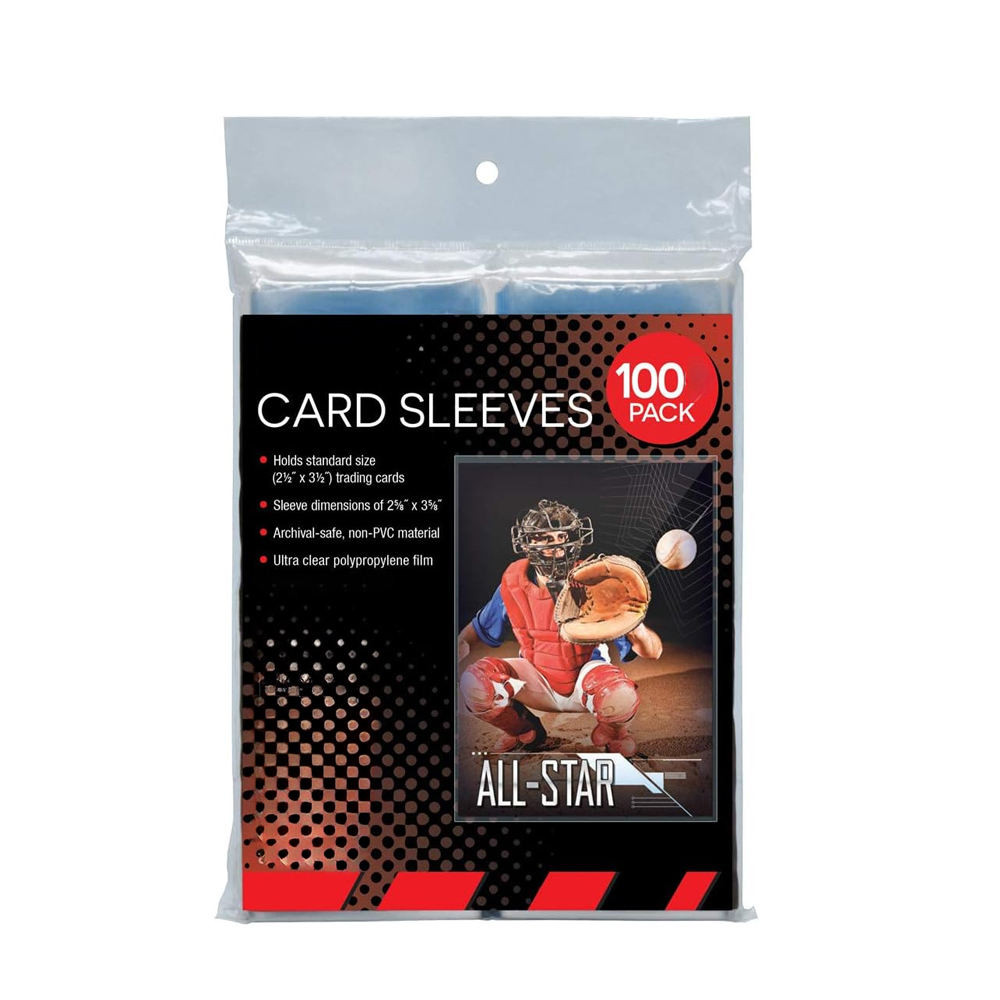
MOQ (minimum order quantity) is the smallest number of units a factory will produce in one order. For custom card accessories, standard items can start as low as 100 pieces, light custom printing usually starts around 500–1,000 pieces, and products that need new tooling – holographic finishes, custom die cuts, or custom acrylic cases – typically start at 1,000–5,000 pieces or more. Your MOQ is not one number: it is set by the print method, the mold, the packaging, and the material you choose, and it directly determines your unit price.
What Is MOQ and Why Does It Matter for Custom Card Accessories?
MOQ stands for minimum order quantity – the lowest quantity a manufacturer will accept for a production run. It exists because every order, however small, carries fixed costs: setting up a printing press, cutting plates, loading and testing a mold, and preparing packaging. The factory spreads those fixed costs across the units you order, so a low quantity means a high cost per piece and a high quantity means a low one.
For a new TCG accessories brand, MOQ is the single number that decides whether your idea is affordable. A 100-piece private label order of branded penny sleeves is a low-risk market test; a 5,000-piece run of a custom-molded acrylic display case is a real inventory commitment. Understanding what drives MOQ – and which levers you can pull to lower it – is the difference between launching on a hobby budget and locking up thousands in unsold stock.

What Actually Determines Your MOQ?
Four factors decide the minimum order a factory will quote, and they are the same four levers you can negotiate:
- Tooling and molds. Anything that requires a new injection mold, a new die-cutting blade, or a new extrusion die carries a fixed setup cost. The factory must recover that cost, so new tooling pushes MOQ up. Using a factory's existing mold almost always lowers it.
- Printing method. Digital or sublimation printing needs no printing plates, so short runs are viable – often from around 1,000 pieces. Offset or rotogravure printing needs plates and setup, which raises the minimum, but produces a lower unit cost at high volume.
- Packaging. A plain poly bag is cheap and flexible. A custom-printed header card, a branded blister, or a printed box each adds a separate setup and its own minimum, which stacks on top of the product's MOQ.
- Material and finish. Standard PP (polypropylene) film is the most forgiving and lowest-MOQ material. Specialty requests – holographic lamination, matte finishes, non-PVC archival film, or anti-UV coatings – need dedicated runs and therefore higher minimums.
Industry sourcing platforms such as Alibaba and Made-in-China.com list an MOQ on nearly every product page precisely because these factors vary per listing; a smart buyer compares MOQ and unit price together rather than treating MOQ as a fixed number.
MOQ Reference Table: Card Sleeves, Deck Boxes, Acrylic Cases, and Playmats
Here is a realistic MOQ range by card accessory type, based on how these products are actually made. Treat these as planning ranges and always confirm the exact figure per product and per customization (industry estimate):
| Product Type | Standard / Private Label MOQ | Custom Printed / Branded MOQ | What Drives the Difference |
|---|---|---|---|
| Card sleeves (penny, matte, perfect fit) | From ~100 pieces (GUARD TCG standard) | ~1,000–5,000 pieces | Print plates or custom film; plain clear film is lowest |
| Toploaders & rigid holders | Low hundreds of pieces | ~1,000–3,000 pieces | Existing mold vs. custom thickness or branding |
| Deck boxes & storage boxes | Low hundreds of pieces | ~1,000–3,000 pieces | Printed panels and custom colors add setup |
| Acrylic display cases & showcase boxes | Hundreds of pieces | ~1,000–5,000 pieces (new tooling higher) | Cutting dies, dimensions, and new mold amortization |
| Playmats (cloth or rubber) | Hundreds of pieces | ~500–1,000 pieces (digital print) | No plates for digital print; stitched edges add labor |
| Graded card slabs & slab accessories | Hundreds of pieces | ~1,000–5,000 pieces | Ultrasonic sealing setup and mold precision |
| Booster pack dispensers & counter displays | Hundreds of pieces | ~1,000–3,000 pieces | Acrylic thickness, slot count, and laser cutting |

How MOQ Affects Unit Price: Price Break Tiers
MOQ and unit price are two sides of one coin. As your order quantity rises, fixed setup costs are spread across more units, so the price per piece falls. A typical quotation comes back as price breaks – for example, a sleeve might be quoted at one price for 1,000 pieces, a lower price at 5,000, and a lower one again at 10,000. The ranges below are common in card accessories sourcing (industry estimate):
- 10,000+ pieces: the lowest unit cost, often around $0.02–$0.04 per piece for standard sleeves from a factory-direct supplier.
- 1,000–5,000 pieces: small to mid-volume, roughly $0.04–$0.08 per piece, balancing setup cost against inventory risk.
- 500 pieces and below: the highest unit price, often $0.08–$0.15 per piece or more, because the same setup carries fewer units.
- 100-piece low-MOQ OEM: the entry tier for branded standard products, where per-pack prices can run $0.45–$1.20 – affordable for testing, but never your best long-run price.
The takeaway: a low MOQ is a tool for learning, not for maximizing margin. Use it to validate a product, then move to a higher price break once the SKU proves it can sell.
Low MOQ Strategies for Small Sellers and New Brands
If your budget cannot support a 5,000-piece run, you are not locked out of custom card accessories. These strategies lower the entry barrier:
- Start with standard products and private-label branding. Order an existing product in low quantity and apply your logo and packaging. At GUARD TCG, standard-product orders can start around 100 pieces.
- Choose digital printing over offset. Digital and sublimation printing skip the plate setup, so playmats and printed sleeves can run in the hundreds rather than the thousands.
- Combine SKUs to reach the minimum. Some factories will accept a mixed order – several colors or several products – that adds up to the MOQ, rather than requiring the minimum on each single item.
- Group orders with other sellers. Buying groups, local game stores, and tournament organizers can pool demand so everyone gets the lower price break.
- Reuse existing molds and dies. Ask the factory which designs are already tooled; those carry the lowest MOQ because there is no setup to recover.
- Plan a staged rollout. Launch a small branded batch, reinvest the revenue, and increase the order size on the reorder to step up to a better price tier.

How to Choose the Right MOQ for Your First Order
The right MOQ is the smallest quantity that still gets you a workable unit price and enough stock to test demand honestly. Ask yourself three questions before you commit:
- How many can I realistically sell in 3–6 months? Order to your sell-through, not to a discount you cannot afford. Unsold inventory is more expensive than a slightly higher per-piece price.
- Is this a test or a launch? Test products belong at the lowest viable MOQ. Products already validated by sales data belong at the price break that maximizes margin.
- What is the all-in landed cost? Add tooling, plate fees, packaging, and freight to the unit price. A low-MOQ quote can look cheap until tooling is added, and a high-volume quote can be a bargain once those costs are amortized.
Best Practices for Negotiating MOQ with a Manufacturer
MOQ is a starting point in a quotation, not a law of physics. Factories can lower it when the trade makes sense to them, so negotiate on the levers that matter:
- Offer a higher price for a lower quantity. Most factories will accept a smaller run at a modestly higher unit cost, because the setup is still paid for.
- Commit to repeat orders. A written plan for reorders – say, an initial small batch followed by a larger one – gives the factory confidence to reduce the first MOQ.
- Use their existing tooling. The cheapest customization is often a color change or a logo print on a product the factory already makes.
- Keep packaging standard at first. Drop the custom box on your first order and add it once volume justifies its separate minimum.
- Get everything in writing. Confirm MOQ, unit price at each quantity break, tooling ownership, lead time, and QC terms in the quotation before paying a deposit.
About GUARD TCG
GUARD TCG is the trading card accessories brand of a manufacturing group established in 2009 that produces more than 300 million card protection items per year and exports to over 70 countries. With more than 10,000 customers and 500+ distributors worldwide, we run OEM, ODM, and private label programs for card sleeves, toploaders, acrylic display cases, graded card storage, and more. Standard-product orders start around 100 pieces, custom printing and tooling carry higher minimums quoted per project, every batch passes in-house QC inspection, and shipping runs DHL/FedEx/UPS express in 5–12 days or sea freight in 25–35 days. Browse our full product range, read our factory background, see more guidance on our blog, or send us an inquiry for an MOQ and price-break quote on your product.
FAQ
Q1: Can MOQ be negotiated below the quoted number?
Yes, in most cases. MOQ is set by the factory's setup cost, and factories will lower it when the trade is worthwhile – a higher unit price, a commitment to repeat orders, or use of an existing mold. Ask directly what the smallest run they can offer is, and expect a higher price per piece at that quantity.
Q2: Do I have to pay for samples?
Most factories charge for physical samples and the freight to send them, and many credit part or all of the sample cost against your first mass-production order. Digital or photo proofs are usually free. Always confirm the sample charge and whether it is refundable before ordering.
Q3: What is the lowest MOQ for custom card accessories?
At GUARD TCG, standard products with your branding can start around 100 pieces, which makes branded penny sleeves and toploaders an affordable first step. Fully custom printed or custom-molded items need higher quantities because of setup and tooling – typically from around 1,000 pieces upward.
Q4: Does a lower MOQ mean a worse product?
No. MOQ is a production-economics number, not a quality indicator. You can get excellent quality at a 100-piece run – you simply pay a higher unit price because the setup is spread across fewer units. Quality depends on the factory's materials and QC process, not the order size.

Conclusion
How low can you really go with custom card accessories? Standard products with your branding can start at around 100 pieces, light custom printing typically starts near 1,000, and new tooling pushes the minimum to several thousand. The reason is simple: MOQ exists to cover the fixed setup cost of printing plates, molds, and packaging, and the smaller the run, the higher your price per piece. That means the smartest path for a small seller is not to demand an impossible minimum but to use the levers that lower it – standard products, digital printing, existing molds, combined orders, and a staged rollout. Start where your budget is safe, prove the product, and step up to a better price break on the reorder. To get an exact MOQ and price-break quote for your product, contact GUARD TCG or browse the product catalog for standard items you can brand from around 100 pieces.
Wholesale and OEM Supply
Need this range in bulk? GUARD TCG manufactures trading card sleeves and offers OEM/ODM custom card accessories for brands, card shops and distributors. Browse the trading card sleeves range, or request a wholesale quote.