One Piece TCG Booster Box Display Cases: A Protection Guide
- Share
- publisher
- GUARD TCG Team
- Issue Time
- Oct 8,2026
Summary
One Piece booster box display case buying guide for importers, distributors and retailers. Learn why sealed film and box art need rigid protection, how to size a case for the 24-pack display, tray and lid options, and how to plan MOQ, packaging and lead time before ordering.
One Piece TCG Booster Box Display Cases: A Protection Guide
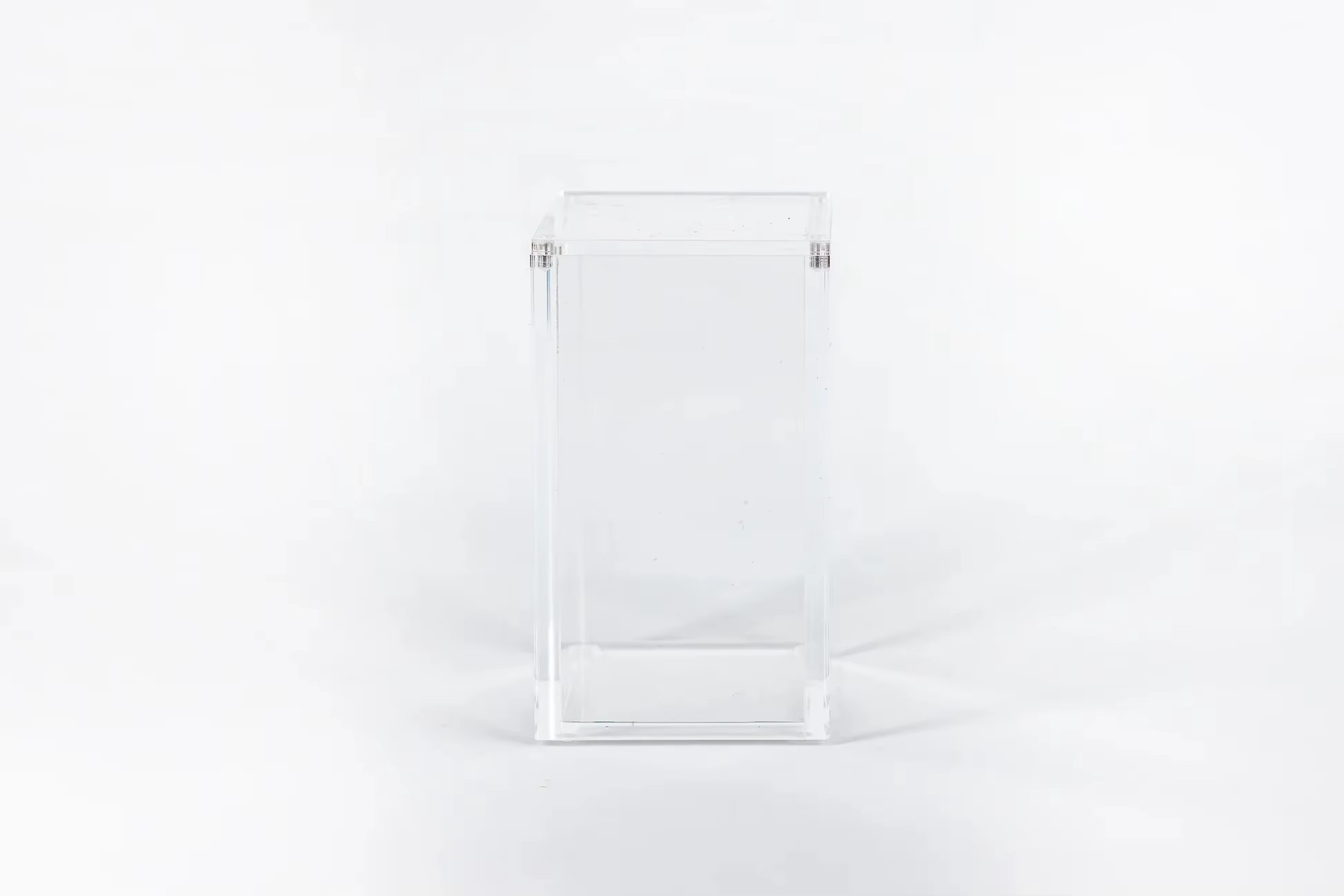
A One Piece booster box display case is a fitted acrylic shell built around the 24-pack display, protecting the sealed film and box art during storage and retail display. Because One Piece displays have their own footprint, generic cases rarely fit well. The right case should match internal dimensions, allow a slide-out tray, and never press on the booster packs inside. For importers, distributors and retailers stocking One Piece sealed product, matching the case to the display is a merchandising decision as much as a protective one — it keeps sealed value intact, photographs well for e-commerce, and reduces the damage claims that bulky goods quietly generate.
What Is a One Piece Booster Box Display Case?
A One Piece booster box display case is a rigid, clear enclosure sized to hold a complete sealed booster box — normally the 24-pack display that One Piece sets ship in — without opening it. Unlike a sleeve or a bag, it is a self-supporting structure: thick acrylic panels sit on a base, and a lid closes over the top so the sealed box can be stored, stacked or shown on a shelf as a single unit.
The purpose is not decoration for its own sake. The sealed box is a store of value, and its condition is what a buyer pays for. A display case keeps the factory film taut and unmarked, holds the box square so corners stay crisp, and lets a shop put stock in a high-traffic position without the shrink wrap picking up shelf scuffs. For a wholesaler moving whole cases of sealed product, the case also turns an anonymous carton into a presentable retail item.
One Piece displays come in a few generations, and the earliest sets differ slightly in footprint from later reprints. If you are working from our earlier article on the Japanese One Piece TCG acrylic case, treat that piece as the product-side companion to this guide: it covers the case itself, while this article is a buying checklist for anyone specifying, stocking or reselling cases at volume.
Why Sealed Film and Box Art Need Rigid Protection
Sealed value rests on two fragile things: the factory film and the printed box. Both fail under handling, and both failures are hard to reverse.
- The shrink film is the proof of sealed condition. Once it tears, creases or goes cloudy, a box that was "sealed" becomes "opened or resealed" in the eyes of a cautious buyer, and the price gap between the two is large.
- Box art is the product. One Piece packaging is collectible in its own right. Corner crush, shelf rub and UV fade all show up first on the printed faces, exactly where a buyer looks.
- Grading and authentication. Services such as PSA, BGS and CGC, and marketplaces such as TCGplayer and eBay, treat packaging condition as part of the record. A squared, unmarked box presents cleanly through every step of that chain.
- Bulk handling multiplies risk. A distributor moving pallets restacks boxes repeatedly. Without a rigid shell, every restack is another chance to nick a corner.
A clear acrylic case absorbs that handling. Its job is to be the surface that gets scratched instead of the box, and to hold the display in the orientation that keeps the film flat.
A fitted case built for the slim Japanese One Piece carton keeps the sealed film from shifting or scuffing on the shelf.

Acrylic Display Case vs. Shrink Wrap Compared
The comparison below sets a rigid acrylic display case against the two cheap alternatives buyers reach for first — an extra layer of shrink wrap and a plain poly bag. Both are better than nothing, but neither holds a box square or blocks UV light.
| Attribute | Acrylic Display Case | Shrink Wrap / Poly Bag |
|---|---|---|
| Crush protection | High — rigid panel resists stacking load | None — film transmits pressure to the box |
| UV fade resistance | Available in UV-filtering grades | None — clear film passes UV |
| Sealed film safety | Box slides in; film is never pressed | Tight film can crease or mar the wrap |
| Retail presentation | Crystal-clear, shelf-ready, stackable | Dull, wrinkled, hard to stack |
| Reusability | Reusable across many boxes | Single use; discarded after opening |
| Dust and moisture | Sealed enclosure reduces both | Bag helps; wrap alone does not |
| Wholesale unit cost | Higher per unit, spread over reuse | Very low, but recurring |
| Best use | Valuable sealed stock and display | Interim dust cover in transit |
Compared with brand-name alternatives, the deciding factors are the same everywhere: wall thickness, edge polish, lid fit and whether the internal dimensions actually match the box. A cheap case with a poor lid fit protects no better than a bag; a well-tooled case lasts for years of restocking.
Sizing a One Piece Booster Box Display Case for the 24-Pack
One Piece booster boxes are built around a 24-pack display, but the outside dimensions vary by print run and region, so sizing starts with the box in hand, not a product line name. Published retailer listings for One Piece displays cluster loosely — Japanese-edition boxes run taller and narrower, while Western-format cartons tend to be wider and lower, roughly in the region of 148 mm wide, 120 mm high and 67 mm deep for later sets, with the earliest first-print boxes a few millimetres different again. Treat those numbers as working ranges from listings rather than a fixed standard, because set-by-set variation is real.
The routine that prevents returns is short:
- Measure the sealed box width, height and depth on a flat surface, using the outer carton surfaces rather than the printed artwork edge.
- Add 1.5 to 3 mm clearance per side so the box slides in without scraping the film but cannot rattle.
- Confirm the tray depth — the floor panel should support the full base, not just the corners.
- Check the lid closure at the top edge, where a tight fit pinches the film.
- Send a dimensioned drawing to your supplier and confirm with a physical sample holding your own box.
If you carry both Japanese and Western One Piece stock, plan two tooling specifications rather than one. A case sized to the wrong regional box either will not seat or leaves enough slack for the display to shift on every shelf bump. Buyers who need a printed logo on the correct-sized body can use the OEM/ODM programme instead of settling for a generic fit.
One Piece display cases are tooled around the footprint of the sealed 24-pack box, not a universal size.

Tray, Lid, and Stacking Options for One Piece
Once the size is right, three design choices decide how a case behaves in a shop or a warehouse.
- Slide-out tray. The box rests on a tray that slides forward, so stock can be swapped without tipping the case. Best for shops that rotate displays.
- Magnetic-front or drop-over lid. A magnetic closure gives fast access and a clean front face for shelf display; a drop-over sleeve is simpler and usually cheaper. Neither should press on the box top.
- Stackability. A flat, recessed top lets cases stack without sliding. For storage rooms this matters more than looks — a stable stack removes the accidental-fall risk that damages corners.
Keep the terminology straight: a magnetic display case is a box enclosure with a magnetic lid, while a magnetic one-touch card holder is a rigid card holder for a single card. They are different products for different jobs, and mixing them up in a catalogue confuses buyers.
Storing and Handling One Piece Displays
Acrylic protects well but only if it is handled with a little care. Keep cases out of direct sun and away from heat, because UV eventually fades the printed faces and heat can warp thin panels. Store on flat, level shelving rather than wire racking, which concentrates pressure on a few contact points and can craze acrylic over time.
Clean with a dry microfibre cloth or a mild soap solution; avoid alcohol, ammonia and abrasive pads, which cloud the surface. Remove any transit film on both faces before display, and photograph high-value pieces on intake so condition disputes are documented. Rotate stock on a fixed schedule so no box sits in one spot for a year, and keep the heaviest cartons on lower runs where a fall is less costly.
A stackable case lets a retailer build a stable, shelf-ready display that protects the sealed box and presents it at the same time.

Wholesale and Retail Notes for Buyers (MOQ, Packaging, Lead Time)
Display cases are bulky, low-density goods, so landed cost depends as much on packing and freight as on unit price. Plan around four practical numbers.
- MOQ: custom acrylic booster box case programmes commonly start at around 100 pieces per design, which keeps two-size tooling — Japanese and Western — viable for small and mid-size importers.
- Packaging: each unit should ship with protective film on both faces plus foam or EPE corner sets, then a five-layer master carton. Ask for carton dimensions and units per carton, because that figure drives your freight calculation.
- Lead time: express air freight with DHL, FedEx or UPS typically runs 5 to 12 days, while sea freight is normally 25 to 35 days port to port. For repeat programmes, a small air shipment to launch plus sea for the bulk usually protects the retail date.
- Quality control: specify full batch inspection on acrylic — edge polish, wall thickness, lid fit and clarity — against a golden sample, and confirm internal dimensions on the first production units.
The commercial logic is simple. A case that fits the box protects sealed value, displays well online and in store, and cuts returns, which are expensive in bulky goods. A fleet of cases that half-fit wastes shelf footprint and generates exactly the damage claims the buyer was trying to avoid. For category context, market research firms place the physical trading card game market in the region of US$9 billion for 2026, with sealed product and accessories among the faster-growing segments — an industry estimate that frames why protective packaging demand keeps rising, not a precise forecast for any single line. Buyers who want regional tooling, branded cases or a mixed catalogue should work through a factory-direct supplier rather than a generic listing.
A UV-resistant acrylic case guards box art against fade, which matters for One Piece packaging collectors and resellers alike.

About GUARD TCG
GUARD TCG is a protective-packaging manufacturer founded in 2009, supplying trading card accessories and display solutions from our own factory. We produce more than 300 million pieces a year and serve over 10,000 customers in 70-plus countries, including more than 500 distributors. Our range covers acrylic display cases, card binders, sleeves, toploaders, rigid protectors, storage boxes and carrying cases, with OEM and ODM programmes for buyers who need custom dimensions, colours or branding. Every order runs through full batch inspection before dispatch, and we support both express air freight (DHL, FedEx, UPS, typically 5 to 12 days) and sea freight (25 to 35 days). Custom display programmes generally start at an MOQ of 100 pieces. You can review the full acrylic display cases and showcase boxes range or read more on the About Us page.
FAQ: One Piece Booster Box Cases
Q1: Will one case fit every One Piece booster box?
No. One Piece displays differ between regions and print runs. Japanese-edition boxes are taller and narrower, while Western-format cartons are wider and lower, so a case must be matched to the specific box rather than the set name alone.
Q2: How much clearance should a display case have around the box?
About 1.5 to 3 mm per side is the usual target. That lets the sealed box slide in without scraping the film while keeping it tight enough not to rattle during handling.
Q3: Does a display case keep a sealed One Piece box "sealed"?
The film still has to be intact for a box to be considered sealed. The case does not reseal anything, but it protects the film from creasing, scuffing and pressure, which is what preserves the appearance of sealed condition.
Q4: Is a case the same as a magnetic one-touch card holder?
No. A display case is a rigid enclosure for a whole booster box. A magnetic one-touch holder is a rigid holder for a single card. They protect different things and should be listed separately.
Q5: What is the MOQ for a custom One Piece booster box case?
Custom acrylic display programmes commonly start around 100 pieces per design, so a two-size Japanese-and-Western programme is realistic for small and mid-size importers.
Conclusion
The rule for buying a One Piece booster box display case is to specify the case to the box, not to the set name. Measure the sealed display, allow 1.5 to 3 mm per side, confirm the tray and lid do not press on the film, and verify the fit with a physical sample before a container order. For importers, distributors and retailers the payoff is straightforward: sealed value preserved, a shelf-ready presentation, and fewer damage claims on bulky stock. Talk to GUARD TCG about custom acrylic cases, review our acrylic display cases and showcase boxes, or use the OEM/ODM programme for region-specific tooling and branding. Our earlier article on the Japanese One Piece TCG acrylic case is the product-side companion to this buying guide, and you can send your box dimensions through the inquiry form for a matched quote.