PVC Sleeves Card Damage: How Plasticizer Migration Happens
- Share
- publisher
- GUARD TCG Team
- Issue Time
- Nov 7,2026
Summary
PVC sleeves card damage comes from plasticizer migration: flexible PVC releases oily additives that soften ink and leave ghosting that graders score as surface wear. This guide explains the mechanism, how to test film for PVC before loading cards, how to rehouse affected cards safely, and what retailers and importers should specify: polypropylene or polyethylene, plasticizer-free, with MOQ, packaging, and lead-time notes.
PVC Sleeves Card Damage: How Plasticizer Migration Happens
PVC sleeves can damage cards because PVC is a rigid polymer that only becomes flexible when plasticizers are added, and those plasticizers do not stay put. Over months and years they migrate to the film surface, leaving an oily film that softens ink, sticks to card stock, and produces ghosting or staining that professional graders record as surface damage. Archival specifications such as ISO 18902 and the ISO 18916 Photographic Activity Test exclude plasticized PVC for exactly this reason. This guide covers the mechanism, how to spot unsafe sleeves before loading cards, and how retailers and importers should specify polypropylene and polyethylene instead.
What Is Plasticizer Migration and Why Collectors Should Care
Plasticizer migration is the physical movement of small additive molecules out of a polymer matrix. In flexible PVC, plasticizers such as DEHP and DINP can make up a substantial share of the film by weight. They are not chemically bonded to the PVC chain — they sit between the chains and keep them sliding past each other — so they travel toward any surface with lower concentration: the air, the adjacent card, the inside of a binder page, the paper of a box.
Rate depends on heat, light, and contact pressure. A sleeve stored in a hot garage or a sunlit shop window migrates faster than one in a climate-controlled room, and published polymer research on UV-aged PVC shows ultraviolet exposure measurably accelerates plasticizer release. Stack a hundred sleeved cards in a tight box and the added pressure increases transfer to the card surface.
For collectors the consequence is not cosmetic. Surface is one of the four grading criteria, and an oily film or softened print is scored as surface wear even when the card has never been handled — often the difference between a 9 and an 8, and on vintage stock the difference between grading and a rejection.
PVC vs. Polyethylene vs. Polypropylene Materials Compared
The practical question is not "which sleeve is softest" but "which polymer has nothing in it that can move". Polypropylene (PP) and polyethylene (PE) are the two workhorse archival films for card storage; polyester (PET) is the third, used for stiff holders and archival pockets. All three run without plasticizers, so no oily phase exists to migrate. A CCAHA summary of ISO 18902 and ISO 18916 lists polyester, PP, PE, polystyrene, and spun-bonded polyolefins as generally suitable, and rules out PVC and plasticized plastics.
| Factor | PVC (plasticized) | Polypropylene (PP) | Polyethylene (PE) |
|---|---|---|---|
| Plasticizer content | High, often 20-40% by weight | None in card-grade film | None in card-grade film |
| Migration risk | High over time, heat and UV accelerate it | Negligible | Negligible |
| Clarity | Excellent when new | Good to excellent, stays clear | Good, slightly softer look |
| Stiffness | Flexible, drapes and clings | Firm, holds shape | Soft, drapes |
| Surface feel | Slippery, sometimes tacky as it ages | Smooth, low friction | Waxy, higher friction |
| Archival acceptance | Excluded by ISO 18902 criteria | Generally suitable | Generally suitable |
| Typical card use | Legacy binder pages, cheap penny sleeves | Penny sleeves, inner sleeves, graded sleeves | Soft inner bags, outer poly bags |

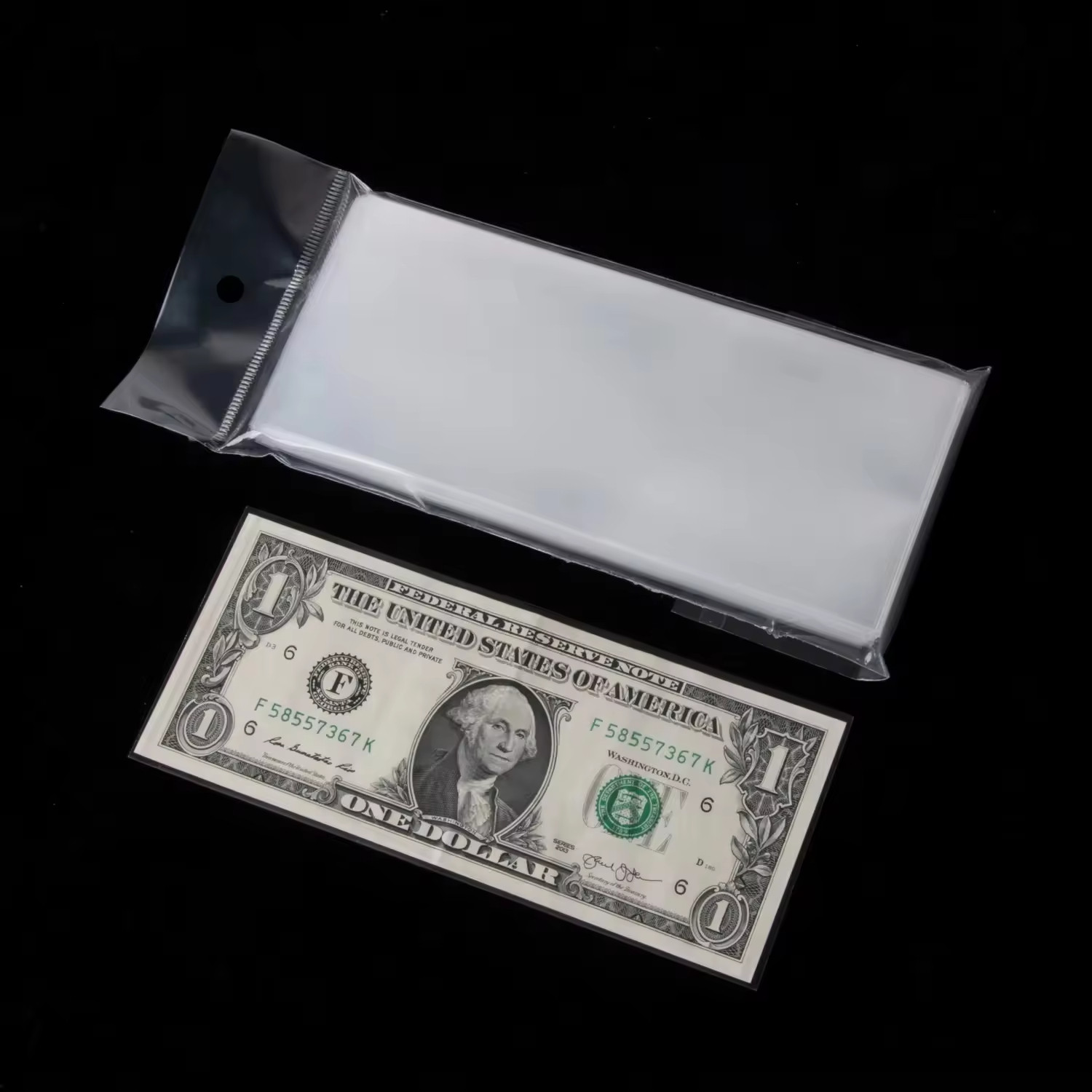
The film above is polypropylene — the same polymer family as card-grade inner sleeves, chosen because it carries no plasticizer load to transfer.
Signs of Plasticizer Card Damage: Oily Film, Ghosting, and Ink Softening
The first sign is a faint sheen on the card face once the sleeve is removed — a thin, even film that will not wipe off with a dry microfibre cloth and reappears after buffing. The second is ghosting: a mirror image of print or of the sleeve seam, most visible on dark borders and foil. The third is ink softening, where print feels tacky and gloss flattens; on older cards this can progress to blocking, where the card sticks and separates with ink loss.
Late-stage damage includes staining along the sleeve edges, foil delamination, and the sleeve fusing to a glossy surface. Once ink has transferred, no cleaning reverses it, and conservator solvent work is not economic on a trading card. The decision has to be made before storage, not after.
How to Identify Unsafe PVC Sleeves Before You Load Cards
Suppliers rarely label film as PVC, so buyers need a physical check. Smell first: plasticized PVC often has a sweet, faintly chemical odour when a pack is opened, while polypropylene and polyethylene smell of almost nothing. Then test stiffness and memory — a PP sleeve springs back when creased and holds a crisp edge, while plasticized PVC creases softly, drapes like cling film, and clings to itself.
Then read the specification, not the marketing: ask for the resin type by name — PP, PE, or PET — plus a statement that the film contains no plasticizers and no PVC. For archival programs, ask whether the material has been tested to the Photographic Activity Test in ISO 18916, which incubates the film against sensitive detectors at elevated temperature and humidity and shows whether it releases anything that could attack stored media.
How to Choose Archival Sleeves for Long-Term Storage
Match sleeve architecture to card value and handling frequency, then lock the tolerances in writing.
| Requirement | What to specify | Why it matters |
|---|---|---|
| Resin | Polypropylene or polyethylene, PVC-free, no plasticizers | Removes the migration pathway |
| Thickness | Consistent micron figure, stated tolerance | Too thin abrades; too thick blocks holders |
| Dimensions | Inner size with 1-2 mm clearance per side | Prevents edge pressure and corner lift |
| Surface | Glossy or lightly textured, never abrasive matte | Matte texture scratches during insertion |
| Seam | Weld width and seam position stated | Burst seams drop cards during handling |
| Additives | No slip agents that transfer, no optical brighteners | Additives can bloom to the surface |
| Documentation | Material statement and batch traceability | Supports archival and retail claims |

Binder pages deserve their own check: legacy PVC pages are the biggest source of migration damage in older collections.
How to Migrate Cards Off PVC Without Causing More Damage
Remediation is where careful collectors do more harm than the sleeve did. Plan the sequence, work in a clean area, and never rush a card that has sat against plasticized film for years. Lower the temperature first: cold makes the film stiffer and less tacky, cutting the chance of ink lifting. Then cut the sleeve rather than pulling the card — snip the top corners and one long edge, and peel the film away instead of dragging the card across it. If the card resists, stop: blocked film will take ink with it.
Then document the removal: photograph the card in the old sleeve and keep the sleeve as evidence if you later describe condition to a buyer or grader. and rehouse immediately in PP or PE, and isolate any tacky card in its own fresh sleeve. Residue that has already transferred cannot be removed safely at home; erasers, alcohol, and lighter fluid all attack print and gloss.
Storage and Maintenance Best Practices for Sensitive Cards
Material choice only buys a stable starting point; environment and handling decide how long it holds. Keep storage near 18-22°C at 40-50% relative humidity, away from attics, garages, and sunlit shelving, because UV degrades both film and print.
Store vertically, not in tall leaning stacks, and avoid over-compression: a box packed so tightly that cards cannot flex transfers corner pressure into the sleeves. Inspect a sample of long-stored cards once a year for sheen, tackiness, or wavy borders, rotating the sample so the whole collection is covered over a few years.
For graded stock, keep slabs out of PVC bags entirely — slab sleeves should be PE or PP, and storage boxes should use foam or EVA inserts rather than soft vinyl dividers. Handlers should work with clean, dry hands; cotton gloves reduce oils but snag foil edges, so many operations prefer bare hands with a strict no-food, no-lotion rule.

Wholesale and Retail Notes for Buyers (MOQ, Packaging, Lead Time)
Specify the resin, not the price tier. Write "polypropylene, plasticizer-free, PVC-free" into the purchase order with the micron and tolerance. Cheap soft sleeves are usually cheap because the film is plasticized, and a returns problem three months later costs more than the difference per thousand.
MOQ. Stock polypropylene sleeve formats commonly start at 100 packs per SKU; printed retail packs and custom dimensions typically need 1,000 units or more because of printing setup. Aggregate your range — inner sleeves, penny sleeves, graded sleeves, toploaders — into one order to reach a better tier.
Packaging. Decide between retail-ready (printed header card, barcode, material statement, country of origin) and plain export cartons. For archival claims, print the resin type on the pack — the one line that wins the shelf against unbranded film.
Lead time. Express samples run 5-12 days, sea freight 25-35 days, with production time added for printing and custom sizes. Land the first order six to eight weeks before your season and reorder on sell-through. GUARD TCG publishes its OEM and private-label process on the OEM/ODM page, and the trading card sleeves catalog lists stock formats with dimensions.

Sealed packs have the same chemistry problem: a rigid PET toploader or a polypropylene pack sleeve avoids the soft-vinyl route that puts plasticizer against printed foil.
About GUARD TCG
GUARD TCG has manufactured card protection and display products since 2009, producing more than 300 million units a year for customers in over 70 countries, with 10,000+ customers and 500+ distributors. We supply polypropylene and polyethylene sleeves, toploaders, binders, and storage boxes with stated resin type, micron, and dimensions, run OEM and ODM programs from a 100-unit MOQ, inspect every batch, and ship express in 5-12 days or by sea in 25-35 days. To move a program onto archival film, start with the product catalog or send your specification through the inquiry page.
FAQ
Q1. Can plasticizer damage from a PVC sleeve be reversed?
No, not at home. Once plasticizer has softened ink or transferred a ghost image, alcohol, erasers, or solvents attack the print and gloss. Remove the card from the PVC, rehouse it in polypropylene or polyethylene, and disclose the surface condition if you sell.
Q2. Are soft "penny" sleeves always PVC?
No. Most modern penny sleeves are polypropylene; the risk sits with older or very cheap soft sleeves and legacy binder pages, which are often plasticized PVC. If a sleeve drapes unusually, clings to itself, and smells faintly chemical, treat it as suspect until the supplier confirms the resin.
Q3. How long does migration take to show?
It varies with heat, light, contact pressure, and plasticizer load. In a hot, sunlit environment a visible sheen can appear within months; in cool, dark storage the same film may look clean for years while still transferring plasticizer slowly.
Q4. What do archival standards actually require of plastic sleeves?
ISO 18902 sets selection criteria for storage materials, and the CCAHA summary of the standard lists "no plasticizers" and no PVC or plasticized plastics for plastic products, with polyester, polypropylene, polyethylene, and polystyrene generally suitable. ISO 18916 describes the Photographic Activity Test used to screen enclosure materials.
Q5. What should a retailer print on the pack?
The resin type (polypropylene or polyethylene), a plasticizer-free and PVC-free statement, the micron or thickness, the inner dimensions, and the card count. Those five lines answer the buyer's real question and separate an archival SKU from generic film.
Conclusion
The failure mode behind most PVC sleeves card damage is simple chemistry: a flexible film full of mobile additives in direct contact with printed paper. Once cards are stored you cannot inspect your way out of it, so the decision belongs at purchase — name the resin, require a plasticizer-free statement, and prefer polypropylene, polyethylene, or polyester for anything meant to sit in a box for a decade. Keep the environment cool, dry, and dark, rehouse legacy PVC with a cut-and-peel method, and inspect a sample every year. For buyers, archival material is also the better commercial story: a specification you can print on the pack and defend on the shelf.