Scratch-Resistant Acrylic Cases: Coatings, Polishing, and Care
- Share
- publisher
- GUARD TCG Team
- Issue Time
- Nov 14,2026
Summary
A scratch resistant acrylic case relies on a hard coat over cast sheet, not on the material alone. This guide compares cast and extruded acrylic, explains hard-coat versus film options, covers polishing and buffing for minor scratches, and sets out a cleaning and storage routine that avoids new marks, with wholesale notes on MOQ, packaging, and lead time for importers and retailers.
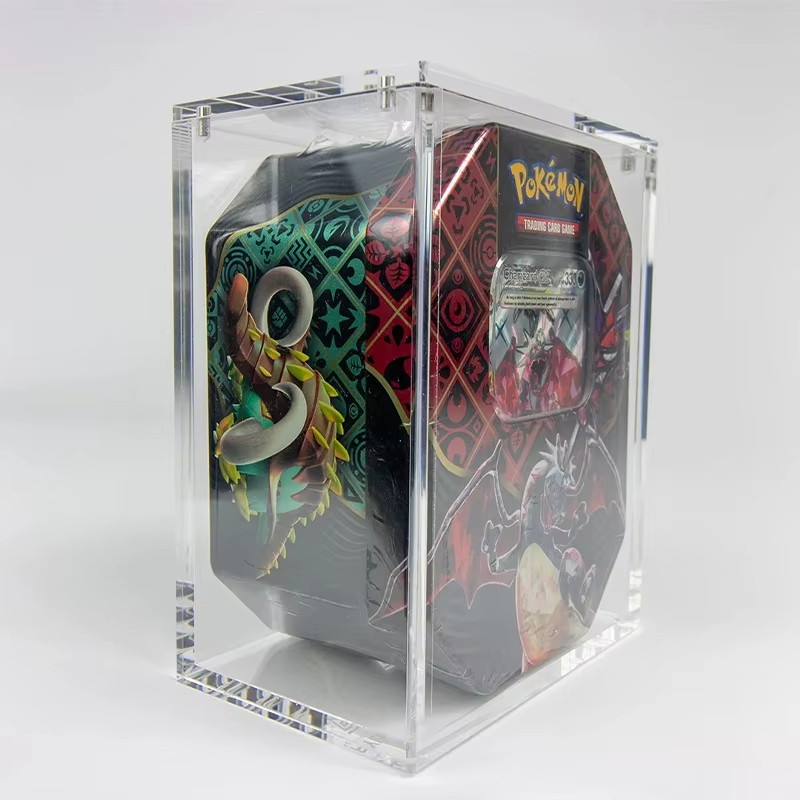
Scratch-Resistant Acrylic Cases: Coatings, Polishing, and Care
A scratch resistant acrylic case uses a hard-coat or anti-scratch coating on cast acrylic to raise surface hardness and reduce the micro-scratches left by wiping, stacking, and transport. Coatings preserve clarity far longer than bare sheet, but they cannot make acrylic scratch-proof, so care still means lint-free microfiber, mild soapy water, no paper towels, and no ammonia or alcohol cleaners that haze the surface. For retailers, importers, and distributors specifying display hardware, the coating type, sheet grade, and repairability of a case decide how it looks after two years on a shelf.
What Scratch Resistance Means on Acrylic Cases
Scratch resistance is a surface property, not a bulk one. Two cases cut from the same 3 mm sheet behave differently after a year of dusting if only one face is coated, because every handling event deforms a microscopic layer of polymer at the surface. What buyers call scratching is usually two failures: true scratches deep enough to catch a fingernail, and micro-abrasion that leaves a diffuse haze and kills clarity without a visible line.
Hardness is measured on the pencil scale, and the gap is large. Uncoated cast acrylic is commonly reported at around 2H, while hard-coated optical-grade sheet is published by coated-acrylic suppliers in the 6H to 8H range. That does not survive a key in a pocket, but it does stop ordinary dust, carton edges, and repeated wiping from marking the panel. Acrylic transmits roughly 92% of visible light, so even a few percent of haze makes a display look tired.

Cast vs. Extruded Acrylic and Scratch Behavior Compared
Cast acrylic is polymerised in a mould from MMA monomer, giving a harder, more uniform surface that machines and polishes cleanly and accepts coatings well. Extruded sheet is pushed through a die from pre-polymerised pellets: softer, more impact-tolerant, cheaper per square metre, and quicker to scuff in display use. The trade-off is not only hardness — cast sheet is more brittle, extruded flexes before failing.
| Factor | Cast acrylic | Extruded acrylic |
|---|---|---|
| Surface hardness | Higher; about 2H uncoated | Lower; hazes sooner in handling |
| Coating acceptance | Excellent bond, even cure | Workable but less consistent |
| Impact behaviour | Brittle; chips on corner impact | Tougher; flexes before failing |
| Optical clarity | Deeper polish, less internal stress | Good; faint extrusion lines on edges |
| Machining | Clean cuts, near-optical polish | Gums when cut hot |
| Solvent resistance | Resists mild-solvent crazing | Crazes at drilled holes |
| Cost per m² | Typically 20-40% higher | Lower; default for budget displays |
| Best use | Premium coated display cases | Short-life packaging, inner trays |
For a range that must hold its appearance through retail display and repeat cleaning, cast sheet with a coating is the safer specification. For a case that ships inside another carton and is discarded after unboxing, extruded sheet is rational.
Hard-Coat vs. Anti-Scratch Coating Options
Suppliers quote three families and use the names loosely. A true hard coat is a cross-linked acrylate or polysiloxane layer, a few microns thick, cured by UV or heat and bonded to the surface, lifting pencil hardness into the 6H-8H range. An anti-scratch treatment is often a thinner, cheaper coating or surface treatment that improves slip without the same hardness. The third is a temporary PE or PVC film applied for transit and peeled by the end user: useful in shipping, worthless afterwards.
Ask which one you are buying, in writing. A hard coat adds a curing step and narrows sheet options, so it carries real cost; a film costs cents and is often what a low quote includes. Both are legitimate — conflating them in a purchase order is how buyers end up with a "scratch-resistant" case that hazes in its first week on display. Check the edges to see which faces are coated, and abrade a hidden corner with a dry paper towel rather than trusting an adjective.
Polishing Compounds and Buffing for Minor Scratches
Light scratches that do not catch a fingernail are recoverable, and sequence matters more than product. Work from least aggressive: a plastic polish on a microfiber pad, then a fine abrasive compound if the mark persists, then a glaze to restore gloss. Three-step acrylic kits sold to the sign and aquarium trades follow exactly that logic — cut, smooth, shine — and work on display cases because the material is the same.
Keep the surface wet and the speed low. Acrylic softens at the surface around 80-100°C, and a dry pad at high rpm drags a smear worse than the scratch. For deeper marks, wet-sanding from 800 to 2000 grit first removes less material and keeps the panel flat. Know when to stop: a scratch you can feel has cut below the polished layer, and buffing it out leaves a shallow lens that distorts reflections — on a clear display face that looks worse than the scratch.

How to Choose a Scratch Resistant Acrylic Case by Handling Frequency
Specify from the handling profile, not the price list. Static display: coated cast at 3 mm, no moving parts, lid or magnetic closure. Handling is low, so the coating mainly fights dusting abrasion and shelf contact — the volume segment for premium ETB and UPC display. Our guide to the best acrylic display cases for Pokemon ETBs covers sealed-product box formats in more depth.
Frequent handling: coated cast at 3-4 mm, radiused and flame-polished edges, and a lid that opens without flexing — every open-close cycle drags the lid across the rim. Transport and events: cast or extruded at 4-5 mm, corner protection, foam-lined outer. Here impact resistance beats hardness, so keep the film on until the end user peels it.
Cleaning Routine That Avoids New Scratches
Most scratches on acrylic are installed by the owner. Blow or brush off loose dust first: dry-wiping grit across a panel is a sanding operation. Then use a soft white microfiber with a few drops of dish soap in warm water, rinse, and dry with a second cloth, working top to bottom so runoff does not cross clean panels.
What to keep away matters more. Ammonia glass cleaners, alcohol, and acetone attack acrylic and cause crazing — a permanent white haze polishing cannot fix. Paper towels carry wood and dust fibres that micro-scratch, and coloured microfiber can transfer dye. A monthly clean done properly beats a weekly wipe done wrong; for a shop, writing the method on a card behind the counter is the cheapest protection you can buy, because staff turnover is the real risk to a display range.

Storage and Transport Best Practices for a Scratch Resistant Acrylic Case
Acrylic cases are usually damaged before anyone uses them. In a warehouse, stack them in their film, in the original cartons, lid or printed face up, with nothing resting on an uncovered panel. Cardboard is abrasive, and a carton dragged across unbagged cases leaves a scuff no polish removes. Keep cartons off concrete and away from heat, since thermal cycling encourages crazing.
For transport, keep the film on or interleave with foam, and never ship cases loose beside hard goods. Corner impact is the main failure: a chip propagates into a crack under load. Corner foam or a moulded insert tray is the line item that cuts damage sharply, though the exact rate depends on route and handling — treat it as an industry estimate. At retail, handle cases by the rim and never stack filled cases, even briefly.
Best Practices and Common Mistakes in Acrylic Care
The commonest mistake is reading "scratch-resistant" as "scratch-proof" and dropping the routine; a coated case still hazes if wiped with paper towels weekly, just more slowly. The second is buying cheap extruded sheet for a premium display position and seeing it under showroom lighting, where a soft surface shows every buff as a dull patch.
Third is using the wrong cleaner once and living with it: a single pass of ammonia glass cleaner can craze a panel permanently. Fourth is over-polishing, which thins the panel and strips the coating in the worked area — polish twice, then replace. On the supply side, the mistake is buying on unit price alone: two cases quoted alike can differ in sheet grade, coating, edge finish, and packaging, and only one of those appears on the invoice. Sample them, clean them as your customer will, and inspect under shop light. Comparisons with brand-name alternatives are fair on specification — use a checklist, not a logo.
Wholesale and Retail Notes for Buyers (MOQ, Packaging, Lead Time)
MOQ. Stock display formats commonly start at 100 units per size, enough for an importer to test a market or a retailer to trial a shelf without tooling spend. Custom dimensions, new lid geometry, printed inserts, and a specified coated grade typically need 500-1,000 units, because moulds and coating setup must be amortised. Mixed containers across sizes and closures are the usual route to workable volume.
Packaging. Decide whether the case ships film-on with a retail-ready sleeve, or in plain export cartons for a distributor who rebrands. Film-on is the default for ocean freight and removes most scuff complaints that return as damage claims. For e-commerce, specify a mailer-grade outer with corner protection and confirm packaged weight and dimensions.
Lead time. Allow 5-12 days for express samples and 25-35 days for sea freight, plus production set by coating and printing. First orders should land six to eight weeks before the season; reorders follow sell-through, not the calendar. Put coating type, sheet grade, wall thickness, edge finish, and inspection rights on the purchase order — verbal specs are why the second shipment feels different.

About GUARD TCG
GUARD TCG has manufactured card protection and display products since 2009, producing more than 300 million units a year for customers in over 70 countries, with 10,000+ customers and 500+ distributors. Our acrylic program covers cast and extruded formats, hard-coated faces, magnetic and lid closures, and custom sizes, with documented sheet specs, carton data, full-batch inspection, and a 100-unit MOQ on stock formats. To specify a scratch resistant acrylic case, start with the OEM/ODM program page, browse the acrylic display cases catalog, or send dimensions, coating requirement, and volumes through the inquiry page.
FAQ
Q1. Does a scratch resistant acrylic case ever scratch?
Yes. A hard coat lifts surface hardness into roughly the 6H-8H pencil range and slows micro-abrasion, but acrylic is still soft compared with glass. Sharp metal or grit will mark a coated case; the coating buys years of clarity under normal handling.
Q2. Can I polish a coated case to remove a scratch?
Light marks yes, but the worked area loses hardness because the coating is microns thick. Treat polishing as a touch-up on a secondary panel, and replace the case if the scratch is on a main face and deep enough to feel.
Q3. What cleaner should retailers use on acrylic displays?
Mild dish soap in warm water with a soft white microfiber, rinsed and dried with a second cloth. Avoid ammonia cleaners, alcohol, acetone, and paper towels, which haze or micro-scratch acrylic.
Q4. Is cast acrylic worth the premium over extruded for display cases?
For visible, long-life displays, yes: cast sheet is harder, polishes better, and takes a hard coat consistently. For inner trays discarded at unboxing, extruded sheet is the smarter buy.
Q5. What should a wholesale purchase order specify?
Sheet type, coating type and coated faces, wall thickness with tolerance, edge finish, closure type, film protection, carton count and pallet plan, plus inspection rights with retained samples.
Q6. How should a buyer test samples before a container order?
Order coated cast, uncoated cast, and extruded. Clean each as your customer will, stack them, view under shop light, then check lid flatness, film peel, carton print, and unit weight against the quote.
Conclusion
Scratch resistance in acrylic is a stack of decisions rather than one feature: cast sheet over extruded for display, a real hard coat over a marketing claim, radiused edges where lids cycle, and a cleaning routine that stops installing new scratches. Keep mild soap, water, and white microfiber in the routine, keep ammonia and paper towels out of it, and treat polishing as a touch-up, not a repair. Buyers who write coating type, sheet grade, and packaging into the purchase order get a case that still looks new two years on. To compare formats or request samples, browse the full catalog or send your specification through the inquiry page.