Sleeve Thickness in Microns: 40, 50, and 60 Micron Sleeves Compared
- Share
- publisher
- GUARD TCG Team
- Issue Time
- Oct 30,2026
Summary
Sleeve thickness in microns explained: 40, 50, and 60 micron card sleeves compared on fit, shuffle feel, binder capacity, and protection, with wholesale MOQ, packaging, and lead time notes for buyers.
Sleeve Thickness in Microns: 40, 50, and 60 Micron Sleeves Compared
Sleeve thickness in microns describes the plastic film gauge: a 40-micron sleeve is thin and flexible, 50 microns is a balanced everyday standard, and 60 microns feels noticeably stiffer and more premium. Thicker is not automatically better, because gauge affects fit, shuffle feel, and how many sleeves fit in a binder or box. Match micron to use case. For importers, distributors and retailers, getting this right means stocking the gauges your customers actually reach for, from budget penny sleeves to premium outer sleeves.
What Sleeve Thickness in Microns Means
A micron (micrometre) is one-thousandth of a millimetre, and card sleeve thickness is simply how thick the polypropylene (PP) film is before it is cut and welded. The three most common everyday gauges sit at 40, 50, and 60 microns, and they all fall into what the industry calls the "thin" sleeve band. In rough terms, 40 microns equals about 0.04 mm, 50 microns about 0.05 mm (often described as "2 mil" in imperial packaging), and 60 microns about 0.06 mm. These differences sound tiny, but they change how a sleeve handles, how many fit into a storage box, and how much abuse a card survives.
Within the thin band, 40 microns is the budget or "penny sleeve" tier, 50 microns is the everyday standard that most brands and grading workflows treat as the baseline, and 60 microns is the upper edge before you cross into medium and thick sleeves that run 90 to 120 microns for tournament play. Understanding sleeve thickness in microns is really about understanding the trade-off between economy and protection, which is why it matters as much to a shop's buying plan as it does to a single collector.
Why Gauge Affects Fit, Feel, and Protection
Film gauge is the first thing your hands notice. A 40-micron sleeve is thin enough to feel almost weightless, which makes it easy to double-sleeve and cheap to buy in bulk, but it creases and corners more easily and offers the least defense against moisture and bending. A 50-micron sleeve adds material density without much bulk, giving a firmer, more confident feel and noticeably better tear resistance. A 60-micron sleeve is stiffer still, resisting corner wear and edge nicks, but it adds stack height and can feel less "grippy" when shuffling.
Protection is not purely about thickness, though. Chemical safety comes from the film material being PVC-free and acid-free polypropylene; gauge is what governs physical handling. This is why the honest advice is to read thickness and material together: a 50-micron PVC-free PP sleeve will protect a card better over years than a thick but chemically unstable film. For a buyer, gauge is the visible spec your customers understand instantly, so it deserves a clear place on the pack and on the shelf label.
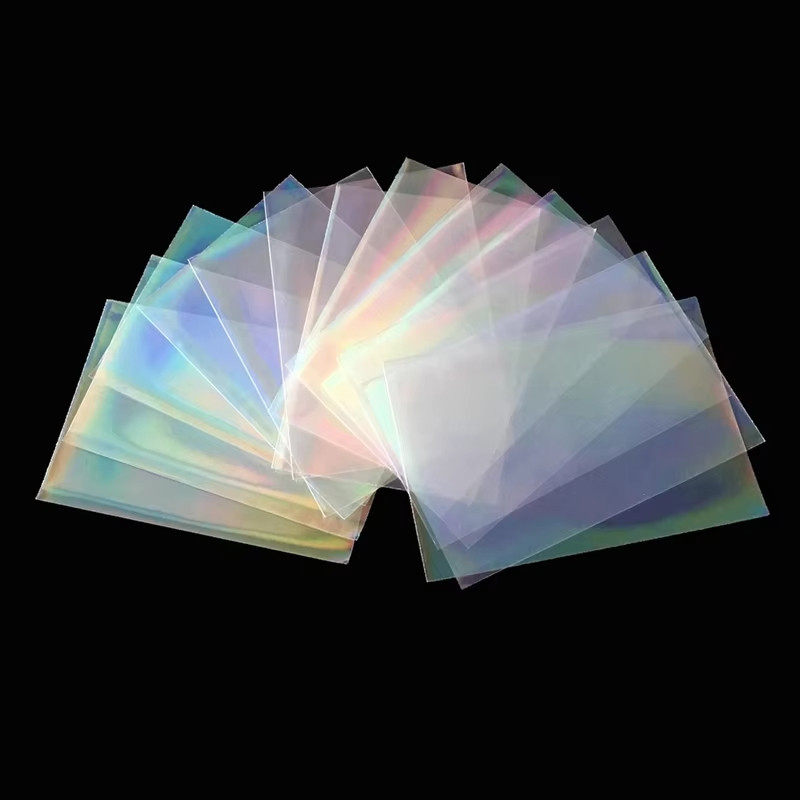
Retail-ready holographic PP sleeves show how a clean, PVC-free film performs on the shelf while still protecting the card underneath.

40 vs. 50 vs. 60 Micron Sleeves Compared
The table below lays out the three common gauges side by side, from durability and shuffle feel to where each one earns its keep in a store's lineup.
| Property | 40 Micron | 50 Micron | 60 Micron |
|---|---|---|---|
| Thickness | ~0.04 mm, very thin | ~0.05 mm, standard | ~0.06 mm, upper thin band |
| Durability | Prone to creasing and corner wear | Good balance of strength and flex | Noticeably stiffer, better edge resistance |
| Shuffle feel | Light, easy, slightly flimsy | Smooth and confident | Firmer, less "grippy" |
| Double-sleeving | Leaves the most room for inner sleeves | Works well with a thin inner | Tighter, can feel bulky |
| Binder / box capacity | Highest count per pocket or box | Standard capacity | Fewer fit in a given space |
| Price | Lowest | Mid, best value | Higher, premium feel |
| Best use case | Bulk play, penny sleeves, inner layers | Everyday play and storage standard | Higher-value cards, frequent handling |
The pattern matches what reputable brands such as Ultra PRO publish on their packs: 40-micron-class penny sleeves are the economy tier, 50 microns is the archival and tournament baseline, and 60 microns is a sturdier "thin" option before stepping up to 90-to-120-micron thick sleeves for heavy play.
How to Choose Micron by Card and Use
Match the gauge to what the card will actually go through. For cheap bulk, draft commons, and casual decks that get sleeved in volume, 40-micron penny sleeves are the cost-effective choice; they protect from surface scuffs and light handling without inflating the budget. For regular play across Magic: The Gathering, Pokémon, and Yu-Gi-Oh!, 50 microns is the sweet spot between cost and protection, and it is what most players and grading-submission guides expect. For valuable singles, cards handled often, or displays where the sleeve must resist corner wear, 60 microns earns its premium.
The material layer still matters. A 50-micron PVC-free, acid-free PP sleeve protects better over years than any PVC-based film, regardless of gauge, because it will not leach plasticizers onto the card. The practical recipe is a thin PP inner sleeve against the card, then a firmer outer sleeve for handling, then a rigid toploader or slab for the pieces that deserve it. This layered approach gives you the economy of a thin gauge where it is safe and the stiffness of a thicker gauge where it earns its keep.
Soft inner sleeves in clear PP are the thin, safe first layer that makes a thicker outer sleeve work without bulk.

Thickness, Binder Capacity, and Shuffle Feel
Gauge quietly reshapes how much storage you can offer a customer. Thinner 40-micron sleeves slide easily into binder pockets and let more cards fit in a given box or case, which is why they are the default for storage-heavy collections. A 60-micron sleeve adds stack height, so a deck or a full binder page gets noticeably thicker, and some decks will no longer fit the original game box once every card is in a heavier sleeve. For retailers, this is a real sales conversation: a customer buying for storage wants the thin option, while a customer buying for play wants the handling upgrade.
Shuffle feel runs the other direction. Thin sleeves are light and effortless to mash-shuffle but can feel flimsy and catch on edges. Thicker sleeves shuffle with more snap and confidence but feel stiffer, which some players dislike for fast play. There is no single right answer; the winning line is to stock the spectrum so a customer can feel the difference between a 40, 50, and 60-micron sleeve in hand and choose the one that matches their game.
Sealable perfect-fit inner sleeves show how a thin gauge can still deliver precise, snug protection as the first layer.

Maintaining Sleeves Over Time
No sleeve lasts forever, but the right habits stretch the lifespan of any gauge. Keep sleeves cool, dry, and out of direct sunlight, because heat and UV accelerate both film yellowing and any chemical degradation. Replace sleeves that show clouding, creases, or edge splits before they stop protecting the card, and avoid reusing torn sleeves even if they look usable. For stored collections, a thin inner sleeve inside a firmer outer sleeve reduces surface contact wear, and swapping an old penny sleeve is cheap insurance for a card worth far more than the film.
Common mistakes include leaving sleeved cards in a hot car or attic, assuming a thicker sleeve is automatically archival (it is about handling, not chemical safety), and re-sleeving cards too rarely. Watch for a strong plastic smell or a clingy, tacky feel, which are warning signs of PVC and plasticizer migration rather than a healthy polypropylene film. A clean, acid-free PP sleeve at any of the three common gauges will keep doing its job for years under normal indoor conditions.
Wholesale and Retail Notes for Buyers (MOQ, Packaging, Lead Time)
For importers, distributors and retailers, sleeve thickness in microns is a stocking and margin lever. The 50-micron PVC-free PP sleeve is the volume SKU: it is the everyday standard across TCG and sports cards, so it turns inventory fast and anchors a card protection line. The 40-micron penny sleeve is the high-unit, low-price entry product for bulk play and storage, while the 60-micron sleeve is the premium tier that lets you step a customer up with a visible, tactile difference. Our custom card sleeve programs generally start at an MOQ of 100 pieces for OEM and ODM, with packaging from retail polybags and hangable boxes to bulk cartons, and full custom dimensions, color, print and branding.
Lead time depends on whether you take a standard construction or a custom spec. Express air freight via DHL, FedEx, or UPS typically runs 5 to 12 days, and sea freight 25 to 35 days for larger orders. Confirm the exact gauge and film material on every spec sheet, not just the marketing copy, so you can honestly label your shelf stock as PVC-free and archival-safe. Explore our OEM/ODM services for custom sleeve programs, or browse the card sleeves category for ready-to-stock lines in multiple gauges.
Custom clear pull-tab PP sleeves give stores a flexible, retail-friendly sleeve that covers sport and TCG card lines alike.

About GUARD TCG
GUARD TCG is a trading card and collectibles accessories manufacturer established in 2009, producing more than 300 million units a year for over 10,000 customers in 70-plus countries, including more than 500 distributors. Our range covers card sleeves, toploaders, rigid protectors, graded card storage boxes and slab cases, acrylic display cases, binders and storage solutions, with OEM and ODM programs for custom dimensions, colors, print and branding. Every order runs through full batch inspection before dispatch, we support express air freight (DHL, FedEx, UPS, typically 5 to 12 days) and sea freight (25 to 35 days), and custom programs generally start at an MOQ of 100 pieces. Learn more on our about page.
FAQ: Sleeve Thickness in Microns
Q1: What does 40, 50, and 60 micron mean on card sleeves?
These numbers describe the thickness of the polypropylene film. A 40-micron sleeve is thin and flexible, 50 microns is the everyday standard, and 60 microns is stiffer and more premium. One micron is one-thousandth of a millimetre, so 50 microns equals roughly 0.05 mm.
Q2: Is a thicker sleeve always more protective?
Not automatically. A thicker sleeve resists bending, corner wear, and edge nicks better, but chemical safety depends on the film being PVC-free and acid-free. A 50-micron archival PP sleeve can protect a card better over time than a thick PVC film that leaches plasticizers.
Q3: Which micron is best for everyday TCG play?
For Magic: The Gathering, Pokémon, and Yu-Gi-Oh!, 50 microns is the sweet spot between cost and protection. It is the baseline most players and grading-submission guides expect, and it gives a smooth, confident shuffle without the bulk of a heavy sleeve.
Q4: Why do thin sleeves let more cards fit in a binder?
Thinner film adds less stack height, so 40-micron sleeves fit more cards into a binder page or storage box. A 60-micron sleeve is stiffer but thicker, so a full deck or binder gets noticeably bulkier and may not fit the original game box.
Q5: Can I double-sleeve with a 60-micron outer sleeve?
Yes, but it will feel tight. A 60-micron outer sleeve leaves less room for a thick inner sleeve, so pair it with a thin perfect-fit inner. For maximum room, use a 40- or 50-micron outer sleeve over a sealable inner sleeve.
Conclusion
Sleeve thickness in microns is a gauge decision, not a quality score. A 40-micron sleeve is the economical thin choice for bulk and storage, 50 microns is the everyday standard that balances cost and protection, and 60 microns is the stiffer premium tier for valuable cards and frequent handling. Match the gauge to the use case, always confirm PVC-free, acid-free polypropylene, and stock the full spectrum so buyers can feel the difference in hand. Review our full product range for sleeve lines across gauges, or send your formats through the inquiry form for a matched quote on the card sleeves your market needs.