Ultrasonic Sealing Card Sleeves vs Glue: How They Are Made
- Share
- publisher
- GUARD TCG Team
- Issue Time
- Nov 10,2026
Summary
Ultrasonic sealing card sleeves use high-frequency vibration to weld film without adhesive, while glue sealing bonds with a third material. This factory-side guide compares bond strength, seam appearance, material compatibility and inspection methods, with MOQ, packaging and lead-time notes for retailers, distributors and importers sourcing card protection.

Ultrasonic Sealing Card Sleeves vs Glue: How They Are Made
Ultrasonic sealing bonds card sleeves and slab components with high-frequency vibration and pressure instead of adhesive, producing a weld that is stronger, cleaner, and free of glue lines. Glue sealing is cheaper and works across more material types, but seams can yellow, fail under heat, and leave residue next to the card. For retailers, distributors, and importers buying at volume, weld quality decides burst strength and how a carton behaves in a hot container. This guide explains both methods from the factory floor, so buyers can specify and inspect what they pay for.
What Ultrasonic Sealing Is and Why It Matters for Card Protection
Ultrasonic sealing converts electrical energy into mechanical vibration, usually between 20 and 40 kHz, applied through a horn pressed against the film. Friction at the interface melts a narrow band of polymer, which fuses under pressure and re-solidifies in a fraction of a second. Nothing is added: no solvent, no hot-melt, no adhesive tape.
Placement matters as much as mechanism. A sleeve seam sits a few millimetres from a card face worth anything from a dollar to four figures. Conducted heat can shrink, curl, or gloss the film near the seal; adhesive can migrate, outgas, or leave a tacky edge that welds itself to the next sleeve in a stack. Ultrasonic welding keeps heat local to the weld zone, and because a weld is set by amplitude, pressure, and dwell time rather than by operator technique, it also repeats more reliably than a glue line at volume.
Bond Strength: Ultrasonic vs. Glue Seams Compared
Ultrasonic welds are typically strong in peel and shear because the bond is a fused zone of the same polymer, not a third material stuck between two surfaces. They also seal through light contamination such as dust or talc, because vibration displaces material out of the seal zone — a property packaging engineers rely on in food and medical lines, and directly relevant to sleeves where anti-block powder is always present.
The caveat is that strength is material-dependent. A peer-reviewed comparison of ultrasonic versus heat-conductive sealing on polyethylene and polybutene-1 peel films found lower seam strength for ultrasonic across all films tested, with results changing again when the seal area was contaminated. Ultrasonic wins on cleanliness and contamination tolerance; conductive heat sealing can win on raw peel strength in specific structures. A factory should test the actual film to ASTM F88, plus a dye or bubble test on sealed bags.
| Factor | Ultrasonic sealing | Glue / adhesive sealing |
|---|---|---|
| Bond mechanism | Fused polymer weld at the interface | Third-material adhesive layer |
| Seam appearance | Clean, narrow, no visible glue line | Visible bead or film; can yellow with age |
| Heat effect on film | Localised; low shrinkage outside the weld | Broader heat history; curl and gloss risk |
| Contamination tolerance | Seals through dust and light residue | Contamination weakens or blocks the bond |
| Material range | Thermoplastics with compatible melt points | Wide; bonds paper, foil, coated board, dissimilar films |
| Failure mode | Film tear beside the weld, not seam peel | Adhesive creep, embrittlement, edge lift |
| Best fit | Sleeves, inner bags, film windows, high volume | Short runs, paper packaging, mixed substrates |
Seam Aesthetics, Glue Lines, and Print Registration
A sleeve is a retail product seen at arm's length on a peg, and the seam is the first thing a buyer's eye finds. Ultrasonic welds produce a narrow, uniform band that can be patterned, and because there is no adhesive reservoir the sealed edge stays flat. Glue seams add thickness that shows as a faint ridge under raking light and pick up warehouse dust.
Print registration interacts with both. On printed sleeve backs the seal zone must miss critical artwork, and a wide glue bead plus normal tolerance stack-up can eat 3-4 mm of printable area. Colour is the long-term differentiator: adhesive on clear film yellows or turns milky after heat cycles, while a welded seam has nothing to discolour — a retention argument for private-label SKUs.
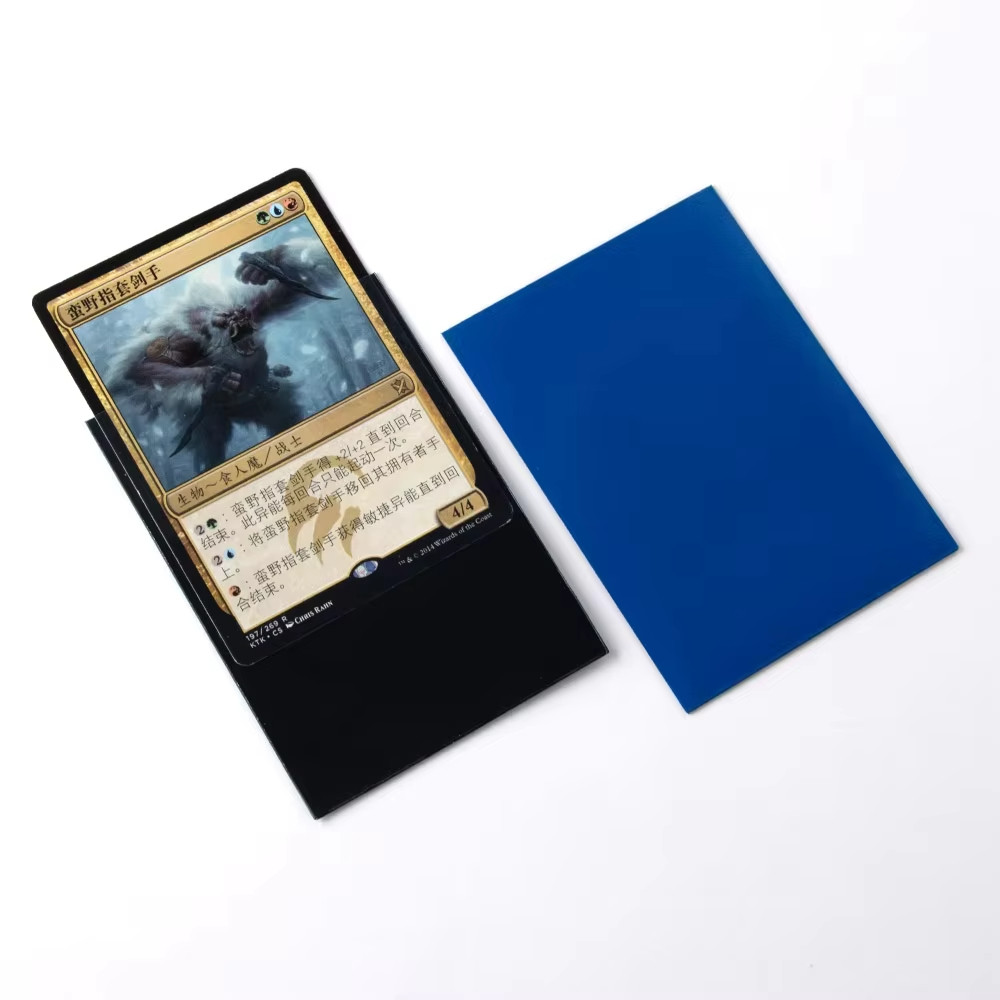
Above: a polypropylene sleeve body where the weld sits flush with the film, with no adhesive bead and no gloss band along the edge.
Ultrasonic Sealing Card Sleeves: Which Films Accept Which Method
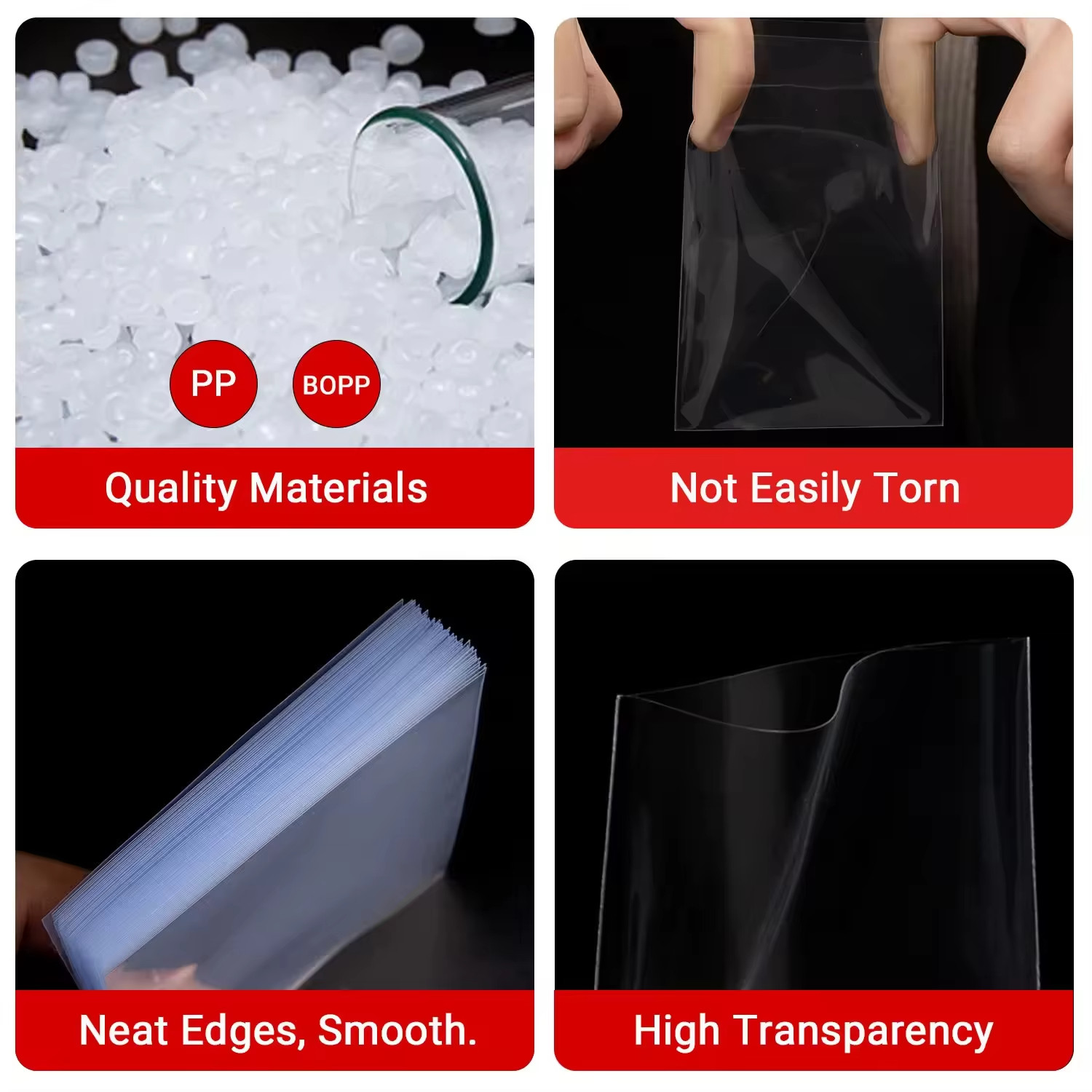
Ultrasonic welding is a thermoplastics process and behaves best when both surfaces have similar melting points. Polypropylene to polypropylene, polyethylene to polyethylene, and PET to PET weld cleanly. Mixed structures — PET laminated to paper, metallised film, coated board — are where glue sealing earns its keep, because adhesive does not care whether the substrates are chemically related.
Amorphous plastics such as polystyrene, polycarbonate, and ABS transmit ultrasonic energy well; semi-crystalline PE and PP need tighter process windows because they melt sharply, and films below roughly 25 micron leave little material to fuse.
Card sleeves sit at the easy end: most are polypropylene at 1-2 mil and weld predictably once dialled in. Rigid holders differ — a PVC-free top loader in PETG or rigid PVC is assembled by high-frequency welding, solvent bonding, or mechanical interlock, because the walls are 35 to 130 point thick. Acrylic cases and slab shells are solvent-cemented or ultrasonically staked, since a visible glue line on clear acrylic is a defect.

Above: acrylic joints are bonded rather than glued with a bead — the same invisible-seam logic that drives ultrasonic welding on film.
How to Choose Manufacturing Method by Product and Volume
Start with the substrate, then the volume, then the aesthetic. If both faces are the same thermoplastic and annual volume justifies a horn and anvil, ultrasonic is usually better: no consumables, no cure time, no glue inventory. If the pack combines paper, foil, or a coating with plastic, or the run is a few thousand units of a seasonal promotion, adhesive is the pragmatic choice.
Volume changes the maths more than buyers expect. Ultrasonic equipment carries capex and tooling per seam pattern, so cost per unit falls steeply with quantity; a glue line carries almost no capex but consumes adhesive and operator time forever. Below roughly 50,000 units a year the difference disappears into overheads; above a few hundred thousand on a stable film, weld economics usually win.
Specify the output, not the machine: seam width, strength target and test method, burst or leak requirement, cosmetic standard, and film construction by resin and gauge. A factory quoting "strong seal" has told you nothing; one quoting "6 mm weld, ASTM F88 target, 100% inline dye test" has given you something you can reject against. GUARD TCG runs that conversation through its OEM/ODM program, and the card sleeves catalog shows the formats where each method applies.
How to Inspect Ultrasonic Sealing Card Sleeves and Slabs
You cannot inspect what you did not specify, so the first check happens before the purchase order: seal method in writing, seam width in millimetres, film resin and gauge, and the test the factory runs.
Visual. Pull twenty sleeves from three cartons. The weld should be uniform in width and opacity, with no scorch, wrinkle, or gap; a milky or yellow cast suggests adhesive or overheated film.
Mechanical. Peel a sample from the corner. A good weld resists, then tears the film beside the seam rather than unzipping along it. If it opens cleanly like a resealable bag, the process was under-amplitude or the film contaminated.
Fit and function. Load a card, slide it in and out ten times, then hold the seam against a light. Sleeves that split at the corner on the third insertion will split in a customer's hands.

Above: on rigid cases, add a joint check — crazing or white stress marks around a bonded or screwed edge signal trouble later.
Storage, Handling, and the Mistakes That Weaken Seals
Sealed products age in the warehouse long before they age in a customer's hands. Keep cartons off concrete, out of direct sun, and below about 25°C. Polypropylene softens with repeated heat cycles, and a sleeve that has been through a summer container may still look perfect while its seam has lost a third of its peel strength. Slabs stored on their faces rather than on edge can also develop hairline crazing.
The most common cause of seam failure is not the method but the film. Buying on gauge alone, without confirming resin and slip additives, produces sleeves that weld differently batch to batch, because the additive blooms to the surface and sits exactly where the weld needs clean polymer. Running at the top of the speed range is the second — dwell time collapses and peel strength quietly drops — and skipping the retained sample is the third.
For graded slabs, storage is a display decision too. Sunlight fogs clear acrylic and outside labels migrate. Store face-up, away from windows, and never stack weight on a slab you intend to resell as mint. Retail-ready presentation is covered in the graded card slab accessories range, where buyers discover that the case, not the holder, sets perceived value on a shelf.
Wholesale and Retail Notes for Buyers (MOQ, Packaging, Lead Time)
MOQ. Stock sleeve formats typically start at 100 units per SKU, low enough to test a seal specification without tooling spend. Custom film width, bespoke pack counts, printed sleeve backs, and new horn patterns generally need 500-1,000 units because setup must be amortised. Switching a running SKU from glue to ultrasonic deserves a qualification run rather than an assumption that the film behaves identically.
Packaging. Choose between retail-ready — printed sleeve back, hang tag, barcode, country of origin — and plain export cartons. Retail-ready adds cost but removes repacking at your warehouse. Specify carton dimensions, units per carton, and per-pallet count up front.
Lead time. Allow 5-12 days for express samples by DHL, FedEx, or UPS, and 25-35 days for sea freight, plus production time set by pack count and printing. Land the first order six to eight weeks before your season.
Above: retail-ready acrylic presentation where joint quality, not just the card inside, carries the price point.
About GUARD TCG
GUARD TCG has manufactured card protection and display products since 2009, producing more than 300 million units a year for customers in over 70 countries, with 10,000+ customers and 500+ distributors. We run OEM and ODM programs across sleeves, toploaders, binders, deck boxes, and acrylic display, with documented material statements, carton data, a 100-unit MOQ on stock formats, and full-batch inspection. Seal method, film resin, seam width, and cosmetic standard are specified per order. For a quote, start with the OEM/ODM page, browse the product catalog and sleeves range, or send your requirements through the inquiry page.
FAQ
Q1. Is ultrasonic sealing stronger than glue on card sleeves?
Usually stronger in peel and shear on the same polypropylene film, because the seam is a fused weld rather than an adhesive layer. It is not automatically stronger on every structure: published comparisons on some PE and PB-1 peel films found lower seam strength with ultrasonic.
Q2. Why do glue seams turn yellow on clear sleeves?
Adhesive chemistry ages. Hot-melt and solvent adhesives oxidise and plasticiser migrates under heat cycles, so a clear seam drifts milky or yellow. A welded seam has nothing to discolour, which is why long-running private-label SKUs move to ultrasonic.
Q3. Can ultrasonic sealing bond acrylic display cases?
It can stake and weld thermoplastics including acrylic, but most clear cases are solvent-cemented or mechanically interlocked, because a full weld on thick cast acrylic risks crazing. For sleeves and film windows, ultrasonic is standard.
Q4. What should I ask a supplier before ordering sealed sleeves?
Seal method, seam width in millimetres, film resin and gauge, the seal strength test they run, and whether they keep retained samples per batch. Add a cosmetic standard — no yellowing, no bead, no scorch — and you have a specification you can inspect against.
Q5. Can a glue-sealed SKU be switched to ultrasonic mid-program?
Yes, but run a qualification batch first. The film may need a different additive package to weld cleanly, and seam width often changes, which affects artwork and pack dimensions.
Conclusion
Ultrasonic sealing and glue sealing are both legitimate factory processes, and the choice should follow the film, the volume, and the cosmetic standard rather than a preference. Ultrasonic gives a clean, adhesive-free weld that tolerates contamination and ages well; adhesive gives flexibility across mixed substrates and short runs. Buyers who specify seam width, test method, and resin — then inspect against retained samples — get a stable product either way.