What Does PT Mean in Card Storage? 35PT, 55PT and 130PT Explained
- Share
- publisher
- GUARD TCG Team
- Issue Time
- Aug 12,2026
Summary
PT stands for point (1 PT = 0.001 inch / 0.0254 mm) and describes the inner cavity of card protectors: 35PT fits standard cards, 55PT fits premium foil stock and double-sleeved cards, 130PT fits patch and memorabilia cards. Learn how to choose the right toploader thickness from GUARD TCG, a factory-direct manufacturer since 2009.
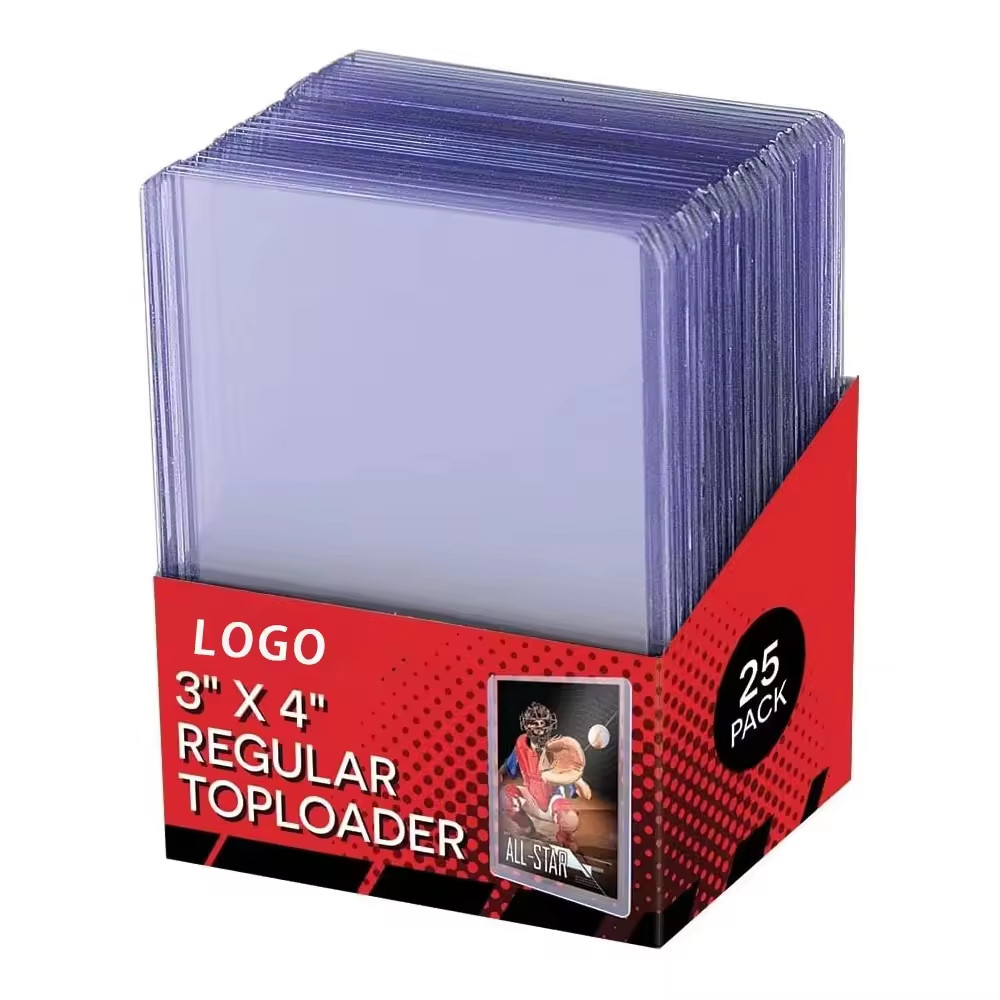
What Does PT Mean in Card Storage? 35PT, 55PT and 130PT Explained
PT stands for "point," a thickness unit used across the trading card hobby: 1 PT equals 0.001 inch (about 0.0254 mm). When a toploader or card protector is labeled 35PT, 55PT or 130PT, that number describes the width of its inner cavity — the thickest card it can safely hold. A standard card fits a 35PT toploader, thicker premium stock needs 55PT, and patch or memorabilia cards require 130PT or more.
What Does "PT" Actually Stand For?
In card storage, PT is short for "point" — a printing and packaging industry unit of measurement that equals one-thousandth of an inch (0.001 in / 0.0254 mm). It is the same unit used for paper stock and card board thickness, which is why card manufacturers and accessory makers both use it. When you see "35PT" printed on a toploader, it is not the outer thickness of the plastic — it is the inner opening, i.e. the maximum thickness of card that will fit inside.
This distinction matters: a 35PT toploader looks thin from the outside, but its interior channel is precisely machined to hold a standard card (roughly 12–20PT of card stock) plus a soft penny sleeve, leaving a little breathing room so the card slides in and out without pressure marks.
PT to Inches and Millimetres: The Conversion You Need
The conversion is simple, and worth memorizing if you buy card protectors regularly:
- 1 PT = 0.001 inch = 0.0254 mm
- 35PT = 0.035 inch ≈ 0.89 mm — standard cards
- 55PT = 0.055 inch ≈ 1.40 mm — thicker premium stock
- 130PT = 0.130 inch ≈ 3.30 mm — patch and memorabilia cards
As a quick mental check: multiply the PT number by 0.0254 to get millimetres, or divide a card's measured thickness in inches by 0.001 to get its PT value. A digital caliper reading of 0.118 inches, for example, means your card is roughly 118PT and needs a 130PT protector (industry estimate for most thick patch cards).
Common Toploader Sizes at a Glance
Not every store labels protectors clearly, so here is the standard PT ladder used across the hobby:
| PT Rating | Inner Opening | Typical Cards |
|---|---|---|
| 35PT | 0.035 in / 0.9 mm | Standard base cards — Pokémon, MTG, Yu-Gi-Oh!, most sports cards |
| 55PT | 0.055 in / 1.4 mm | Chrome, Prizm, Optic and other premium foil card stock |
| 75PT | 0.075 in / 1.9 mm | Thicker inserts and some autograph cards |
| 100PT | 0.100 in / 2.5 mm | Jersey relics and single-swatch memorabilia cards |
| 130PT | 0.130 in / 3.3 mm | Multi-color patches, rookie patch autos, premium memorabilia |
| 180PT+ | 0.180 in / 4.6 mm+ | Jumbo patches, booklet cards, medallion cards |
35PT vs. 55PT vs. 130PT: Which One Fits Your Cards?
Most collectors only ever need to choose between three ratings. Here is how they compare for everyday use:
| Feature | 35PT Toploader | 55PT Toploader | 130PT Toploader |
|---|---|---|---|
| Inner opening | 0.035 in / 0.9 mm | 0.055 in / 1.4 mm | 0.130 in / 3.3 mm |
| Fits standard cards | Yes, with a penny sleeve | Yes, slightly loose | Too loose — card will rattle |
| Fits thick premium cards | No — card may jam | Yes, best for Chrome/Prizm | Yes, with extra room |
| Fits patch/memorabilia | No | No | Yes — designed for it |
| Double-sleeved cards | Tight but usually OK | Comfortable fit | Yes, very roomy |
| Best for | Bulk storage, binders, daily play cards | Valuable foil and parallel cards | High-end RPAs and patch cards |
What Happens If You Choose the Wrong PT?
Getting the PT rating wrong is one of the most common rookie mistakes in card protection, and the consequences are exactly the opposite of what you want:
- Too small: the card jams partway in. Forcing it bends the card, scuffs the edges, and can crack the toploader itself — permanent damage to a card that may be worth more than the protector.
- Too large: the card slides and rattles inside the cavity. Every movement rubs the surface against the plastic, which gradually creates micro-scratches, especially on foil cards.
- Wrong size for shipping: a rattling card in an oversized toploader is a common cause of damaged cards in transit — exactly why PSA's official submission guidelines ask senders to secure cards so they cannot shift.
The safe rule: choose the smallest PT that lets your sleeved card slide in smoothly without any resistance. If you have to push, size up one step.
How to Figure Out How Many PT You Need
You do not need a caliper for most cards — these three checks cover 95% of cases:
- Bare standard card (Pokémon, MTG, Yu-Gi-Oh!, most sports): use a 35PT toploader. It fits a single soft sleeve comfortably.
- Premium foil stock (Chrome, Prizm, Optic) or double-sleeved cards: step up to 55PT. A perfect-fit inner sleeve plus a regular outer sleeve adds roughly 10–15PT of thickness, so the standard 35PT cavity becomes tight.
- Patch, relic, auto or memorabilia cards: go straight to 130PT (and up to 180PT for jumbo patches or booklets). Use a thick sleeve designed for 100PT+ cards — a standard penny sleeve is too tight and can damage the edges of thick cards.
If a card comes from a high-end product line like National Treasures, Flawless or Immaculate, assume it is 100PT or thicker and measure before buying. When in doubt, size up — a slightly looser fit with proper sleeving is always safer than a tight fit that damages corners.
What About PT on Graded Card Slabs?
The PT system appears in graded card storage too. A typical grading slab from PSA, BGS or CGC uses a shell roughly equivalent to 35PT wall structure, and the same logic applies to slab protectors, slab sleeves and display cases: match the cavity to the slab thickness so the holder grips it without pressure. For collectors who keep slabs in a binder or a stack, a correctly sized slab sleeve prevents the surface scratches and corner rub that come from slabs sliding against each other.
About GUARD TCG
GUARD TCG is the card protection division of a factory founded in 2009 that produces over 300 million protective items a year and ships to more than 70 countries for 10,000+ customers and 500+ distributors. We manufacture the 35PT 3×4 toploader, penny sleeves and graded card accessories shown in this guide, and every batch is fully inspected under our QC process before shipping. Standard MOQ starts at 100 pieces, with DHL/FedEx/UPS delivery in 5–12 days and sea freight in 25–35 days; OEM/ODM customization is available for brands and retailers. See our full product list or send an inquiry for wholesale pricing.
FAQ
Q1: What PT do I need for a normal trading card?
For a bare standard-size card, a 35PT toploader is the right choice — it fits most Pokémon, MTG, Yu-Gi-Oh! and sports base cards with a penny sleeve.
Q2: Does double sleeving mean I need a thicker toploader?
Usually yes. A perfect-fit inner sleeve plus a regular outer sleeve adds about 10–15PT, so a 55PT toploader gives a comfortable fit where 35PT would be tight.
Q3: Can I put a 130PT card in a 35PT toploader?
No. Patch and memorabilia cards are roughly 100–130PT thick on their own; forcing them into a 35PT cavity will bend the card and can crack the holder. Always match the PT rating to the card.
Q4: How do I measure a card's PT myself?
Use a digital caliper to measure thickness in inches, then multiply by 1,000 — a reading of 0.118 inches means roughly 118PT, which fits a 130PT protector.
Conclusion
PT is simply a thickness unit (1 PT = 0.001 inch / 0.0254 mm) printed on card protectors to tell you the widest card the holder can safely accept: 35PT for standard cards, 55PT for premium foil stock and double-sleeved cards, and 130PT for patch and memorabilia cards. Match the PT to your card, always sleeve before inserting, and when in doubt size up. GUARD TCG manufactures 35PT toploaders and a full range of card protection accessories factory-direct — browse the 35PT toploader or contact us for bulk pricing.
Wholesale and OEM Supply
Need this range in bulk? GUARD TCG manufactures trading card sleeves and offers OEM/ODM custom card accessories for brands, card shops and distributors. Browse the trading card sleeves range, or request a wholesale quote.