Why Acrylic Display Cases for Pokémon Tins Sell Out: Collector Psychology 101
- Share
- publisher
- GUARD TCG Team
- Issue Time
- Aug 17,2026
Summary
Pokemon tins are fragile sealed products: the thin metal shell dents, scratches, and chips easily, and damaged artwork drops resale value fast. Acrylic display cases sell out because they solve both collector needs at once — protecting the tin condition and displaying it as a collectible. Learn which tins deserve a case and what resale data shows.
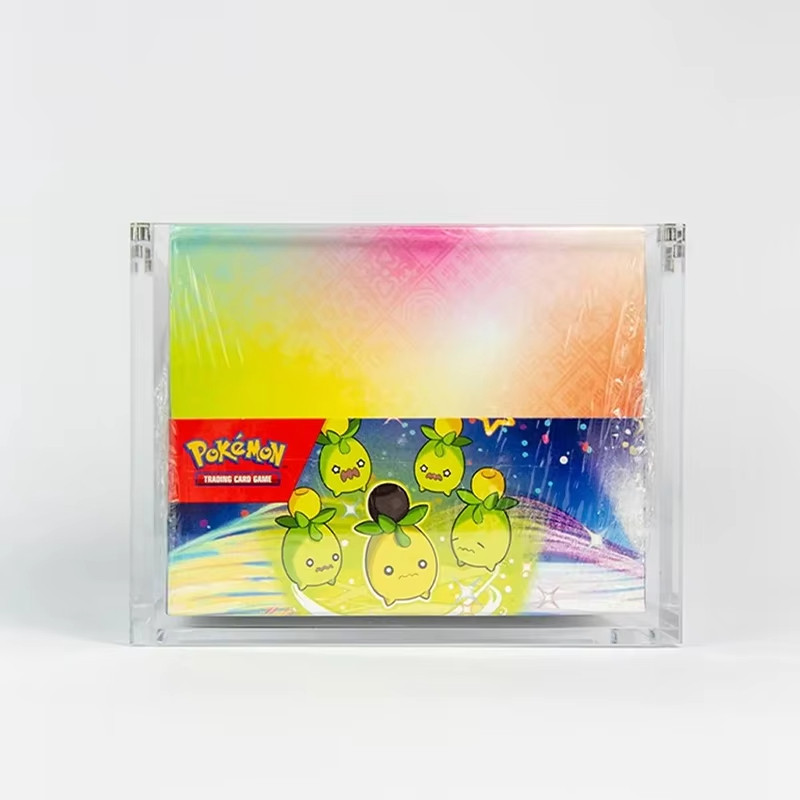
Why Acrylic Display Cases for Pokémon Tins Sell Out: Collector Psychology 101
Pokémon tins — especially the small mini tins and collectible holiday tins — are some of the most fragile sealed products collectors own: the thin metal shell dents, scratches, and chips easily, and once the paint is damaged the tin's collector value drops fast. That is why acrylic display cases for tins regularly sell out: collectors buy them to solve two problems at once — protecting the tin's condition (and therefore its resale value) and displaying it as a collectible object instead of hiding it in a drawer. This guide breaks down the collector psychology behind the demand, which tins are worth protecting, how a display case delivers both protection and presentation, and what the resale market actually shows about condition premiums.
Why Pokémon Tins Are So Easy to Damage
A Pokémon tin looks sturdy, but it is a thin printed metal shell over a cardboard frame — and metal is not the forgiving material collectors assume it is. The paint layer is the first thing to go: stacking tins on top of each other rubs the printed surfaces together, leaving scuffs and bare-metal patches. Dropping one from shelf height dents the corners, and the hinge edge of the lid chips with normal handling. Unlike a booster box, which hides behind its shrink wrap, a tin's art IS the product — there is no protective layer between the print and the world. Once the artwork is scratched, there is no repair, and the tin's appeal for collectors is permanently reduced.
The Two Drivers of the Display Case Boom
Demand for tin display cases is not about the case itself — it is about two behaviors that are everywhere in the modern collecting community:
- Condition-driven collecting: collectors increasingly buy sealed product as an investment. Resale prices on platforms like eBay and TCGplayer are visibly higher for tins with clean, unscratched artwork — and the premium grows with the tin's rarity. A display case is the cheapest insurance against the most common damage vector: careless handling and stacking.
- Display-driven collecting: tins are small, colorful, and designed to be seen — the Pokémon Company prints art on every surface of a tin for a reason. Collectors want their prized tins on a shelf, not in a box, and a clear acrylic case turns a fragile metal box into a safe, dust-free display piece.
Put the two together and you get a product that sells out: a case that protects the investment while showing it off. That is exactly the pattern seen with graded slabs and sealed ETBs — the moment a product category gets "collectible status," the protection-accessory market follows.
Which Tins Are Worth Protecting?
Not every tin needs a case, but several categories clearly justify one:
- Mini tins (Pokémon TCG mini tins): small, cheap to collect, and frequently bought in sets — but their size makes them easy to lose, scratch, and dent. Collectors completing a mini tin set will pay a premium for clean examples.
- Poké Ball and Great Ball tins: the round metal tins are iconic collectibles with highly visible artwork on the ball surface — any scratch is immediately obvious.
- Holiday and special-edition tins: seasonal releases (Christmas tins, anniversary tins) are produced in limited quantities and quickly disappear from retail, which pushes up their aftermarket value and makes condition even more important.
- Tins with exclusive promos: tins that contain exclusive promo cards combine two collectible values — the sealed product and the promo inside — so the tin itself is worth keeping pristine.
The general rule: if a tin is part of a set you are completing, if it is a limited release, or if it holds an exclusive promo, it deserves a display case.
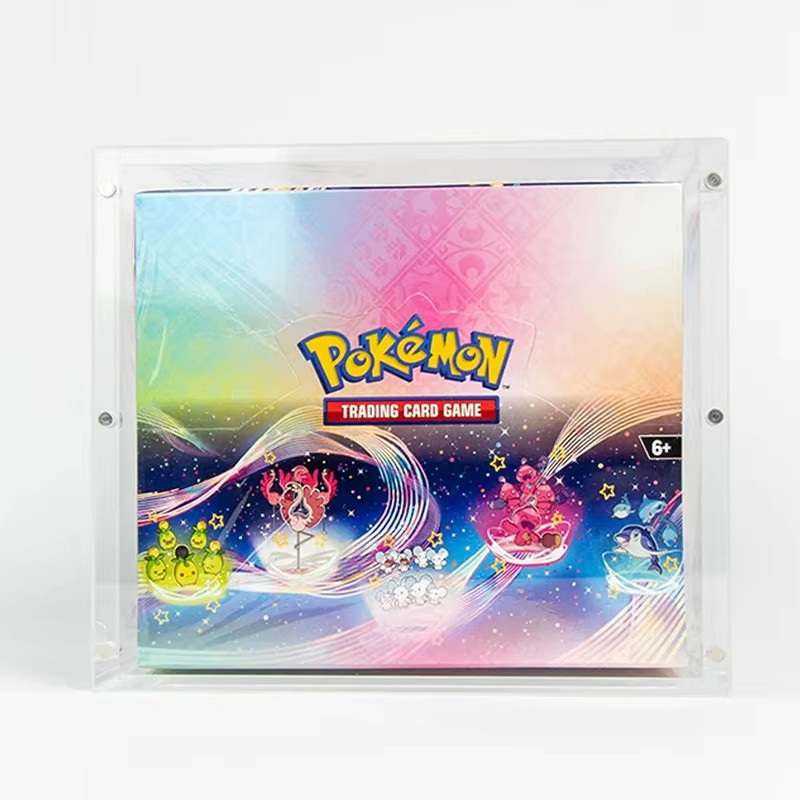
A clear acrylic display case protects the fragile printed metal surface of a tin while keeping the artwork fully visible — the combination of protection and display is what drives collector demand.
How a Display Case Satisfies Both Needs
A well-made acrylic tin display case works on three levels:
- Physical protection: rigid acrylic panels absorb bumps and prevent stacking pressure from reaching the tin. The tin sits immobilized inside, so it cannot slide, rattle, or rub against other objects.
- Environmental protection: a closed case keeps dust off the printed surface and blocks UV light, which fades the artwork over years of shelf display. UV-blocking acrylic (many cases advertise 92–99% UV rejection) is the feature that matters most for long-term value.
- Presentation: high-clarity acrylic shows the tin from all sides like a museum piece. Collectors photograph tins inside cases for listings and social media, which reinforces the "collectible object" status and supports asking prices.
Because tins come in several sizes — mini tins, standard tins, Poké Ball tins, and larger holiday tins — the best display cases are sized to the specific tin or offer adjustable internal space. When in doubt, measure the tin and ask the manufacturer to confirm fit.
What the Resale Market Shows About Condition
Resale data from marketplaces like eBay and TCGplayer consistently shows the same pattern: condition is the dominant price driver for sealed collectibles. Sealed ETBs and bundle displays in pristine condition trade at the top of their price ranges, while scratched or dented examples sell at a visible discount — often 10–30% lower for the same product (industry estimate based on sold listings). Tins follow the same logic, with the added problem that their metal surface damages more easily than cardboard. A display case that costs a few dollars protects a tin that may be worth ten to fifty times that amount, which is why collectors treat it as a no-brainer purchase — and why popular sizes sell out quickly whenever a new collectible tin line drops.
Display Case vs. Alternative Storage for Tins
Here is how common storage approaches compare for tins:
| Storage Method | Protection Level | Display Value |
|---|---|---|
| Acrylic display case | High — dust, UV, impact | Excellent — fully visible |
| Plastic storage bin | Medium — dust but tins can rub | None — hidden away |
| Loose on a shelf | Low — dust, scratches, UV | Good — but unprotected |
| Stacked in a drawer | Low — metal rubs metal | None |
| Sealed hard case with foam | Highest — impact and dust | Low — lid covers the view |
| Bubble wrap in a box | High for transport | None |
The acrylic case is the only option that scores high on both axes — which is precisely why it is the category that sells out.
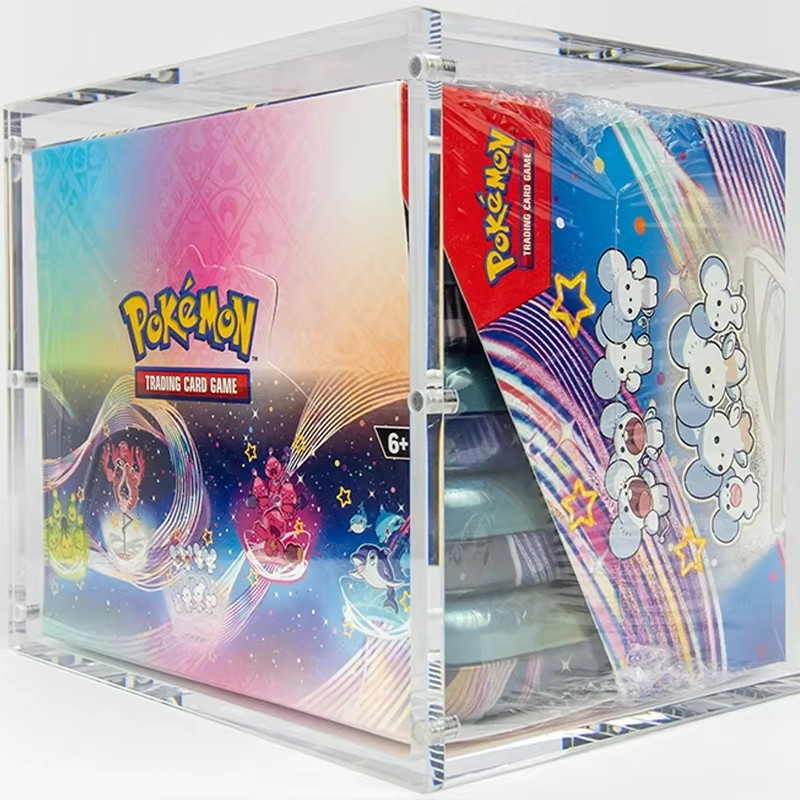
Collectors display tins and sealed boxes inside clear acrylic cases on shelves — the case protects the metal surface while turning the collection into a visible, photogenic display.
About GUARD TCG
GUARD TCG is the card protection division of a factory founded in 2009 that produces over 300 million protective items a year and ships to more than 70 countries for 10,000+ customers and 500+ distributors. We manufacture acrylic display cases for ETBs, tins, booster boxes, and slabs using high-clarity UV-blocking acrylic, and every batch is fully inspected under our QC process before shipping. Standard MOQ starts at 100 pieces, with DHL/FedEx/UPS delivery in 5–12 days and sea freight in 25–35 days; OEM/ODM customization — including custom internal dimensions for specific tin sizes — is available for brands and retailers. See our full product list or send an inquiry for wholesale pricing.
FAQ
Q1: Do Pokémon tins have a standard size?
No single standard — mini tins, standard tins, Poké Ball tins, and holiday tins all have different dimensions. Mini tins are roughly 6 x 6 x 4 cm (about 2.4" x 2.4" x 1.6"), while standard tins are larger. Measure your tin before ordering a case, or ask the manufacturer for the internal dimensions.
Q2: Is a tin display case universal across tin sizes?
Not usually. Cases sized for mini tins will not fit standard or holiday tins. The best approach is to match the case to the exact tin, or buy from a manufacturer that offers custom internal sizing through OEM/ODM.
Q3: Do display cases actually help resale value?
Indirectly, yes. The case does not add value by itself, but it preserves the tin's condition — clean artwork, no dents, no scratches — and condition is what buyers pay a premium for. Sold listings consistently show pristine sealed collectibles trading above damaged ones.
Q4: Should I keep the tin sealed inside the display case?
Yes — sealed tins hold more value than opened ones, and the display case protects the sealed product exactly as it would an opened one. Keep the original shrink wrap and place the whole sealed tin inside the case.
Conclusion
Pokémon tin display cases sell out because they solve the two problems every serious collector has at once: protecting the fragile printed metal surface that determines resale value, and showing the tin off as the collectible object it is. Mini tins, Poké Ball tins, and limited holiday releases all justify a case, and the resale market rewards clean condition with real premiums. A clear UV-blocking acrylic case with a precise fit delivers dust protection, impact protection, and museum-quality display in one product — which is why it is the storage category collectors buy first and why popular sizes disappear from shelves quickly. GUARD TCG manufactures UV-protective acrylic display cases for tins, ETBs, and sealed boxes with OEM/ODM options — browse display cases or contact us for bulk pricing.
Wholesale and OEM Supply
Need this range in bulk? GUARD TCG manufactures acrylic display cases and offers OEM/ODM custom card accessories for brands, card shops and distributors. Browse the acrylic display cases range, or request a wholesale quote.